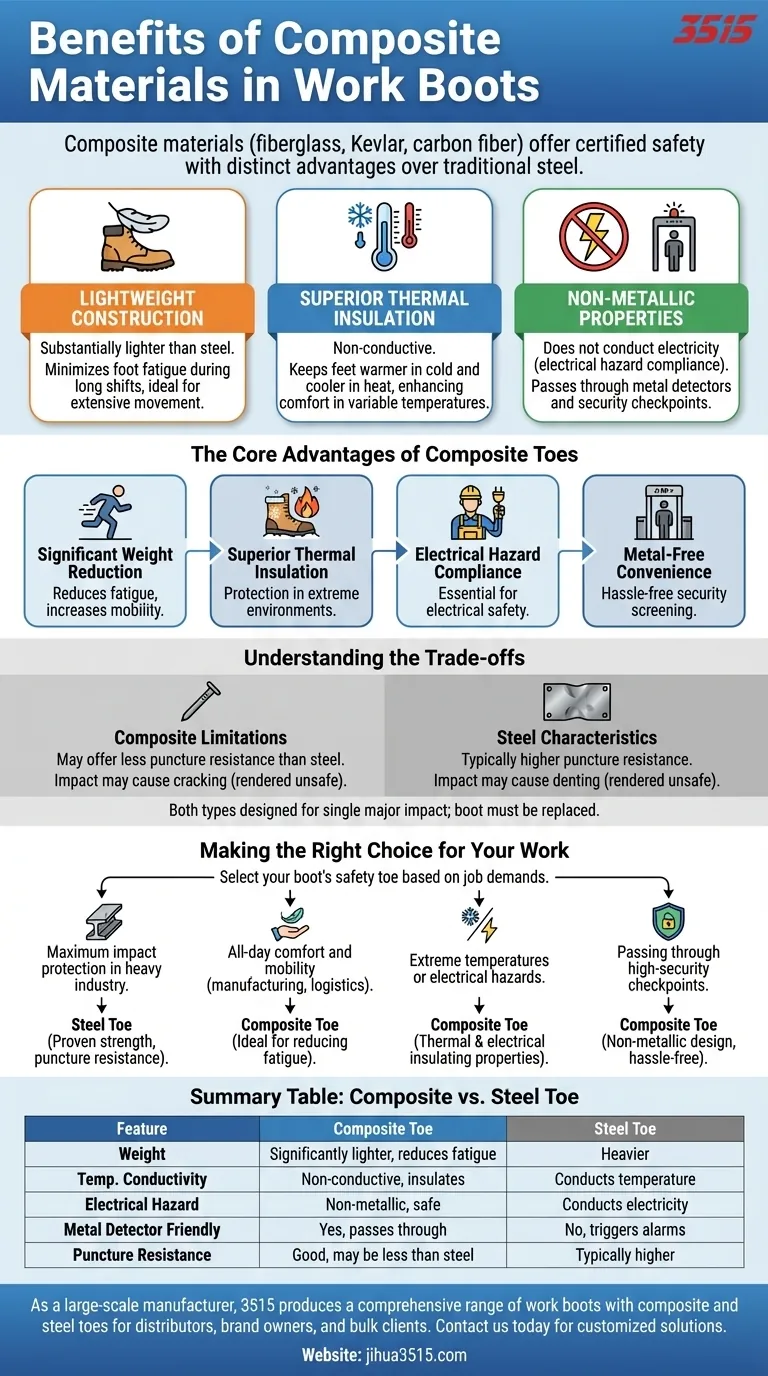
The primary benefits of composite materials in work boots are their lightweight construction, non-metallic properties, and superior temperature insulation compared to traditional steel. Materials like fiberglass, Kevlar, and carbon fiber provide certified safety protection without the added weight or conductivity of metal.
The core decision between composite and steel toes is not about which is universally "better," but which is right for your specific work environment. Composite materials excel where all-day comfort, temperature extremes, and metal-free requirements are the dominant concerns.
The Core Advantages of Composite Toes
A safety toe made from composite materials is engineered to provide specific advantages that are critical in many modern workplaces.
Significant Weight Reduction
Composite materials are substantially lighter than steel. This reduction in weight minimizes foot fatigue over long shifts, making them ideal for workers who are constantly on their feet or covering long distances.
Superior Thermal Insulation
Unlike steel, composites do not conduct temperature. This means your feet stay warmer in cold conditions and cooler in hot environments, providing a significant comfort advantage for outdoor or temperature-variable work.
Electrical Hazard Compliance
Because they are non-metallic, composite toes do not conduct electricity. This makes them an essential choice for electricians and anyone working in environments with a risk of electrical hazards.
Metal-Free Convenience
The non-metallic nature of composite boots allows workers to pass through metal detectors and security checkpoints without issue. This is a major benefit in fields like security, logistics, and airport ground operations.
Understanding the Trade-offs
While composite materials offer clear benefits, it's crucial to understand their limitations to make an informed safety decision.
Puncture Resistance
While strong and compliant with impact safety standards, some composite materials may offer less puncture resistance than a comparable steel plate or toe. Steel often provides a higher degree of protection against sharp objects from below.
Durability After a Major Impact
Both steel and composite toes are designed for a single major impact. After such an event, the boot's safety integrity is compromised and it must be replaced. A key difference is that steel may dent, while a composite toe is more likely to crack, but both outcomes render the boot unsafe for future use.
The Role of the Boot's Upper
The safety toe is only one part of the boot's protective system. The durability, water resistance, and overall lifespan of a work boot are heavily dependent on the upper material, with full-grain leather being a common choice for its robustness and ability to mold to the foot.
Making the Right Choice for Your Work
Select your boot's safety toe based on the primary demands of your job.
- If your primary focus is maximum impact protection in heavy industry: Steel remains a top choice for its proven strength and puncture resistance.
- If your primary focus is all-day comfort and mobility: Composite is ideal for reducing fatigue during long shifts in manufacturing, logistics, or general contracting.
- If your primary focus is working in extreme temperatures or around electricity: Composite is the definitive choice for its thermal and electrical insulating properties.
- If your primary focus is passing through high-security checkpoints: Composite's non-metallic design is essential for hassle-free screening.
Ultimately, understanding your specific job hazards and daily demands is the key to selecting the right protection for your feet.
Summary Table:
| Feature | Composite Toe | Steel Toe |
|---|---|---|
| Weight | Significantly lighter, reduces fatigue | Heavier |
| Temperature Conductivity | Non-conductive, insulates from heat/cold | Conducts temperature |
| Electrical Hazard | Non-metallic, safe for electrical work | Conducts electricity |
| Metal Detector Friendly | Yes, passes through checkpoints | No, triggers alarms |
| Puncture Resistance | Good, but may be less than steel | Typically higher |
As a large-scale manufacturer, 3515 produces a comprehensive range of work boots with composite and steel toes for distributors, brand owners, and bulk clients. Whether you need lightweight composite boots for all-day comfort or steel-toed boots for maximum impact protection, our production capabilities cover all types of safety footwear. Contact us today to discuss your specific requirements and get a customized solution that meets your safety and comfort needs!
Visual Guide
Related Products
- Wholesale Durable Safety Boots Manufacturer Customizable Steel Toe Work Boots
- Durable Leather Moc Toe Work Boots for Wholesale & Custom Manufacturing
- Durable Moc-Toe Wedge Work Boots | Wholesale Manufacturing for Brands
- Durable Moc Toe Wedge Sole Work Boots for Wholesale and Private Label
- Wholesale Customizable Safety Boots Durable & Protective Footwear Manufacturing
People Also Ask
- What are the pros and cons of steel toe work boots? A Guide to Maximum Protection vs. Comfort
- What are the different types of steel toe work boots? Choose the Right Boot for Your Job
- What is the history of steel toe work boots? From German Invention to Modern Safety Standard
- How much weight can steel toe work boots withstand? Unpacking the 3,372 lb. Safety Standard
- What are some common myths about steel toe work boots? Debunked for Modern Workers