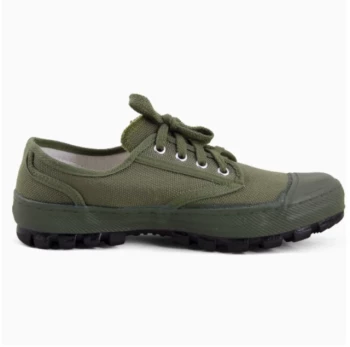
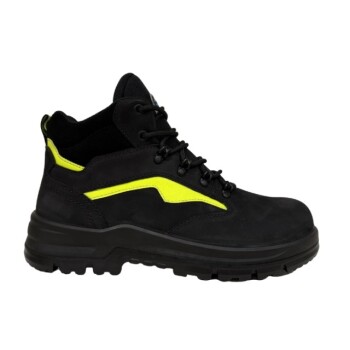
Breaking in new work boots is a critical process for two primary reasons: it molds the stiff, protective materials to the unique shape of your feet for long-term comfort, and it prevents premature damage to the boot's internal lining. This essential step ensures the boot performs correctly from the first day of wear and maintains its structural integrity over time.
The core purpose of breaking in a work boot is to transition it from a generic, factory-shaped object into a piece of equipment customized to your specific foot anatomy. This process is not about enduring pain, but about preventing it.
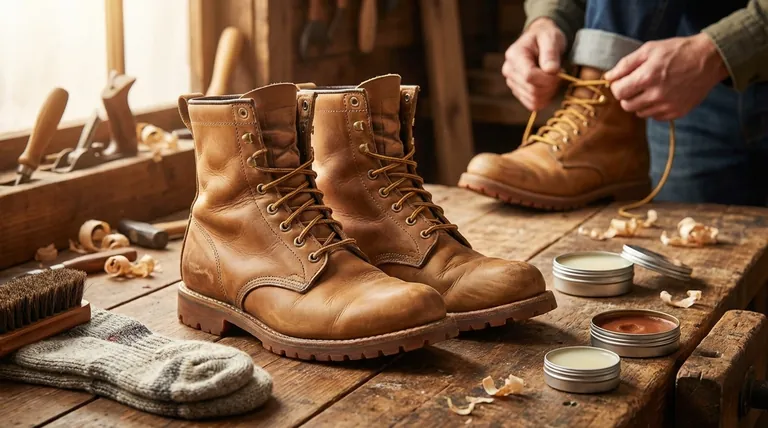
Why New Boots Require a Break-In Period
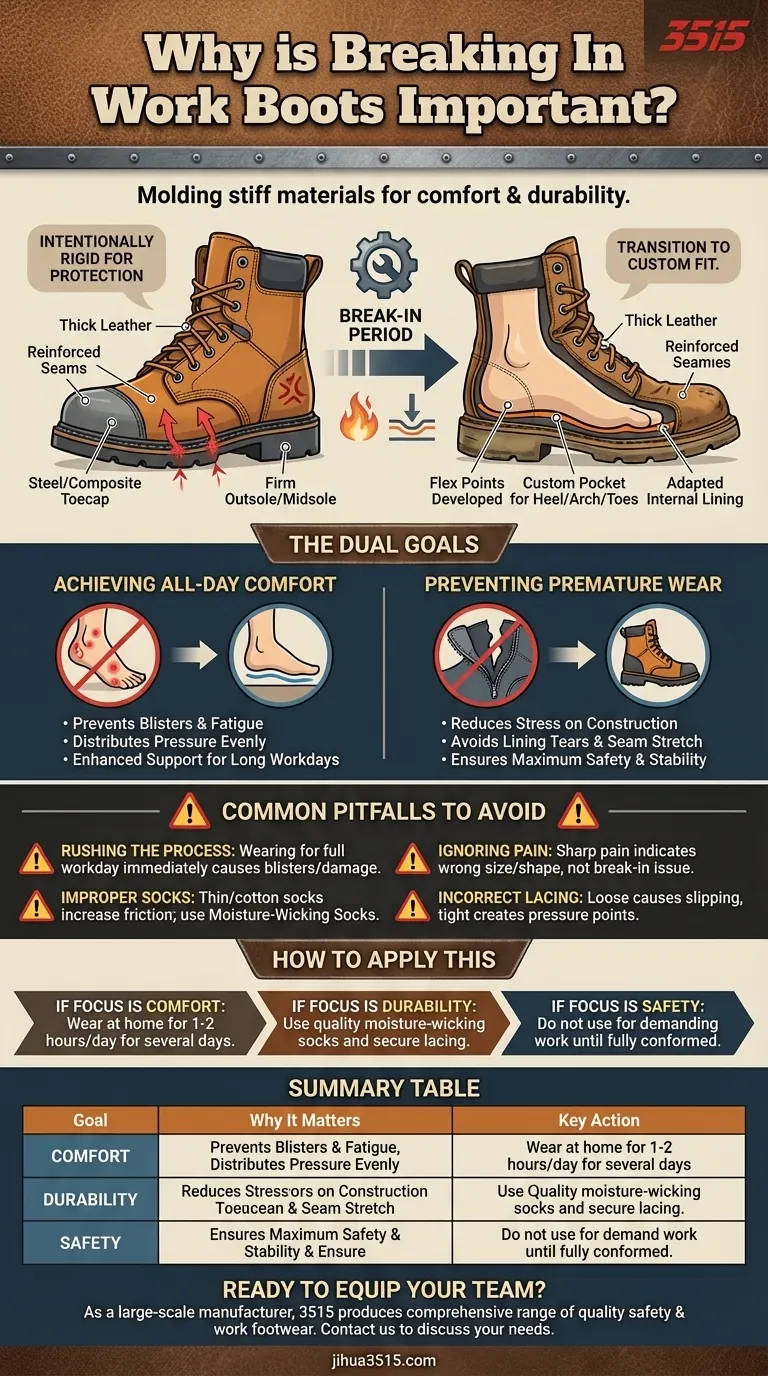
A brand-new work boot is intentionally rigid. Its primary function is protection, which requires durable materials like thick leather, reinforced seams, and safety components like steel or composite toecaps.
The Initial Stiffness of Protective Materials
New leather and synthetic uppers have not yet developed flex points. The outsole and midsole are often firm to provide foundational support and puncture resistance. This initial rigidity is a sign of quality, not a flaw.
From Generic Shape to Custom Fit
Every foot is different. The break-in period uses the gentle heat and pressure from your foot to gradually soften and shape the boot's materials. This creates a custom pocket for your heel, arch, and toes.
The Dual Goals: Comfort and Durability
Failing to break in boots properly compromises both your physical well-being and the lifespan of your investment. The process directly addresses these two interconnected goals.
Achieving All-Day Comfort
An unbroken-in boot creates friction and pressure points. This leads directly to blisters, foot fatigue, and general discomfort. A properly molded boot distributes pressure evenly, providing the support you need for long workdays.
Preventing Premature Wear and Tear
Forcing a stiff boot through a full day of work puts immense stress on its construction. This can cause the internal lining to tear or seams to stretch and weaken prematurely. A gradual break-in allows these materials to adapt without being damaged.
Ensuring Maximum Safety and Support
A boot that doesn't conform to your foot cannot provide optimal support. This can lead to instability and increase the risk of an accident. Once broken in, the boot works with your foot's natural movement, enhancing stability and ensuring protective features are positioned correctly.
Common Pitfalls to Avoid
The break-in process is simple, but several common mistakes can undermine its effectiveness or even signal that you have the wrong boot entirely.
Rushing the Process
The most common mistake is wearing new boots for a full, active workday immediately. This is the fastest way to cause painful blisters and potentially damage the boot's lining.
Ignoring Signs of a Poor Fit
Discomfort is expected, but sharp, persistent pain is not. If you experience significant pain, it likely indicates the boot is the wrong size or shape for your foot, and no amount of breaking in will fix it.
Using Improper Socks
Wearing thin or cotton socks increases friction and retains moisture. Moisture-wicking socks are essential during the break-in period to keep feet dry, reduce friction, and prevent blisters.
Incorrect Lacing
Lacing that is too loose allows your foot to slide, causing friction. Lacing that is too tight creates pressure points. Adjust the lacing to be snug and secure without cutting off circulation.
How to Apply This to Your Boots
Your approach to breaking in your boots should align with your primary goal, whether it's immediate comfort or ensuring the longest possible lifespan for your gear.
- If your primary focus is avoiding pain: Wear your new boots around the house for just 1-2 hours at a time for several days before ever taking them to the job site.
- If your primary focus is long-term durability: Always use quality moisture-wicking socks and pay attention to a secure lacing pattern to minimize internal friction that can shred the boot's lining.
- If your primary focus is on-the-job safety: Do not wear the boots for demanding work until they feel fully conformed to your feet, as a proper fit is essential for stability and support.
Investing a small amount of time to properly break in your boots is the best way to guarantee their comfort, safety, and longevity.
Summary Table:
| Goal | Why It Matters | Key Action |
|---|---|---|
| Comfort | Prevents blisters and foot fatigue by molding the boot to your foot. | Wear boots for 1-2 hours at home initially. |
| Durability | Avoids premature damage to the boot's internal lining and seams. | Use quality socks and proper lacing to reduce friction. |
| Safety | Ensures optimal support and stability for on-the-job protection. | Do not use for demanding work until fully conformed. |
Ready to equip your team with durable, comfortable work boots designed for a smooth break-in?
As a large-scale manufacturer, 3515 produces a comprehensive range of footwear for distributors, brand owners, and bulk clients. Our production capabilities encompass all types of safety and work shoes and boots, built with quality materials that balance protection with long-term comfort.
Contact us today to discuss your specific needs and discover how we can be your reliable manufacturing partner.
Visual Guide
Related Products
- Durable Leather Work Boots for Wholesale & Custom Manufacturing
- Durable Leather Work Boots for Wholesale & Custom OEM Manufacturing
- Durable Leather Work Boots Wholesale Manufacturer & Custom Factory
- Durable Leather Moc Toe Work Boots for Wholesale & Custom Manufacturing
- Wholesale Leather Work Boots with Customizable Wedge Sole for Brands
People Also Ask
- What is the difference between full-grain and top-grain leather? Premium Material Guide for Boot Manufacturers
- What are the common workplace hazards that can be mitigated with the right work boots? Protect Your Workforce
- What are the common foot issues workers face due to uncomfortable work boots? Prevent Pain & Deformities
- What are the advantages of leather versus synthetic work boots? A Guide to Choosing the Right Material
- What are the key components of modern work boots? Engineered for Ultimate Durability and Comfort