
Choosing the right walking boots is the single most important gear decision for any walker. The benefits go far beyond simple footwear; they are a direct investment in your comfort, safety, and long-term physical health. The right boots provide crucial support and protection in all the right places, preventing injury and ensuring you can enjoy your walks for many years to come.
The right boots do more than just cover your feet; they act as a suspension and armor system for your entire body. By absorbing impact, preventing missteps, and protecting you from hazards, they safeguard your ankles, knees, and back, turning a potentially jarring trek into a comfortable journey.
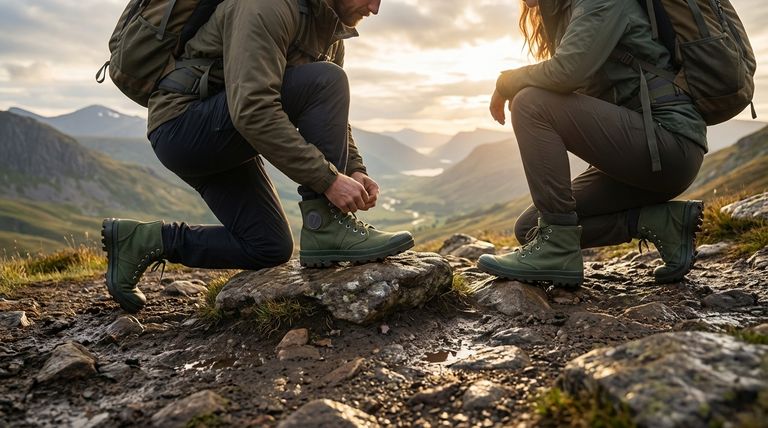
The Foundation of a Good Walk: Core Benefits
Understanding the specific advantages of a well-chosen boot helps clarify why they are superior to other footwear for walking on varied terrain.
Unwavering Ankle and Foot Support
A key feature of a walking boot is its structure, which is designed to hold your foot and ankle securely. This support is critical on uneven or rocky ground, significantly reducing the risk of painful twists and sprains.
This stability also reduces muscle fatigue over long distances, allowing you to walk further and more comfortably.
Superior Protection from Hazards
Walking boots are engineered to be a protective barrier. They feature sturdy materials and often have reinforced toe and heel sections to shield your feet from rocks, roots, and other impacts.
Furthermore, many boots are designed with water-resistant or fully waterproof materials. This keeps your feet dry in wet conditions, which is essential for preventing blisters and maintaining comfort.
Enhanced Grip and Stability
The outsoles of walking boots are built for traction. They have deep, aggressive lugs (the tread pattern) that bite into mud, gravel, and wet surfaces.
This reliable grip provides confidence and stability with every step, dramatically reducing the danger of slips and falls, especially on challenging inclines or descents.
Long-Term Joint Health
This is perhaps the most overlooked benefit. The cushioning and support in a quality boot absorb the repetitive impact of walking on hard or uneven ground.
By reducing this shock, the right footwear helps prevent chronic foot, leg, and even back injuries over the long term, ensuring you can stay active for years.
Understanding the Trade-offs
No single boot is perfect for every situation. Choosing the right one involves balancing key characteristics.
Weight vs. Protection
Walking boots are the heaviest category of hiking footwear. This weight is a direct result of the durable materials and supportive structures that provide maximum protection.
For long-distance hikes on rugged terrain, this trade-off is worthwhile. For shorter walks on flat paths, a lighter boot might be more suitable.
Stiffness vs. Flexibility
A stiffer sole protects your foot from sharp objects underfoot and provides a stable platform when carrying a heavy pack. However, it can feel less nimble and more cumbersome on easy, predictable trails.
Breathability vs. Waterproofing
A fully waterproof boot is excellent for keeping water out but can limit breathability, leading to hotter feet in warm, dry weather. Conversely, a more breathable, non-waterproof boot will be more comfortable in the heat but offers little protection in a downpour.
The Critical Importance of Fit
Even the most technologically advanced boot will fail if it doesn't fit your foot correctly. An improper fit is the primary cause of blisters, hot spots, and general foot pain.
Why "Good Enough" Isn't
A boot should feel like a natural extension of your foot. There should be no significant slipping at the heel, and your toes should not be crammed against the front, especially when walking downhill.
Investing time to find the perfect fit is just as important as investing money in a quality pair of boots.
Making the Right Choice for Your Walk
Your ideal boot depends entirely on the terrain you plan to tackle and the loads you expect to carry.
- If your primary focus is short day hikes on well-maintained trails: A lighter, more flexible boot offers sufficient support without unnecessary weight.
- If your primary focus is multi-day backpacking with a heavy pack: Prioritize maximum ankle support and a durable, stiffer sole to handle the load and rugged terrain.
- If your primary focus is walking in consistently wet or muddy conditions: A waterproof membrane is non-negotiable to keep your feet dry and prevent discomfort.
Investing in the right walking boots is an investment in your comfort, safety, and ability to explore without limitation.
Summary Table:
| Benefit | Key Advantage |
|---|---|
| Ankle & Foot Support | Reduces risk of sprains and muscle fatigue on uneven terrain. |
| Hazard Protection | Shields feet from impacts and offers water resistance. |
| Grip & Stability | Deep treads prevent slips on mud, gravel, and inclines. |
| Long-Term Joint Health | Cushioning absorbs impact, protecting feet, legs, and back. |
Ready to equip your customers with the perfect walking boots?
As a large-scale manufacturer, 3515 produces a comprehensive range of durable and supportive footwear for distributors, brand owners, and bulk clients. Our production capabilities encompass all types of walking boots, ensuring you get the right fit, protection, and performance for your target market.
Contact 3515 today to discuss your footwear needs and enhance your product line with reliable, high-quality boots!
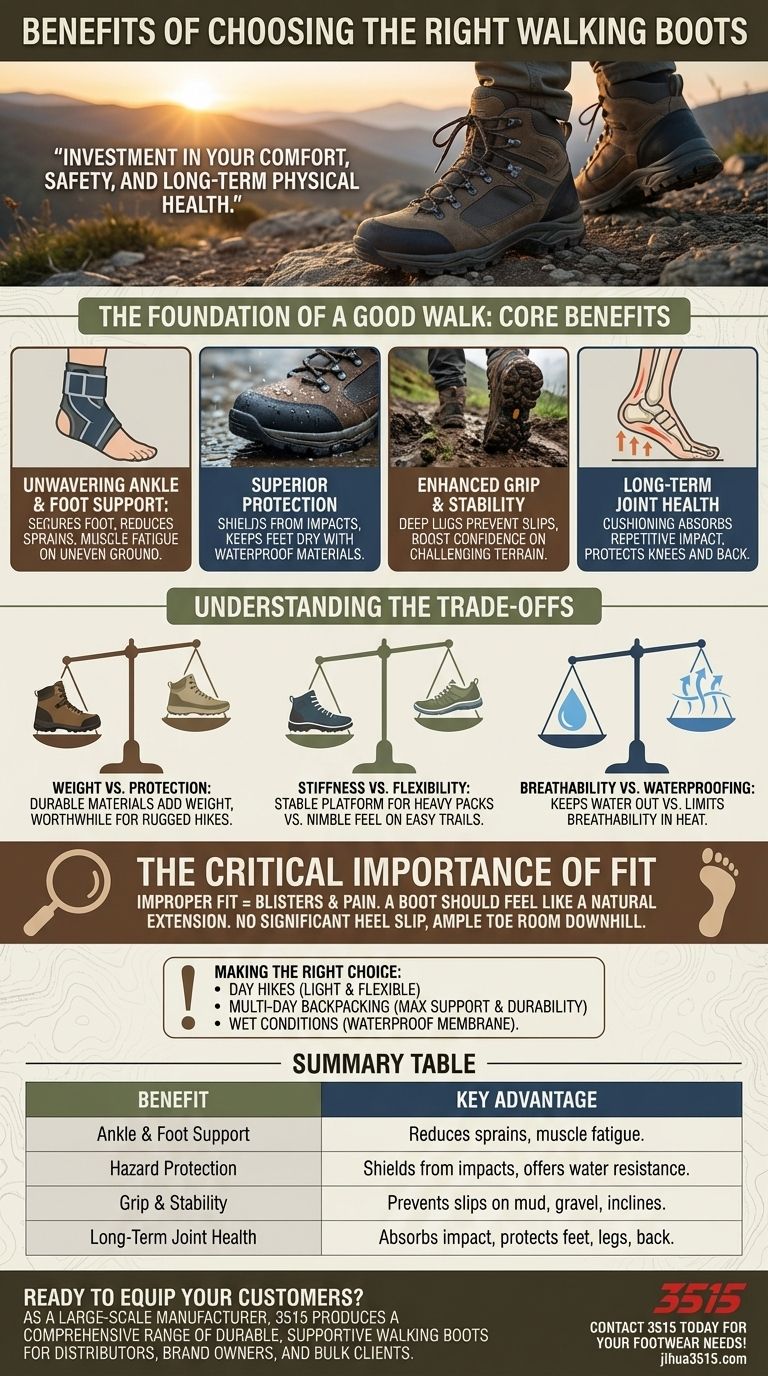
Visual Guide
Related Products
- Durable Goodyear Welt Leather Work Boots for Wholesale & Private Label
- Durable Rubber Sole Outdoor Shoes Wholesale & Custom Manufacturing
- Wholesale Durable Camouflage Canvas Shoes with High-Traction Cleated Rubber Sole
- Wholesale Safety Boots Manufacturer for Custom & Private Label Orders
- Heavy-Duty Waterproof Nubuck Safety Boots Safety Shoes for Bulk Supply
People Also Ask
- What is the difference between full-grain and top-grain leather? Premium Material Guide for Boot Manufacturers
- What are the advantages of leather as an upper material for work boots? Unmatched Durability & Custom Comfort
- Why is it important to waterproof leather work boots? Protect Your Investment and Performance
- How should new leather work boots be broken in? A Guide to Comfort and Durability
- What are the advantages of leather uppers in work boots? Unmatched Durability & Protection

















