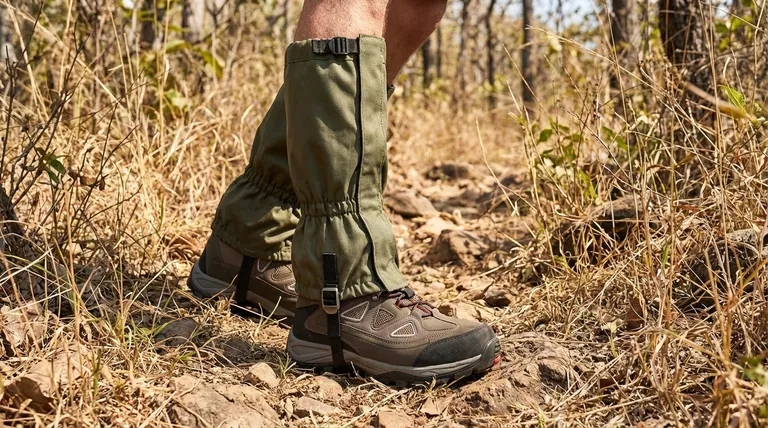
The primary advantages of snake gaiters are their versatility, customized comfort, and lower cost. They are a specialized protective layer that you wear over your existing footwear, allowing you to use the boots you already own and trust. This adaptability provides a level of flexibility that integrated, all-in-one snake boots cannot match.
The decision between snake gaiters and snake boots is not about which is inherently "better," but which system aligns with your specific activities and priorities. Gaiters offer adaptable protection for varied use, while boots provide dedicated, all-in-one security.
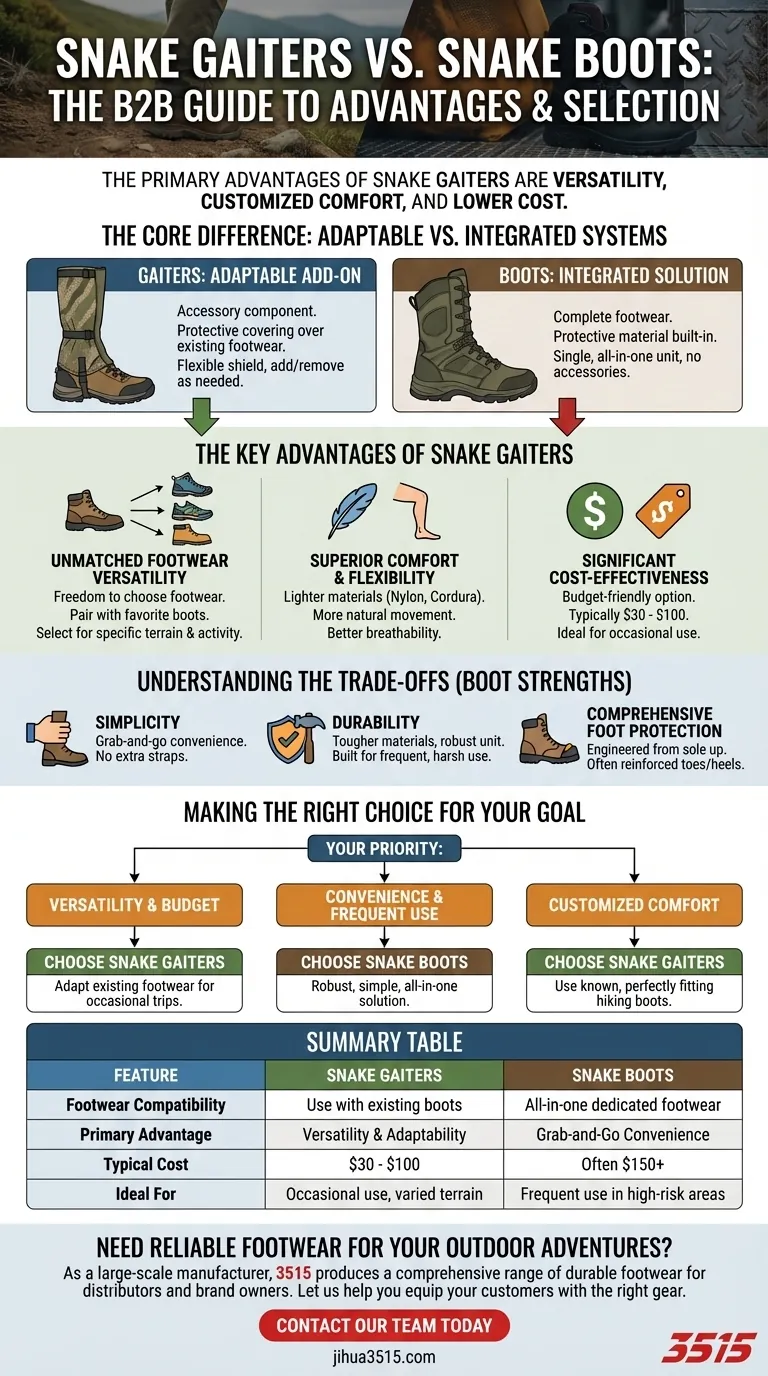
The Core Difference: Adaptable vs. Integrated Systems
Understanding the fundamental design philosophy behind each option is key to making an informed choice. They solve the same problem but with different approaches.
Gaiters: An Add-On Component
Snake gaiters function as an accessory. They are protective coverings, typically running from your ankle to your knee, that wrap around your leg and over your boot.
They are secured with straps and buckles, creating a protective shield that you can add or remove as needed.
Boots: An All-in-One Solution
Snake boots are a complete piece of footwear. The protective material is built directly into the boot's construction, extending high up the calf.
There are no additional accessories to manage; the protection and the footwear are a single, integrated unit.
The Key Advantages of Snake Gaiters
Choosing gaiters over boots provides three distinct benefits that cater to users who prioritize adaptability and have existing gear they prefer.
Unmatched Footwear Versatility
The most significant advantage of gaiters is the freedom to choose your footwear. You can pair them with your favorite broken-in hiking boots, insulated winter boots, or lightweight trail runners.
This allows you to select the perfect footwear for the specific terrain, temperature, and activity, rather than being locked into a single pair of boots.
Superior Comfort and Flexibility
Because gaiters are made from materials like nylon or Cordura, they are often lighter and more flexible than the thick leather or rubber uppers of dedicated snake boots.
This can result in a more natural walking motion and better breathability, which is a critical factor during long hikes in warm weather. You also get to use boots that you know are already comfortable for your feet.
Significant Cost-Effectiveness
Snake gaiters are generally much less expensive than snake boots. With prices often ranging from $30 to $100, they represent a budget-friendly option for reliable protection.
This makes them an excellent choice for individuals who only occasionally venture into snake habitats and don't require a dedicated, expensive piece of footwear.
Understanding the Trade-offs
While gaiters offer clear advantages, it's crucial to acknowledge the strengths of snake boots to understand the complete picture.
The Simplicity of Boots
Dedicated snake boots offer grab-and-go convenience. You simply pull them on, and your protection is ready. There are no extra straps to adjust or pieces of gear to remember.
The Question of Durability
Snake boots are often constructed from tougher, heavier materials like thick leather and solid rubber. They are built as a single, robust unit designed for frequent, long-term use in harsh conditions.
Comprehensive Foot Protection
While gaiters protect your legs, the protection for your feet depends entirely on the boots you wear underneath. A dedicated snake boot is engineered from the sole up with protection as its primary goal, often featuring reinforced toes and heels.
Making the Right Choice for Your Goal
Your specific needs should guide your decision. Consider what you value most in your outdoor gear to select the appropriate system.
- If your primary focus is versatility and budget: Choose snake gaiters to adapt your existing, comfortable footwear for occasional trips into snake country.
- If your primary focus is convenience and frequent use: Invest in snake boots for a robust, simple, all-in-one solution for regular work or recreation in high-risk areas.
- If your primary focus is customized comfort for long treks: Snake gaiters are the superior choice, as they allow you to use the hiking boots that you know fit your feet perfectly.
By understanding the fundamental difference between an adaptable system and an integrated one, you can confidently select the protection that best serves your purpose.
Summary Table:
| Feature | Snake Gaiters | Snake Boots |
|---|---|---|
| Footwear Compatibility | Use with your existing boots | All-in-one dedicated footwear |
| Primary Advantage | Versatility & Adaptability | Grab-and-Go Convenience |
| Typical Cost | $30 - $100 | Often $150+ |
| Ideal For | Occasional use, varied terrain | Frequent use in high-risk areas |
Need Reliable Footwear for Your Outdoor Adventures?
As a large-scale manufacturer, 3515 produces a comprehensive range of durable footwear for distributors, brand owners, and bulk clients. Our production capabilities encompass all types of boots and shoes, ensuring you get high-quality, reliable products.
Let us help you equip your customers with the right gear.
Contact our team today to discuss your manufacturing needs and discover how we can bring value to your supply chain.
Visual Guide
Related Products
- Lightweight Breathable Sneakers with Wet-Traction Grip for Wholesale & Private Label
- Wholesale Breathable Athletic Sneakers - Custom Lightweight Cushioned Footwear Manufacturer
- Wholesale Lightweight Cushioned Athletic Sneakers for Custom Bulk Production
- Wholesale Durable Camouflage Canvas Shoes with High-Traction Cleated Rubber Sole
- Durable High-Ankle Tactical Boots Wholesale Manufacturer for Custom & Bulk Orders
People Also Ask
- Why are breathable sneakers necessary for tropical commuting? Stay Cool and Dry in High Humidity
- What role do lightweight training shoes play in urban traffic? Boost Agility and Reaction for Safer City Navigation
- How do lightweight shoes provide support? The Science of Efficient Cushioning & Stability
- What are the style advantages of lightweight shoes? Sleek, Versatile & Modern Comfort
- How do lightweight shoes contribute to healthier feet? Reduce Fatigue & Prevent Foot Problems