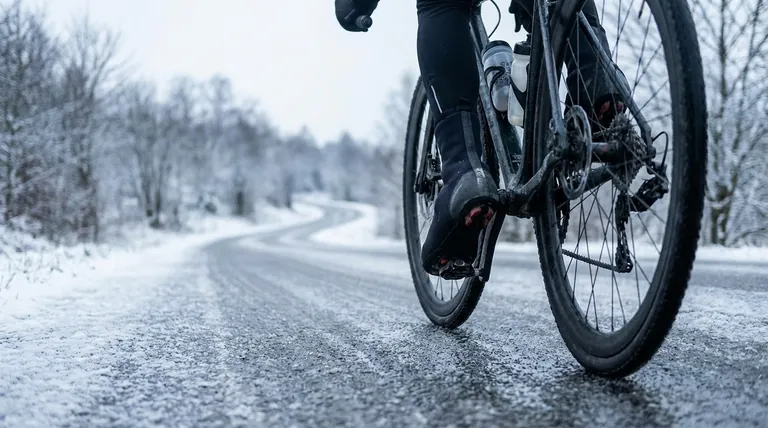
For winter cyclists, booties, or overshoes, are a strategic and cost-effective upgrade to your existing gear. They provide a thermal and weather-resistant barrier by fitting directly over your standard cycling shoes, offering significant protection from wind and water while allowing you to use the shoes you are already comfortable with.
The central takeaway is that cycling booties are not just an accessory, but a crucial piece of equipment that makes your existing shoes viable for cold and wet conditions. They represent the most accessible and versatile solution for extending your riding season without investing in dedicated winter boots.
The Core Advantages of Cycling Booties
The decision to use booties revolves around enhancing the gear you already own. They bridge the gap between your three-season cycling shoes and the demands of winter riding.
Leveraging Your Existing Gear
The primary benefit is that you can continue using your normal cycling shoes. This eliminates the need to buy a separate, expensive pair of winter-specific boots.
Using your current shoes also means you avoid potential bike fit adjustments. A new pair of bulky winter boots can alter your stack height and cleat position, but booties maintain your established setup.
Superior Weather Protection
Most quality booties are made from materials like neoprene, which provides an excellent thermal barrier. This material traps warmth and effectively blocks chilling wind from reaching your feet.
They are also highly effective at keeping water out. By covering the permeable upper and vents of your summer shoes, they prevent rain and road spray from soaking your feet, which is a major cause of heat loss.
Cost-Effectiveness and Versatility
Booties are a very affordable solution, typically costing between $50 and $90. This is a fraction of the cost of high-quality dedicated winter cycling boots.
They are designed to be versatile, with models available to accommodate both road and mountain bike cleat systems.
Practical Convenience
After a wet ride, booties dry out much faster than a waterlogged cycling shoe or a thick winter boot. This makes them easy to manage for cyclists who ride multiple days in a row.
Many modern designs also feature zippers or other closures that make them easier to get on and off, addressing a common complaint with older pull-on styles.
Understanding the Trade-offs and Limitations
While booties are an excellent solution for many, they are not without their compromises. Understanding these limitations is key to deciding if they are the right choice for your specific needs.
Durability Concerns
The materials used in booties can wear out over time, especially with frequent on-and-off use or walking on abrasive surfaces. The areas around the cleat and heel are particularly susceptible to wear.
Incomplete Coverage
Some bootie designs leave the underside of the shoe partially exposed. While this allows for cleat engagement, it can also become a point of entry for water, particularly in very wet conditions or when stepping in puddles.
The Fit Can Be Tricky
Choosing the correct size can be challenging, as it depends on the specific shape and bulk of your cycling shoe. A poor fit can be uncomfortable or leave gaps for cold air to enter.
Getting them on and off, even with zippers, can sometimes be a cumbersome process compared to simply putting on a dedicated boot.
Not a True Arctic Solution
While booties provide significant insulation, they are an addition to a non-insulated shoe. In deeply freezing temperatures, they may not offer the same level of total warmth as a fully integrated, insulated winter cycling boot.
Making the Right Choice for Your Ride
Your ideal foot-warming strategy depends entirely on your riding conditions and goals.
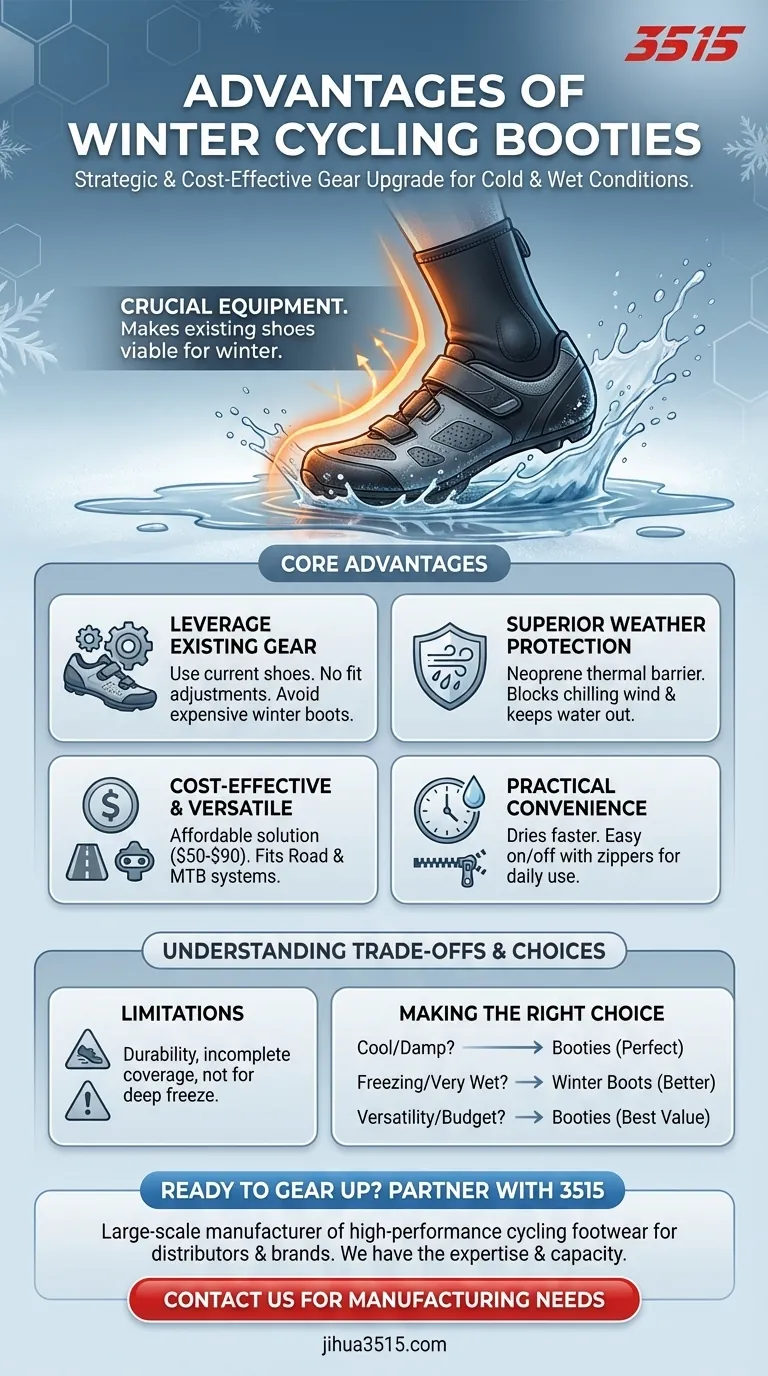
- If your primary focus is extending your season into cool, damp weather: Booties are the perfect, most cost-effective solution for you.
- If your primary focus is riding in consistently freezing or very wet conditions: You may want to invest in dedicated winter boots for their superior, integrated protection.
- If your primary focus is versatility and budget: Booties offer the best value by upgrading the shoes you already own for a wide range of conditions.
Ultimately, choosing the right equipment empowers you to ride comfortably and safely through the colder months.
Summary Table:
| Advantage | Benefit |
|---|---|
| Leverage Existing Gear | Use your current shoes, avoiding bike fit changes and extra cost. |
| Weather Protection | Blocks wind and water with materials like neoprene for superior warmth. |
| Cost-Effective | A fraction of the price of dedicated winter boots ($50-$90). |
| Versatile & Convenient | Fits road/MTB cleats; dries quickly and is easy to put on/take off. |
Ready to Gear Up for Winter Riding?
As a large-scale manufacturer, 3515 produces a comprehensive range of footwear for distributors, brand owners, and bulk clients. Our production capabilities encompass all types of shoes and boots, including high-performance cycling gear designed for durability and comfort in all conditions.
Let us help you provide the right equipment for your customers. Whether you need reliable cycling booties or other specialized footwear, we have the expertise and capacity to meet your demands.
Contact our team today to discuss your manufacturing needs and discover how we can add value to your product line.
Visual Guide
Related Products
- Premium Insulated Safety Boots and Shoes for Wholesale & Bulk Orders
- Durable Waterproof Rain Boots | Custom Manufacturer for Wholesale & Brands
- Factory Direct Wholesale Rain Boots Durable Waterproof & Fully Customizable
- Wholesale Waterproof Tactical Boots Custom Suede & High-Traction Soles
- Heavy-Duty Waterproof Nubuck Safety Boots Safety Shoes for Bulk Supply
People Also Ask
- What are the recommended insulation ratings for mild winter conditions? A Guide for Active & Stationary Workers
- How does insulation thickness correlate with temperature ranges? A Guide to Choosing the Right Warmth
- What insulation level is needed for severe cold and stationary work? 1200g or Higher is Essential
- What safety advantages do insulated boots offer beyond warmth? Dielectric Protection & Superior Grip
- How does fleece lining contribute to the warmth of insulated boots? Trapping Air for Superior Cold Protection