In short, a walking boot offers superior comfort, mobility, and adaptability compared to a traditional plaster cast. It allows for immediate weight-bearing, can be adjusted to accommodate swelling, and features a design that facilitates a more natural walking motion, all while providing the necessary stability for healing without increasing the risk of complications.
The core advantage of a walking boot is its ability to provide clinical-grade stability comparable to a cast, while offering the practical flexibility and comfort essential for a faster, more manageable recovery process.
Functional Superiority: How a Walking Boot Enhances Daily Life
The most immediate differences between a walking boot and a plaster cast are felt in day-to-day activities. The design of a modern walking boot directly addresses the primary drawbacks of a rigid, permanent cast.
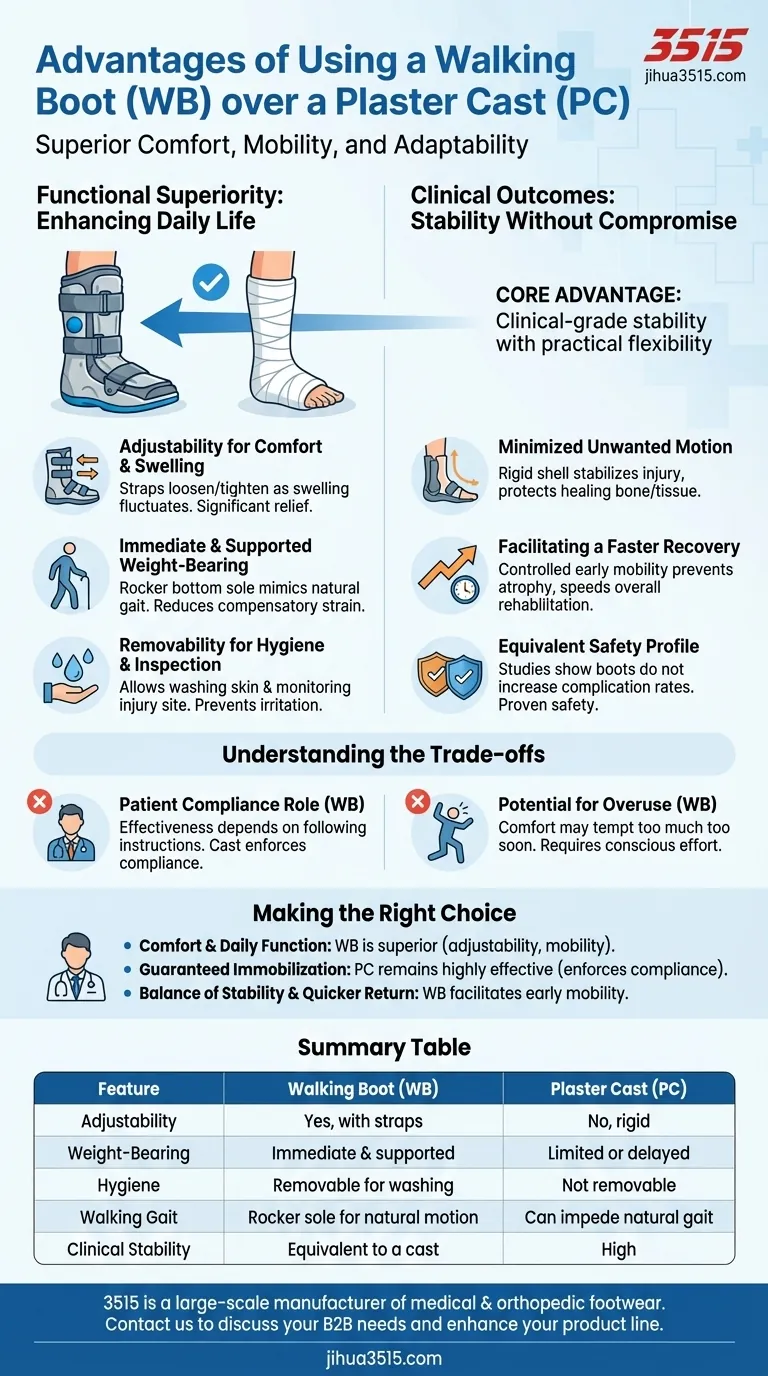
Adjustability for Comfort and Swelling
A key limitation of a plaster cast is its static nature. A walking boot, however, uses adjustable straps.
This allows you to loosen or tighten the boot as needed, providing significant relief as swelling fluctuates throughout the day, which is a common occurrence in the early stages of healing.
Immediate and Supported Weight-Bearing
Walking boots are engineered for mobility from the start. Many are designed for immediate weight-bearing as tolerated by the patient and prescribed by a doctor.
Their signature rocker bottom sole mimics a natural walking gait, minimizing joint motion in the foot and ankle while allowing for a smoother, more efficient stride. This helps reduce compensatory strain on your knees and hips.
Removability for Hygiene and Inspection
Unlike a cast, a walking boot can be temporarily removed. This is a crucial advantage for personal hygiene, allowing you to wash your skin and prevent the irritation and odor commonly associated with plaster casts.
It also permits visual inspection of the injury site, making it easier to monitor for any skin issues or changes without requiring a trip to the clinic.
Clinical Outcomes: Stability Without Compromise
While the comfort and convenience advantages are clear, the clinical effectiveness of a walking boot is equally important. Research and clinical use have shown it provides robust support for healing.
Minimized Unwanted Motion
The primary goal of immobilization is to prevent movement that could hinder healing. A properly fitted walking boot achieves this by encasing the ankle and foot in a rigid shell.
This design effectively stabilizes the injury and minimizes motion at the joint, ensuring the bone or soft tissue is protected during recovery.
Facilitating a Faster Recovery
By enabling controlled, early weight-bearing and a more natural walking pattern, walking boots can help prevent muscle atrophy and joint stiffness.
This functional approach often facilitates a faster overall recovery and an easier transition back to normal activities once the boot is no longer needed.
Equivalent Safety Profile
Studies comparing walking boots to plaster casts for many common injuries show that boots do not increase the rate of complications.
Patients can benefit from the enhanced comfort and function of a boot without compromising the stability or safety of the healing process.
Understanding the Trade-offs
Despite its many advantages, the choice of a walking boot is not without considerations. Objectivity requires acknowledging its potential downsides.
The Role of Patient Compliance
The greatest strength of a walking boot—its removability—is also its primary weakness. Its effectiveness is entirely dependent on the patient wearing it as instructed.
A plaster cast, by contrast, enforces compliance. For a boot to work, the patient must be disciplined enough not to remove it inappropriately or bear too much weight against medical advice.
The Potential for Overuse
Because a walking boot is more comfortable and allows for greater mobility, there can be a temptation to do too much, too soon.
This can potentially slow the healing process. It requires a conscious effort to follow activity restrictions prescribed by your healthcare provider.
Making the Right Choice for Your Recovery
The decision between a walking boot and a plaster cast should always be made with your doctor, based on the specific type and severity of your injury.
- If your primary focus is comfort and maintaining daily function: A walking boot is almost always superior due to its adjustability, mobility support, and hygienic benefits.
- If your primary focus is guaranteed, absolute immobilization: A plaster cast remains a highly effective option, especially in cases where patient compliance might be a concern.
- If your primary focus is a balance of stability and a quicker return to activity: The walking boot's design facilitates early mobility, which can help reduce muscle loss and speed up rehabilitation.
Ultimately, understanding these key differences empowers you to have a more informed discussion with your healthcare provider about the best path for your specific injury.
Summary Table:
| Feature | Walking Boot (WB) | Plaster Cast (PC) |
|---|---|---|
| Adjustability | Yes, with straps | No, rigid |
| Weight-Bearing | Immediate & supported | Limited or delayed |
| Hygiene | Removable for washing | Not removable |
| Walking Gait | Rocker sole for natural motion | Can impede natural gait |
| Clinical Stability | Equivalent to a cast | High |
As a large-scale manufacturer, 3515 produces a comprehensive range of medical and orthopedic footwear for distributors, brand owners, and bulk clients. Our production capabilities encompass all types of therapeutic boots designed for superior comfort and clinical effectiveness. If you are looking for reliable, high-quality walking boots to support your customers' recovery, contact our team today to discuss your needs and discover how we can enhance your product line.
Visual Guide
Related Products
- Durable Goodyear Welt Leather Work Boots for Wholesale & Private Label
- Durable Waterproof Rain Boots | Custom Manufacturer for Wholesale & Brands
- Heavy-Duty Waterproof Nubuck Safety Boots Safety Shoes for Bulk Supply
- Durable Moc-Toe Wedge Work Boots | Wholesale Manufacturing for Brands
- Wholesale Premium Waterproof Nubuck Safety Shoes Boots
People Also Ask
- What is the difference between full-grain and top-grain leather? Premium Material Guide for Boot Manufacturers
- What are the advantages of leather as an upper material for work boots? Unmatched Durability & Custom Comfort
- Why is it important to waterproof leather work boots? Protect Your Investment and Performance
- How should new leather work boots be broken in? A Guide to Comfort and Durability
- What are the advantages of leather uppers in work boots? Unmatched Durability & Protection