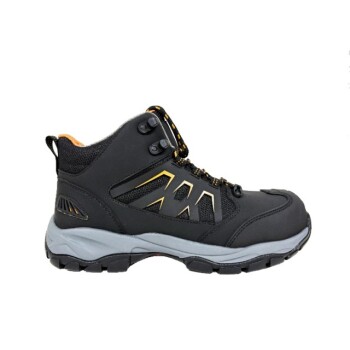
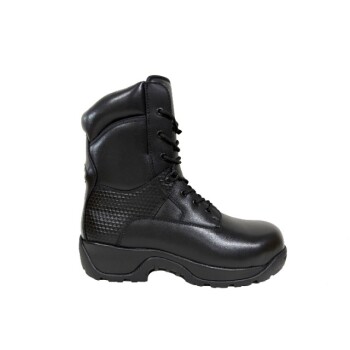
In short, the primary advantages of soft-toe boots are their superior comfort, lighter weight, and increased flexibility compared to safety-toe alternatives. They are an excellent choice for work environments where protection from heavy falling or rolling objects is not a primary safety requirement.
The core decision between soft-toe and safety-toe boots is not about which is "better," but about which is appropriate for your specific environment. Soft-toe boots prioritize all-day comfort and mobility in low-hazard settings.

The Core Benefits of Choosing a Soft-Toe Design
Soft-toe boots are designed for a wide range of professions where the risk of crushing foot injuries is minimal. Their construction focuses on support and wearability rather than impact resistance.
Enhanced Comfort and Flexibility
The absence of a rigid, heavy toe cap is the most significant factor in a soft-toe boot's comfort.
This design allows the boot to flex more naturally with your foot as you walk, crouch, or climb, reducing fatigue over a long day.
Lighter Overall Weight
Removing the steel, alloy, or composite toe cap significantly reduces the boot's weight.
Lighter footwear means less strain on your legs and back, making a noticeable difference in energy levels by the end of a shift.
Protection from Other Workplace Hazards
While they don't protect against impact, quality soft-toe boots still offer crucial safety features.
Many models provide excellent slip resistance on wet or oily surfaces, ankle support to prevent twists and sprains, and protection from minor scrapes and abrasions.
Understanding the Trade-offs: When Not to Choose Soft-Toe
Choosing the right boot means understanding its limitations. The trade-off for comfort and flexibility is a clear lack of impact protection.
No Protection from Impact or Compression
This is the most critical distinction. Soft-toe boots offer zero protection from falling objects, heavy rolling equipment, or compression hazards.
Jobs in construction, manufacturing, warehousing, or any environment with heavy machinery absolutely require a safety-toe boot that meets industry standards (like ASTM F2413).
Perceived as Less "Serious"
In some industries, wearing soft-toe boots—even if technically permissible—can be seen as less professional or less serious about safety protocols.
Always defer to your employer's specific Personal Protective Equipment (PPE) requirements before making a choice.
Who Is the Ideal User for Soft-Toe Boots?
Soft-toe boots excel in roles where mobility, long hours on your feet, and protection from environmental conditions are more important than protection from heavy impacts.
Professionals in Low-Impact Fields
Think of professions like landscaping, light maintenance, transportation, or certain agricultural work.
These roles demand durable, supportive footwear but rarely expose workers to the risk of severe toe injuries.
Electricians and Utility Workers
A key advantage of non-safety footwear is the lack of conductive materials.
Metal-free soft-toe boots are an ideal choice for electricians, as they reduce the risk of completing an electrical circuit and causing shock.
Anyone Valuing All-Day Wearability
For many, a work boot doubles as an everyday shoe. The stylish, comfortable, and lightweight nature of many soft-toe models makes them a practical choice for wear both on and off the job site.
Making the Right Choice for Your Goal
Your specific work environment and daily tasks should be the ultimate guide for your footwear selection.
- If your primary focus is all-day comfort and mobility in a low-hazard environment: A soft-toe boot is the superior choice for reducing fatigue and increasing flexibility.
- If your primary focus is safety in an environment with falling objects or heavy machinery: You must choose a certified safety-toe boot (steel, composite, or alloy) to prevent serious injury.
- If your primary focus is working around live electrical currents: A non-metallic soft-toe boot is the safest option to minimize conductivity risks.
Ultimately, selecting the right boot is about accurately matching the footwear's features to your daily risks.
Summary Table:
| Advantage | Key Benefit | Ideal For |
|---|---|---|
| Enhanced Comfort | Flexible design reduces foot fatigue | Long shifts, all-day wearability |
| Lighter Weight | Less strain on legs and back | Professionals valuing mobility |
| Electrical Safety | No conductive metal toe cap | Electricians, utility workers |
| Slip & Abrasion Resistance | Protects against environmental hazards | Landscaping, light maintenance |
Find Your Perfect Fit with 3515
As a large-scale manufacturer, 3515 produces a comprehensive range of soft-toe and safety footwear for distributors, brand owners, and bulk clients. Whether your team needs lightweight boots for comfort or certified safety-toe boots for protection, our production capabilities encompass all types of shoes and boots to meet your exact specifications.
Let us help you equip your workforce with the right footwear for their safety and comfort.
Contact our team today for a quote to discuss your needs and discover how we can add value to your supply chain.
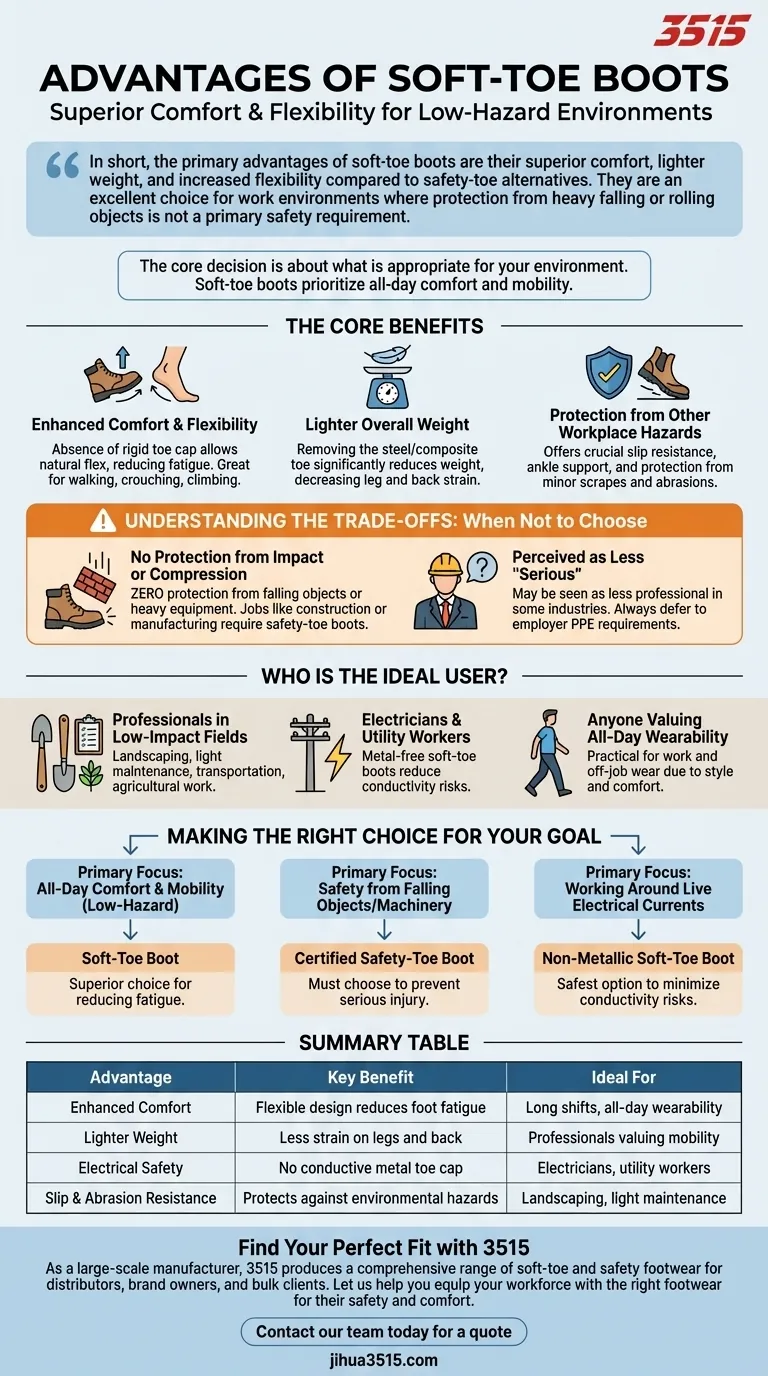
Visual Guide
Related Products
- Durable Leather Moc Toe Work Boots for Wholesale & Custom Manufacturing
- Durable Leather Safety Boots for Wholesale & Custom OEM Manufacturing
- Wholesale Durable Safety Boots Manufacturer Customizable Steel Toe Work Boots
- Durable Goodyear Welt Leather Work Boots for Wholesale & Private Label
- Wholesale Customizable Safety Boots Durable & Protective Footwear Manufacturing
People Also Ask
- What are moc toe work boots designed for? Superior Comfort and Mobility for Tradespeople
- What are the key features to look for when purchasing moc toe boots? A Guide to Durability & Fit
- How did moc toe boots originate? A Legacy of Workwear Durability and Style
- What clothing items complement the Outdoorsman/Heritage Look with moc toe boots? Build a Timeless, Rugged Wardrobe
- What types of outfits can moc toe boots be worn with? Versatile Style Guide