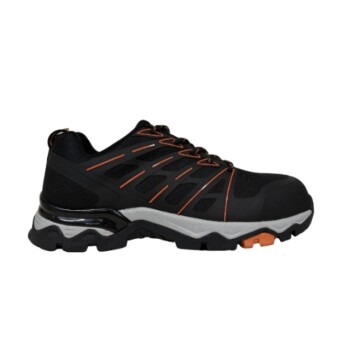
Placing thermal actuators on the dorsal area of the foot optimizes both signal perception and user comfort. By positioning hardware on the top of the foot rather than the sole, you bypass the sensory interference caused by body weight while preventing the physical discomfort of stepping on rigid components.
Effective smart footwear design decouples communication from load-bearing mechanics. Dorsal placement leverages the skin’s natural sensitivity and lack of pressure to create a clear, unobtrusive communication channel.
Enhancing Signal Clarity
Avoiding Sensory Masking
The sole of the foot endures significant mechanical stress during standing and walking. This high pressure creates sensory input that can effectively mask thermal signals.
By moving the actuator to the dorsal area, you eliminate this interference. The top of the foot experiences minimal pressure, ensuring that thermal feedback remains distinct and is not "drowned out" by the physical sensation of walking.
Leveraging High Sensitivity
The dorsal region is biologically distinct from the sole regarding sensitivity. It is highly responsive to temperature variations.
Because of this sensitivity, actuators do not need to generate extreme temperature differences to be noticed. A moderate thermal change on the top of the foot is often perceived more clearly than a significant change on the callous, pressure-laden sole.
Prioritizing Ergonomics and Hardware Integration
Eliminating Mechanical Discomfort
Thermal actuators are hardware components with physical volume and rigidity. Placing them in the sole creates a direct conflict with the user's anatomy.
Positioning them on the dorsal area prevents the hardware from protruding into the footbed. This ensures the user does not feel like they are stepping on a foreign object, maintaining the comfort required for long-term wear.
Decoupling from Body Weight
The performance of a sole-mounted actuator changes depending on whether the user is sitting, standing, or running.
Dorsal placement ensures consistency. Because the top of the foot is not subject to body weight pressure, the interface between the actuator and the skin remains stable regardless of the user's stance or activity level.
Understanding the Trade-offs of Sole Placement
The Cost of Overcoming Pressure
While the sole seems like a logical contact point, it introduces significant engineering challenges. To overcome the "masking" effect of body weight, sole-mounted actuators often require higher power to generate sharper temperature spikes.
The Comfort Compromise
Designers attempting to use the sole must heavily pad or recess the actuators to avoid pain. This adds bulk to the shoe and complicates the manufacturing process, often without fully resolving the issue of mechanical intrusion into the footbed.
Making the Right Choice for Your Design
When integrating haptic or thermal feedback into safety footwear, placement dictates efficacy.
- If your primary focus is signal reliability: Choose dorsal placement to ensure alerts are perceived immediately, unaffected by the desensitizing effects of walking pressure.
- If your primary focus is long-term wearability: Locate actuators on the top of the foot to keep the sole interface smooth and free of rigid hardware that causes fatigue.
Aligning hardware placement with human biomechanics ensures your device protects the user without becoming a source of distraction or discomfort.
Summary Table:
| Feature | Dorsal (Top) Placement | Sole (Bottom) Placement |
|---|---|---|
| Signal Clarity | High; no interference from body weight | Low; masked by walking pressure |
| User Comfort | Excellent; avoids stepping on hardware | Poor; rigid components cause fatigue |
| Thermal Sensitivity | High; skin is responsive to subtle changes | Moderate; calloused skin requires high power |
| Consistency | Stable regardless of activity level | Varies based on weight distribution |
| Manufacturing | Easier integration into upper layers | Complex padding needed to recess hardware |
Partner with 3515 for Advanced Footwear Solutions
As a large-scale manufacturer serving distributors and brand owners, 3515 offers comprehensive production capabilities for all footwear types. Whether you are developing cutting-edge smart safety shoes or traditional work boots, our expertise in integrating hardware with ergonomics ensures a superior product.
Our flagship Safety Shoes series is anchored by an extensive portfolio including:
- Tactical & Work Boots for rugged environments.
- Outdoor & Training Shoes for performance and durability.
- Sneakers & Dress Shoes for diverse bulk requirements.
Contact us today to leverage our manufacturing excellence and bring your innovative footwear designs to life!
References
- Bettina Eska, Florian Müller. ThermoFeet: Assessing On-Foot Thermal Stimuli for Directional Cues. DOI: 10.1145/3626705.3627974
This article is also based on technical information from 3515 Knowledge Base .
Related Products
- Premium Safety Shoes with Rotating Buckle Safety Sneakers
- Premium Wholesale Tactical Style Safety Shoes Boots with Quick Lacing
- Premium KPU Injection Athletic Style Safety Shoes
- Advanced KPU Athletic Safety Shoe with Steel Toe Cap Anti-Slip Rotary Lacing System
- Premium Lightweight Safety Shoes for Wholesale & Bulk Orders
People Also Ask
- What role do specialized safety shoes play in preventing falls? Engineering Stability in Industrial Environments
- How do I choose the best safety shoes? Match Certified Features to Your Hazards
- How do complex outsole tread designs in safety shoes work with coated floors? Master Slip Resistance Engineering
- How do the 3R principles influence green footwear design? Master Sustainable Safety Shoe Manufacturing
- How do gait analysis algorithms ensure accuracy in footwear? Master Step Length Precision for Boots & Sneakers