
In the world of quality footwear, the Goodyear welt is considered one of the finest construction methods available. Its advantages center on exceptional durability, superior water resistance, and unparalleled repairability, which allows the shoe or boot to last for decades. This is achieved by stitching the upper to a "welt"—a strip of leather—which is then stitched to the sole, creating a strong and replaceable foundation.
The core advantage of a Goodyear welt is not just its durability, but its capacity for renewal. It transforms a shoe from a disposable item into a long-term investment that can be rebuilt multiple times and molds perfectly to your foot over time.
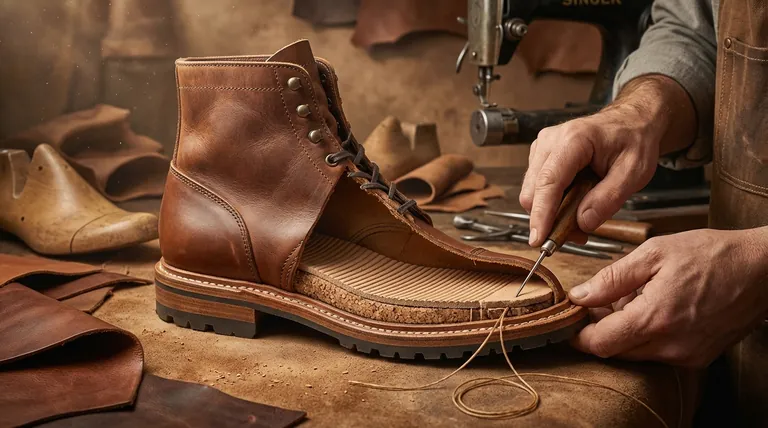
The Mechanics: What Makes a Goodyear Welt Different?
To understand its benefits, you must first understand its structure. Unlike cheaper methods where the sole is simply glued on, the Goodyear welt is a more complex, mechanical process.
The Double-Stitch System
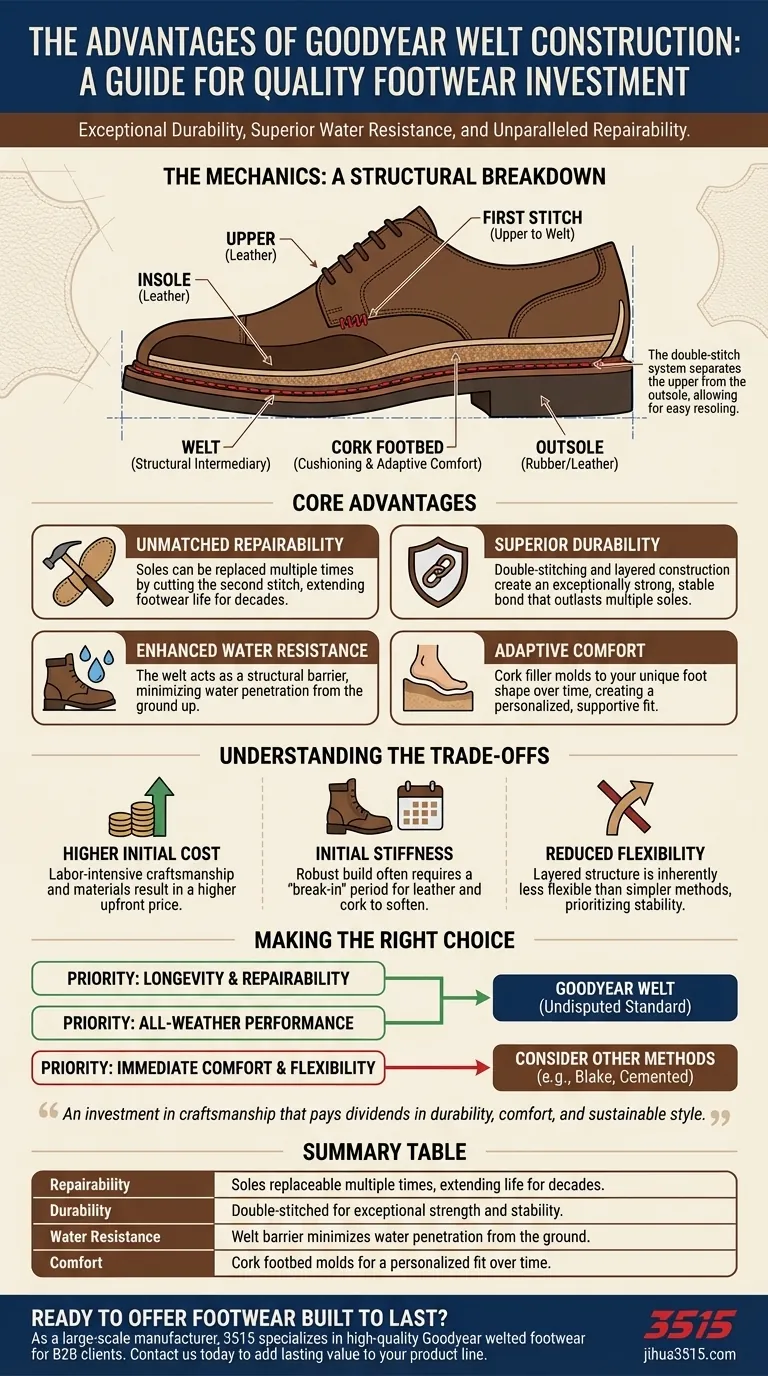
At its heart, the method uses two independent stitches. The first stitch attaches the shoe's upper and insole to the welt. A second, separate stitch attaches the welt to the outsole. This separation is the key to its repairability.
The Role of the Welt
The welt itself is a strip of material, typically leather, that runs along the perimeter of the outsole. It acts as a structural intermediary, creating a robust buffer between the upper and the sole you walk on.
The Cork Footbed
This construction method creates a cavity between the insole and the outsole. This space is filled with a layer of granulated cork, which is critical for providing cushioning and adaptive comfort.
The Core Advantages Explained
The unique construction of a Goodyear welt directly translates into tangible, long-term benefits for the wearer.
Unmatched Repairability
This is the primary advantage. A cobbler can easily replace a worn-out sole by simply cutting the second stitch (the one connecting the welt to the outsole) without ever disturbing the shoe's upper. This allows for repeated resoling, drastically extending the footwear's lifespan.
Superior Durability & Longevity
The double-stitching and layered construction create an exceptionally strong and stable bond. High-quality leather uppers can easily outlast dozens of soles, and this construction ensures the shoe can endure that entire lifecycle.
Enhanced Water Resistance
The welt creates a structural barrier that minimizes water penetration from the ground up. Because the stitching doesn't run directly from the outside into the shoe's interior, it's significantly more difficult for water to seep in.
Adaptive Comfort
The cork filler is the key to long-term comfort. Over time, the warmth and pressure from your foot cause the cork to compress and mold to your unique foot shape, creating a personalized and highly supportive insole.
Understanding the Trade-offs
While highly regarded, this construction method is not without its considerations. Objectivity requires acknowledging them.
Higher Initial Cost
The Goodyear welting process is labor-intensive and requires skilled craftsmanship and more materials. This complexity naturally results in a higher upfront purchase price compared to cemented or Blake-stitched shoes.
Initial Stiffness
The multiple layers and robust build can make the shoes feel stiff right out of the box. They almost always require a "break-in" period for the leather and cork to soften and conform to your foot.
Reduced Flexibility
Compared to simpler constructions, a Goodyear welt is inherently less flexible due to its layered structure. While this provides excellent stability, it may not be ideal for users who prioritize a lightweight, sneaker-like feel.
Making the Right Choice for Your Goal
Ultimately, deciding if a Goodyear welt is right for you depends on your priorities.
- If your primary focus is maximum longevity and repairability: Goodyear welt is the undisputed standard, allowing your footwear to last for decades with proper care.
- If your primary focus is all-weather performance and durability: The superior water resistance and robust build make it an excellent choice for boots and shoes worn in demanding conditions.
- If your primary focus is immediate comfort and flexibility: Be prepared for a break-in period, as other construction methods may feel more comfortable straight out of the box.
Choosing a Goodyear welt is an investment in craftsmanship that pays dividends in durability, comfort, and sustainable style.
Summary Table:
| Advantage | Key Benefit |
|---|---|
| Repairability | Soles can be replaced multiple times, extending the shoe's life for decades. |
| Durability | Double-stitched construction provides exceptional strength and stability. |
| Water Resistance | Welt acts as a barrier, minimizing water penetration from the ground up. |
| Comfort | Cork footbed molds to your foot over time for a personalized fit. |
Ready to offer your customers footwear built to last a lifetime?
As a large-scale manufacturer, 3515 specializes in producing high-quality Goodyear welted footwear for distributors, brand owners, and bulk clients. Our production capabilities encompass all types of durable shoes and boots designed for superior longevity and customer satisfaction.
Contact us today to discuss how our manufacturing expertise can add lasting value to your product line.
Visual Guide
Related Products
- Durable Goodyear Welt Leather Work Boots for Wholesale & Private Label
- Wholesale Durable Leather Work Boots | 8-Inch Goodyear Welt Manufacturer
- Wholesale Breathable Training Shoes Custom Athletic Footwear Manufacturer
- Wholesale Durable & Breathable Training Shoes for Custom Brands
- Lightweight Breathable Training Shoes for Wholesale & Custom OEM Manufacturing
People Also Ask
- What is the difference between full-grain and top-grain leather? Premium Material Guide for Boot Manufacturers
- What are the advantages of leather as an upper material for work boots? Unmatched Durability & Custom Comfort
- Why is it important to waterproof leather work boots? Protect Your Investment and Performance
- How should new leather work boots be broken in? A Guide to Comfort and Durability
- What are the advantages of leather uppers in work boots? Unmatched Durability & Protection



















