
To sleep comfortably with a walking boot, the most effective strategies involve adjusting your position and the boot itself. Sleep on your back with your foot elevated on pillows, loosen the boot's straps slightly to relieve pressure, and consider keeping your booted leg outside of the covers to prevent overheating.
The core challenge of sleeping with a walking boot is managing pressure, position, and temperature. By making small, intentional adjustments to each of these factors, you can significantly improve your comfort and sleep quality during recovery.
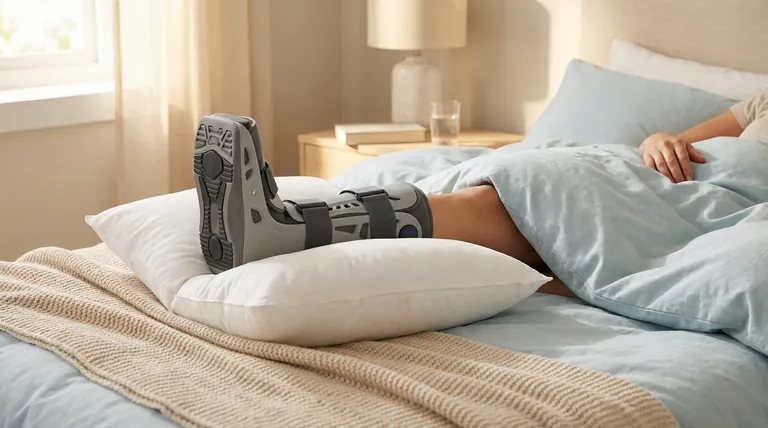
Optimizing Your Sleep Environment
The key to a restful night is preparing your space and your body for the constraints of the boot. Simple changes to your sleeping setup can make a dramatic difference.
The Ideal Sleeping Position
Sleeping on your back is the most stable and recommended position when wearing a walking boot. This posture minimizes the chances of twisting your injured leg or putting awkward pressure on it during the night.
The Power of Elevation
Using one or two pillows to elevate your booted foot is critical. This position should raise your foot slightly above the level of your heart, which helps reduce swelling, decrease throbbing, and improve circulation throughout the night.
Managing Temperature and Space
A walking boot can be bulky and hot. To combat this, keep your booted leg outside of your sheets and blankets. This provides better airflow, prevents you from feeling trapped, and helps regulate your body temperature for more continuous sleep.
Managing Boot-Related Discomfort
The boot itself is the primary source of discomfort. Adjusting how you wear it at night, with your doctor's approval, can provide immediate relief.
Adjust the Straps for Comfort
The straps on your boot don't need to be as tight at night as they are during the day. Loosen them slightly before bed to reduce compression and improve blood flow, but ensure the boot is still snug enough to provide necessary support.
Consider a Pre-Sleep Break
If your doctor permits it, you can take the boot off for about an hour before going to bed. This allows your skin to breathe and gives you a brief respite. Be sure to put it back on securely before you fall asleep.
Plan for Pain Relief
If you are experiencing pain, especially at the end of the day, plan your medication accordingly. Taking prescribed or over-the-counter pain relievers about 30 to 60 minutes before bedtime can help you fall asleep more easily and stay asleep longer.
Common Pitfalls to Avoid
While seeking comfort is important, you must not compromise the boot's primary function: to immobilize and protect your injury.
The Risk of Loosening Too Much
While you should loosen the straps, do not make them so loose that your foot can move freely inside the boot. This defeats the purpose of wearing it and can put your recovery at risk.
The Temptation to Remove It Completely
Unless your medical provider has explicitly given you permission, never remove the boot for the entire night. Unprotected movements during sleep could easily re-injure the area and set back your healing process significantly.
A Checklist for a Better Night's Sleep
Use these points to tailor your approach based on your biggest challenge.
- If your primary focus is reducing swelling and throbbing: Sleep on your back and consistently elevate your booted foot on pillows.
- If your primary focus is relieving pressure and numbness: Loosen the straps on the boot just enough to feel relief without sacrificing support.
- If your primary focus is avoiding overheating and feeling confined: Keep your booted leg completely outside of your blankets and sheets.
- If your primary focus is managing persistent pain: Time your pain medication to be fully effective as you are getting into bed.
Ultimately, adapting your sleep routine is a crucial part of a successful recovery.
Summary Table:
| Challenge | Key Tip |
|---|---|
| Swelling/Throbbing | Sleep on back with foot elevated above heart level. |
| Pressure/Numbness | Slightly loosen boot straps for comfort (with doctor's approval). |
| Overheating/Confinement | Keep booted leg outside of sheets and blankets. |
| Persistent Pain | Time pain medication to be effective at bedtime. |
Struggling to get a good night's sleep during your recovery? The right support makes all the difference. As a large-scale manufacturer, 3515 produces a comprehensive range of comfortable and supportive footwear for distributors, brand owners, and bulk clients. Our production capabilities encompass all types of shoes and boots designed for recovery and wellness. Let us help you or your customers find the perfect fit for a smoother healing journey.
Contact our experts today to discuss your footwear needs!
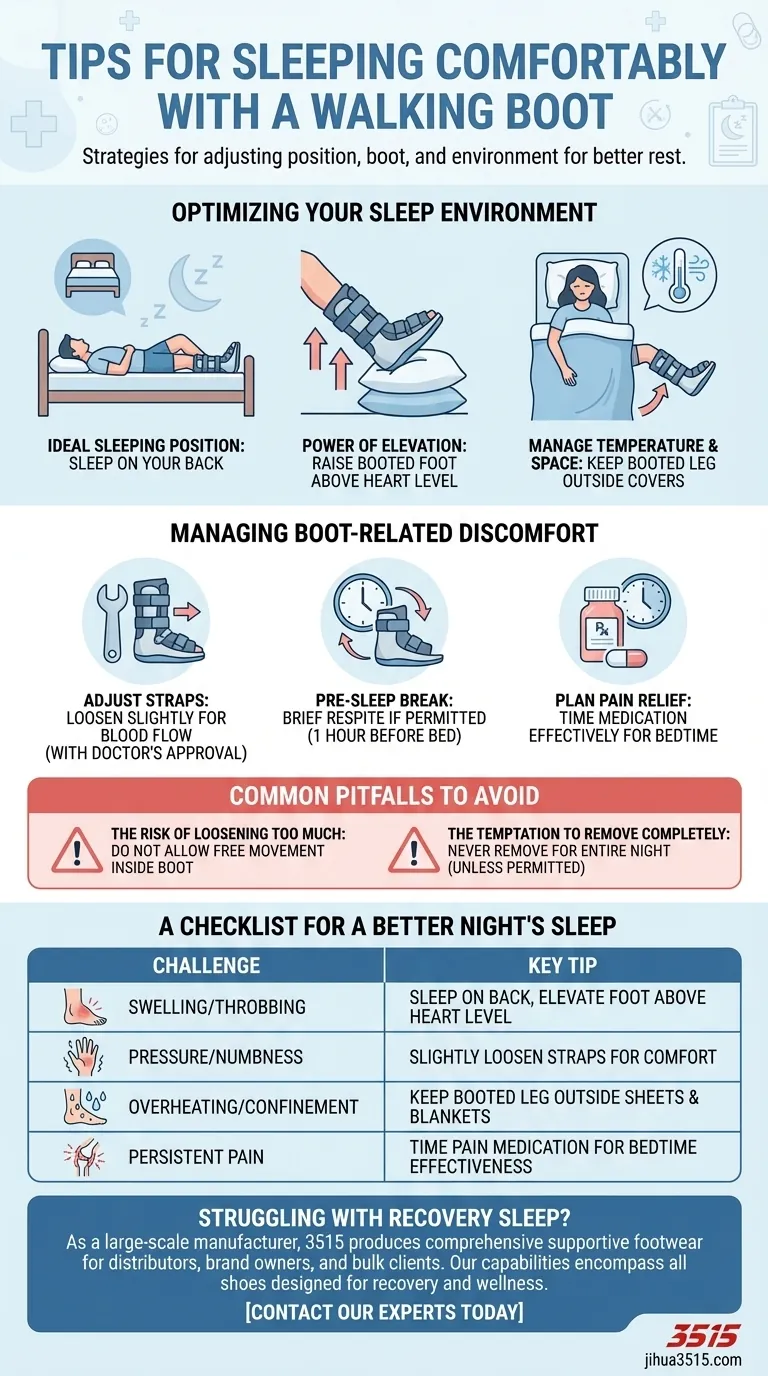
Visual Guide
Related Products
- Wholesale Durable Camouflage Canvas Shoes with High-Traction Cleated Rubber Sole
- Durable Rubber Sole Outdoor Shoes Wholesale & Custom Manufacturing
- Durable Goodyear Welt Leather Work Boots for Wholesale & Private Label
- Wholesale High-Traction Camo Boots - Custom Manufacturer for Brands
- Heavy-Duty Waterproof Nubuck Safety Boots Safety Shoes for Bulk Supply
People Also Ask
- Why is the selection of high-strength fabric materials necessary in the production of canvas shoes and training shoes?
- What are the properties of canvas as a shoe material? A Guide to Lightweight Comfort & Style
- Can canvas shoes be worn in rainy conditions? The Truth About Water Resistance
- What are some examples of vulcanized shoes? Discover the Flexibility and Board Feel of Classic Sneakers
- What are the characteristics of canvas as a shoe material? A Guide to Lightweight, Breathable Footwear



















