
To prolong the life of your riding boots, the most critical steps are to clean them after each use, condition the leather regularly to prevent cracking, and always store them in a cool, dry place using boot trees to maintain their structural shape. This consistent routine protects the materials from sweat, dirt, and environmental damage, which are the primary causes of premature wear.
The key to extending your riding boots' lifespan isn't a single action, but a disciplined habit. It's about proactively protecting the materials from their two biggest enemies: moisture degradation from the inside and environmental stress from the outside.
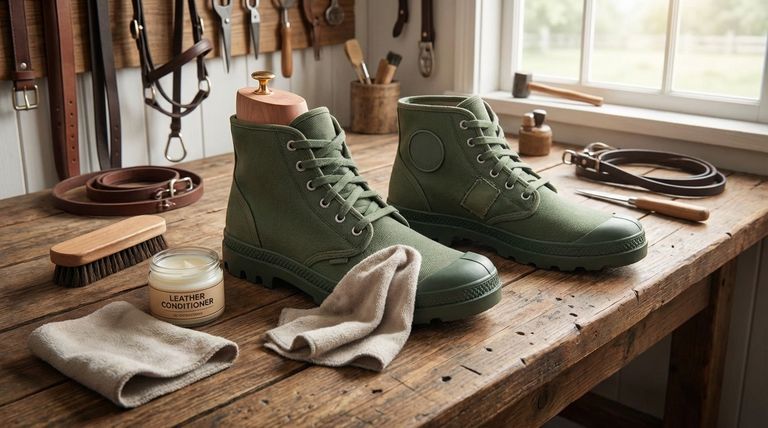
The Foundation: Cleaning and Conditioning
Proper cleaning and conditioning are not just about appearance; they are fundamental to preserving the integrity of the boot's materials.
Clean After Every Ride
Dirt, mud, and sweat are abrasive and damaging. After every use, wipe your boots down with a damp cloth to remove surface grime. This simple step prevents buildup that can break down leather fibers and stitching over time.
Use a Specialized Leather Cleaner
For a deeper clean, especially on leather boots, use a cleaner specifically designed for the material. Harsh soaps or all-purpose cleaners can strip the leather's natural oils, leading to dryness and brittleness.
The Critical Role of Conditioning
Think of leather conditioner as moisturizer for your boots. It replenishes the oils in the leather, keeping it supple and preventing the painful cracking that can permanently damage the boot. Apply conditioner according to the product's instructions, typically after a deep clean.
Caring for Synthetic Boots
While synthetic boots don't require conditioning, they still benefit from regular cleaning. A simple wipe-down with a damp cloth is usually sufficient to keep them in good condition and prevent material breakdown from dirt and sweat.
Proper Storage: Preventing Structural Damage
How you store your boots between rides has a massive impact on their shape and durability.
Find a Cool, Dry Environment
Store your boots in a place shielded from direct sunlight and extreme temperatures. Sunlight can fade and dry out leather, while heat can warp synthetic materials and weaken adhesives used in the sole.
Maintaining Shape is Non-Negotiable
When not in use, your boots need internal support. Use boot trees or stuff them with rolled-up newspaper. This is especially critical for tall boots to prevent the ankle from collapsing and creasing, which creates a permanent weak point.
Preparing for Long-Term Storage
If you won't be using your boots for an extended period, give them a thorough cleaning and conditioning. Once fully dry, place them in a breathable dust bag or box with boot trees inside to protect them from dust and pests.
Common Pitfalls to Avoid
Even with good intentions, common mistakes can shorten your boots' lifespan.
Using the Wrong Cleaning Products
Never use household detergents, solvents, or harsh chemicals on your boots. These products are too aggressive and will strip essential oils from leather, causing irreversible damage. Stick to products made specifically for footwear.
Ignoring Minor Repairs
A fraying lace, a sticking zipper, or a slightly separated sole may seem minor, but they are warnings. Addressing these small issues immediately with a professional cobbler prevents them from becoming major, unrepairable failures.
Over-Conditioning the Leather
More is not always better. Applying too much conditioner can oversaturate the leather, making it too soft, clogging its pores, and potentially compromising its structural support. Follow the product's recommended frequency.
Making the Right Choice for Your Goal
Your maintenance routine can be tailored to your primary objective.
- If your primary focus is daily performance: Prioritize wiping boots down after every ride and always using boot trees to maintain their shape and support.
- If your primary focus is long-term preservation: Emphasize a consistent conditioning schedule and storing them correctly in a climate-controlled, dark location.
- If your primary focus is maximizing value: Conduct regular inspections of soles, seams, and zippers to catch minor issues before they require a costly replacement.
A few minutes of consistent care is the best investment you can make in the safety, comfort, and longevity of your riding boots.
Summary Table:
| Maintenance Focus | Key Action | Benefit |
|---|---|---|
| Daily Cleaning | Wipe down after every ride | Removes abrasive dirt & sweat |
| Leather Health | Condition regularly | Prevents cracking & keeps leather supple |
| Structural Integrity | Use boot trees for storage | Maintains shape & prevents creasing |
| Proactive Care | Address minor repairs immediately | Prevents small issues from becoming major failures |
As a large-scale manufacturer, 3515 produces a comprehensive range of durable footwear for distributors, brand owners, and bulk clients. Our production capabilities encompass all types of riding boots, built with quality materials designed to last. Ensure your customers get the best by partnering with a manufacturer that understands longevity from the ground up. Contact our team today to discuss your riding boot needs and discover how we can add value to your supply chain.
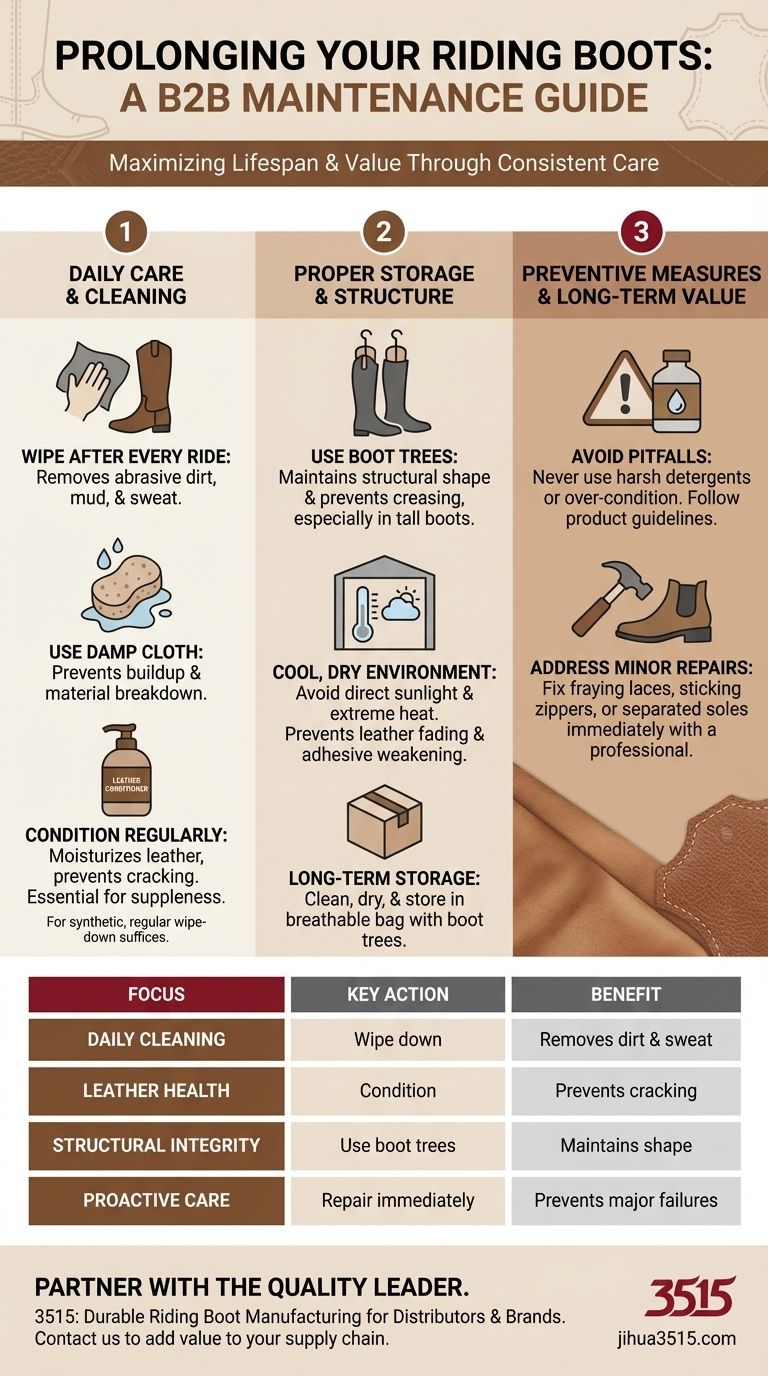
Visual Guide
Related Products
- Heavy-Duty Waterproof Nubuck Safety Boots Safety Shoes for Bulk Supply
- Premium Wholesale Tactical Style Safety Shoes Boots with Quick Lacing
- Wholesale High-Traction Camo Boots - Custom Manufacturer for Brands
- Durable Goodyear Welt Leather Work Boots for Wholesale & Private Label
- Wholesale Tactical Boots High-Traction & Reflective for Bulk & Brand Orders
People Also Ask
- What primary protective functions do professional safety boots provide in urban solid waste recovery and waste picking processes? Discover Dual-Layer Protection.
- How do safety boots reduce cutting hazards? Essential Protection for Your Workforce
- Which organizations develop safety standards for work boots? Ensure Compliance & Worker Safety
- What are the common types of safety boots and their primary uses? A Guide to Industrial Footwear
- Why is ankle and arch support important in safety footwear? Prevent Injury & Fatigue



















