While many brands offer them, classic examples of desert boots with leather uppers include the iconic Clarks Desert Boot in "Beeswax" leather and various models from British and Italian makers that use smooth, polished, or oiled leathers. These options shift the boot's character from purely casual to something more versatile and durable.
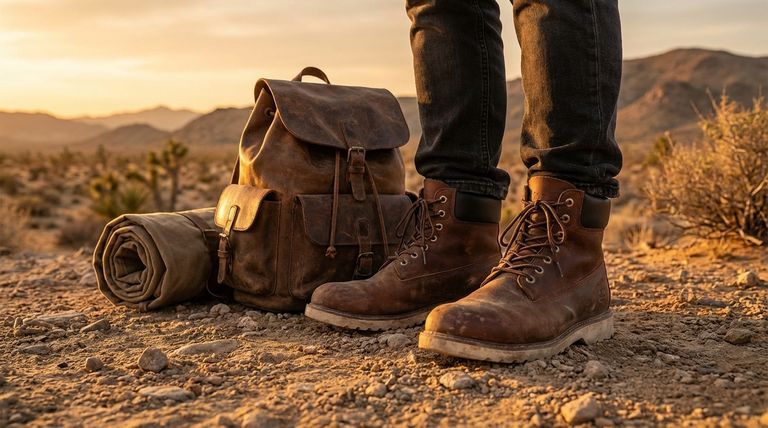
The choice to opt for a leather desert boot over the traditional suede is a deliberate decision about durability, formality, and maintenance. The type of leather you choose—from rugged oiled leather to polished calfskin—fundamentally changes the boot's purpose and style.
What Defines a Leather Desert Boot?
A desert boot's identity comes from its simple construction, not just its material. When leather is used, it enhances certain characteristics while maintaining the boot's core DNA.
The Unmistakable Foundation
At its heart, a desert boot is defined by two key features: a simple upper (typically made of just two or three pieces of material) and a natural crepe rubber sole. This minimalist design is what makes it lightweight and comfortable.
The Role of the Leather Upper
Swapping the traditional suede for a leather upper introduces new properties. Leather offers increased durability, water resistance, and a different aesthetic that can range from rugged to refined. It transforms the boot into a more robust piece of footwear.
The Spectrum of Leather Finishes
Not all leather is the same. The finish dictates the boot's appearance, feel, and ideal use case, allowing you to tailor it to your specific needs.
Smooth or Polished Leather
This finish creates a cleaner, more refined look. Boots made with smooth or polished calfskin can easily be dressed up, pairing well with chinos or even smart trousers, making them perfect for a business-casual or "Urban Explorer" aesthetic.
Oiled or "Beeswax" Leather
This is a more rugged and utilitarian option. The leather is treated with oils and waxes, giving it a rich, slightly matte appearance and significant weather resistance. These boots develop a unique patina over time and are ideal for tough, everyday wear.
Nubuck and Textured Leathers
Nubuck is a top-grain leather that has been sanded to create a slight nap, similar to suede but more durable. It offers a middle ground, providing a soft texture with greater resilience than traditional suede.
Understanding the Trade-offs: Leather vs. Suede
Choosing between leather and suede involves balancing durability, formality, and comfort. Each material has distinct advantages.
Durability and Weather Resistance
Leather is the clear winner here. A smooth or oiled leather upper can handle scuffs, scrapes, and light rain far better than delicate suede, which is prone to staining and water damage.
Formality and Versatility
A polished leather desert boot has a higher formality ceiling. It can comfortably fit into a smart-casual wardrobe, whereas suede almost always reads as strictly casual.
Break-in Period and Comfort
Suede is typically softer and more flexible out of the box, requiring almost no break-in period. Leather, especially thicker varieties, can be stiffer initially and needs time to soften and mold to your foot.
Maintenance and Care
The care routines are different. Suede requires regular brushing and protective sprays to repel stains. Leather needs occasional cleaning and conditioning with cream or polish to keep it from drying out and cracking.
Choosing the Right Leather for Your Needs
Your primary goal should dictate your choice of material.
- If your primary focus is a smarter, business-casual look: Choose a desert boot in a smooth or polished leather to pair easily with chinos and blazers.
- If your primary focus is rugged, all-weather durability: Opt for an oiled or beeswax leather that will resist the elements and develop character with wear.
- If your primary focus is maximum out-of-the-box comfort for casual wear: The original suede remains an excellent choice, but a soft, unlined leather is a close and more durable alternative.
Ultimately, selecting a leather desert boot allows you to customize a classic silhouette to perfectly match your lifestyle and purpose.
Summary Table:
| Leather Type | Key Characteristics | Best For |
|---|---|---|
| Smooth/Polished | Clean, refined look | Business-casual, smarter outfits |
| Oiled/Beeswax | Rugged, weather-resistant, develops patina | All-weather, everyday wear |
| Nubuck/Textured | Soft texture, more durable than suede | Casual wear with greater resilience |
Ready to find your perfect leather desert boot?
As a large-scale manufacturer, 3515 produces a comprehensive range of high-quality footwear for distributors, brand owners, and bulk clients. Our production capabilities encompass all types of shoes and boots, including durable leather desert boots tailored to your market's needs.
Contact our expert team today to discuss your requirements and discover how we can deliver the style, quality, and volume you need.
Visual Guide

Related Products
- Durable Leather High-Ankle Tactical Boots for Wholesale & Custom Manufacturing
- Wholesale Classic Leather Lace-Up Ankle Boots for Brand Manufacturing
- Wholesale Lightweight Tactical Boots Custom Manufacturer for Desert & Combat Use
- Durable Leather Tactical Boots Wholesale & Custom Manufacturing for Brands
- Durable Leather Work Boots Wholesale Manufacturer & Custom Factory
People Also Ask
- How do military uniforms and tactical boots impact the prediction of thermal risk? Essential Safety Insights
- How does the material of tactical boots affect their performance? Choose the Right Material for Your Mission
- Why is sequential analysis utilized to evaluate tactical boots? Master Dynamic Boot Development and Ergonomic Performance
- How do tactical boots differ from regular boots? Performance, Durability & Design Explained
- What are the primary differences between tactical boots and combat boots? Choose the Right Boot for Your Mission