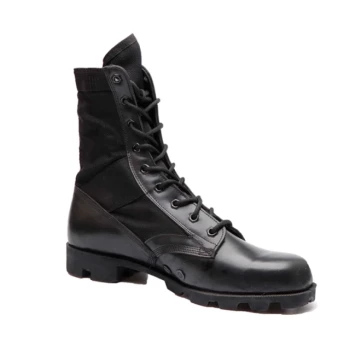
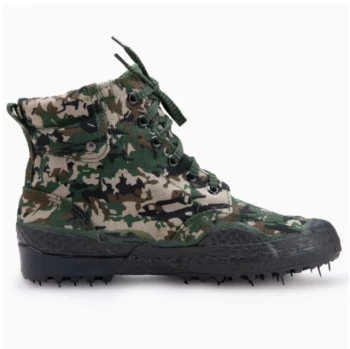
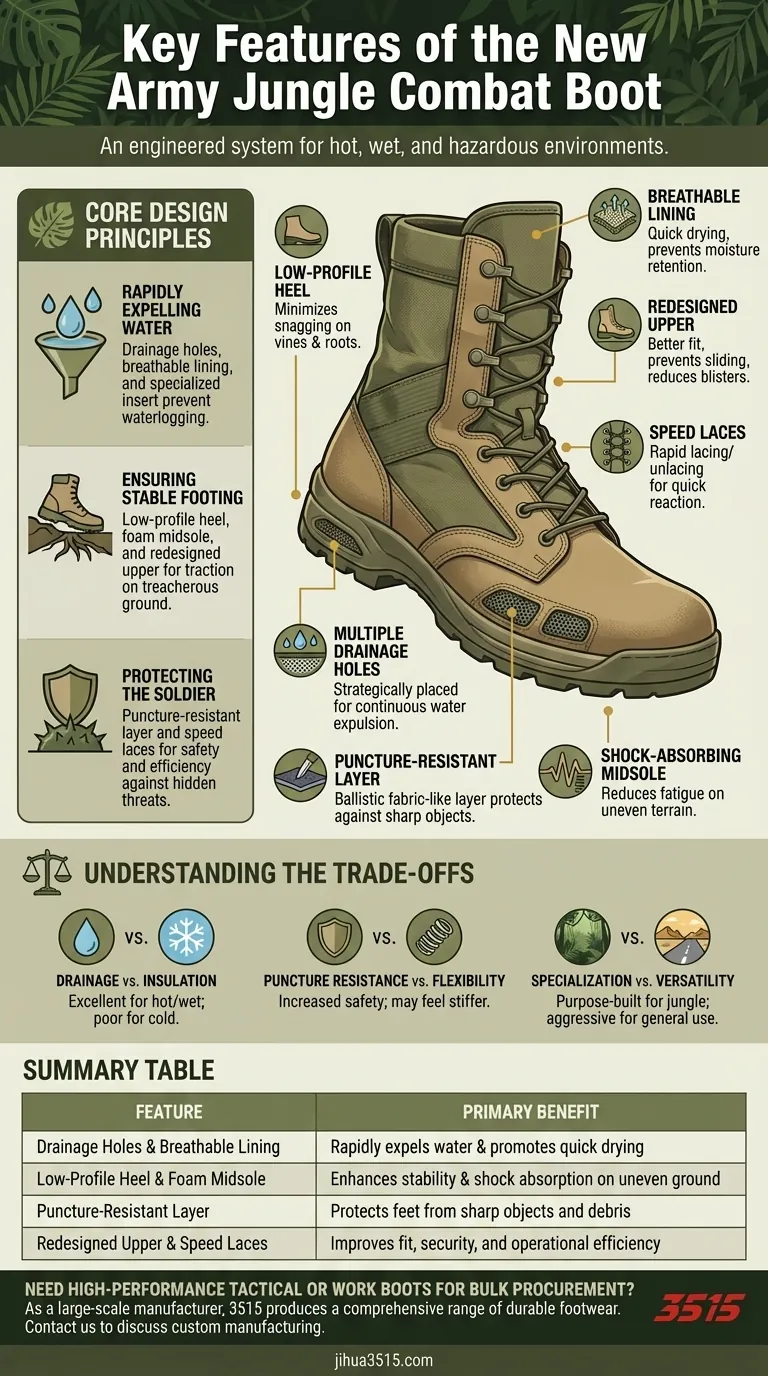
At its core, the new Army Jungle Combat Boot is an engineered system designed for performance in hot, wet, and hazardous environments. Its key features include a low-profile heel, multiple drainage holes, a puncture-resistant layer, a shock-absorbing midsole, a redesigned upper for better fit, a breathable lining for quick drying, and speed laces for efficiency.
This boot is not just an update; it is a fundamental redesign focused on three principles for jungle operations: rapidly expelling water, ensuring stable footing on treacherous ground, and protecting the soldier from unseen threats.
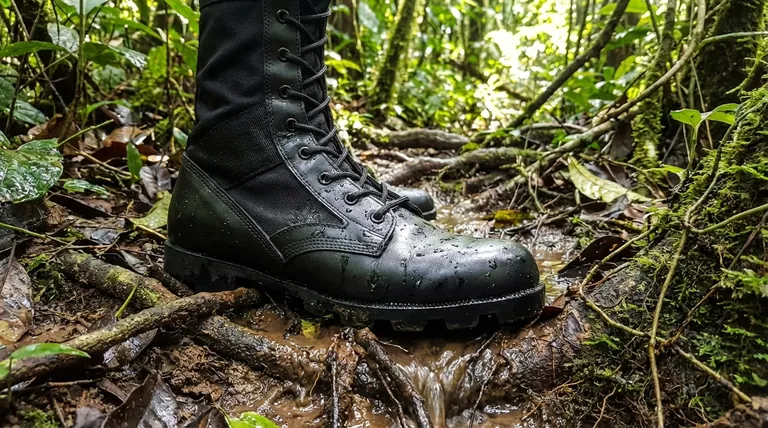
Deconstructing the Design Philosophy
To understand the boot, you must first understand the unique challenges of a jungle. The design directly addresses the constant threats of water, unstable terrain, and hidden dangers.
The Core Challenge: Constant Wetness
A waterlogged boot is heavy, causes blisters, and can lead to serious medical issues like trench foot. The Jungle Combat Boot prioritizes water expulsion above all else.
- Additional Drainage Holes: These screened vents are strategically placed to allow water to drain out with every step, preventing the boot from becoming a bucket.
- Breathable Lining: The lining is designed not to retain moisture, working in tandem with the drainage holes to ensure the boot and the soldier's foot dry as quickly as possible.
- Specialized Insert: The boot includes a unique insert that is also designed to shed, not absorb, water, contributing to the overall drainage system.
Navigating Treacherous Terrain
Jungle floors are a chaotic mix of mud, roots, and vines. Stability and agility are paramount for preventing injury and maintaining momentum.
- Low-Height Heel: This is a critical feature. A traditional, high block heel can easily snag on vines and roots, causing dangerous falls. The lower profile minimizes this risk.
- Foam Midsole: The midsole provides crucial shock absorption, reducing fatigue and protecting joints during movement over uneven and hard surfaces hidden beneath the foliage.
- Redesigned Upper: A better-fitting upper, typically made of leather and durable nylon, secures the foot more effectively. This prevents the foot from sliding inside the boot, which is a common cause of blisters and loss of stability.
Enhancing Soldier Protection and Efficiency
The jungle hides threats and demands speed. The boot incorporates features to mitigate these risks and improve operational tempo.
- Puncture-Resistant Layer: A ballistic fabric-like layer is integrated into the sole. This provides essential protection from sharp objects underfoot, such as stakes, sharp rocks, or debris.
- Speed Laces: Tunnels and hooks allow for rapid lacing and unlacing. This is vital for quick reaction times, whether donning gear or needing to quickly remove a boot to address a foot issue.
Understanding the Trade-offs
No piece of equipment is perfect for every situation. This boot's specialized design comes with inherent trade-offs.
Drainage vs. Insulation
A boot designed to expel water cannot also be designed for warmth. The features that make it excel in the jungle make it a poor choice for cold-weather environments where retaining heat is critical.
Puncture Resistance vs. Flexibility
The protective layer in the sole adds a degree of stiffness. While essential for safety in the jungle, this can make the boot feel less flexible than a standard combat boot or commercial hiking boot.
Specialization vs. Versatility
This is a purpose-built tool. Its aggressive traction and drainage features may feel excessive or wear differently on predictable, dry terrain like pavement or hard-packed desert trails.
Making the Right Choice for Your Goal
Select your footwear based on the most likely environment, not just the feature list.
- If your primary focus is performance in hot, wet, and humid climates: This boot is engineered specifically for these conditions and is an exceptional choice.
- If your primary focus is general-purpose hiking in temperate or dry climates: A standard hiking boot may offer better long-term comfort and durability for those conditions.
- If your primary focus is cold-weather operations: You must choose an insulated and waterproof boot designed to retain heat.
Ultimately, the most effective gear is the one that is correctly matched to its intended environment.
Summary Table:
| Feature | Primary Benefit |
|---|---|
| Drainage Holes & Breathable Lining | Rapidly expels water & promotes quick drying |
| Low-Profile Heel & Foam Midsole | Enhances stability & shock absorption on uneven ground |
| Puncture-Resistant Layer | Protects feet from sharp objects and debris |
| Redesigned Upper & Speed Laces | Improves fit, security, and operational efficiency |
Need high-performance tactical or work boots for bulk procurement?
As a large-scale manufacturer, 3515 produces a comprehensive range of durable footwear for distributors, brand owners, and bulk clients. Our expertise in designing for extreme conditions ensures you get reliable, purpose-built gear.
Contact 3515 today to discuss your custom manufacturing needs and elevate your product line.
Visual Guide
Related Products
- Durable Military Combat Boots with Water Drainage for Wholesale & OEM
- High-Traction Suede Tactical Boots Wholesale & Custom Manufacturing
- Durable Leather Tactical Boots Wholesale & Custom Manufacturing for Brands
- Wholesale Lightweight Tactical Boots Custom Manufacturer for Desert & Combat Use
- Wholesale Waterproof Tactical Boots Custom Suede & High-Traction Soles
People Also Ask
- Why must gait validation for military applications be conducted in combat boots? Ensure Data Accuracy for Soldiers
- What are the common types of combat boots? Find the Right Boot for Your Mission
- What factors should be considered when choosing military boots for hiking? Durability vs. Weight for Your Terrain
- What are the key considerations when choosing military boots? Prioritize Compliance, Environment & Fit
- How should the midfoot and heel fit in military boots? Achieve a Snug, Secure Fit for Blister Prevention