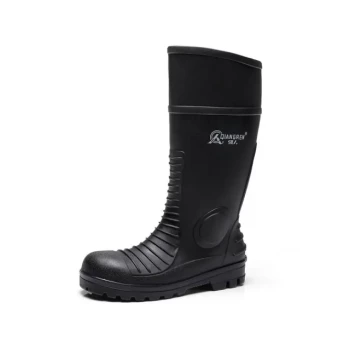
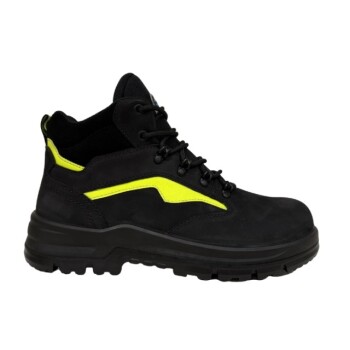
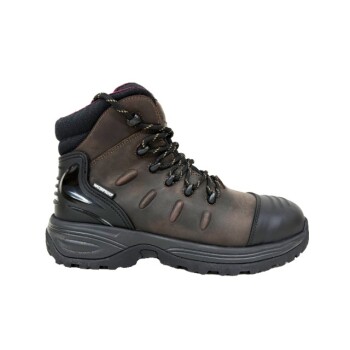
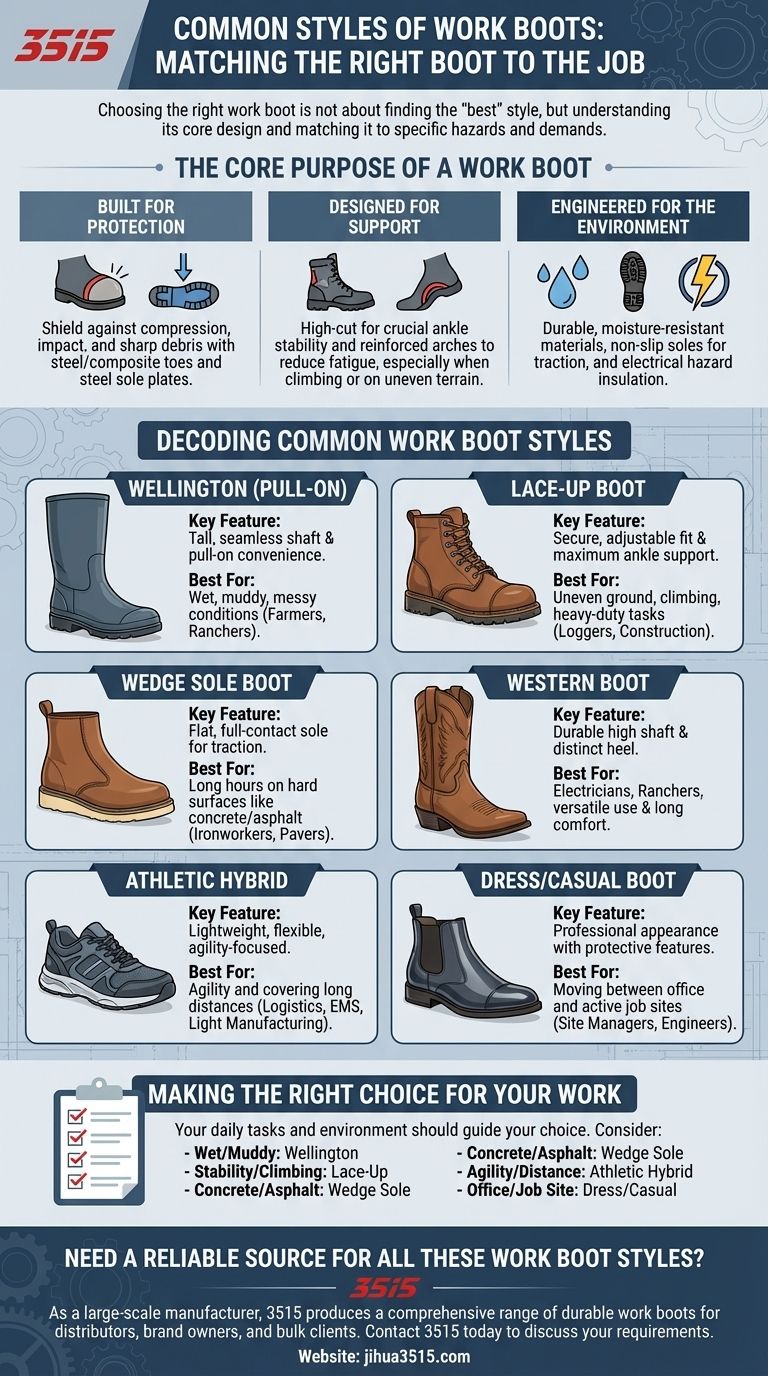
The most common styles of work boots are the Wellington, lace-up, wedge sole, Western, athletic, and dress/casual boot. Each is engineered with a specific work environment in mind, balancing features like ankle support, water resistance, sole traction, and ease of use to meet the demands of different professions.
Choosing the right work boot is not about finding the "best" style, but about understanding the core design of each and matching it to the specific hazards and physical demands of your job. The style dictates the boot's primary function.
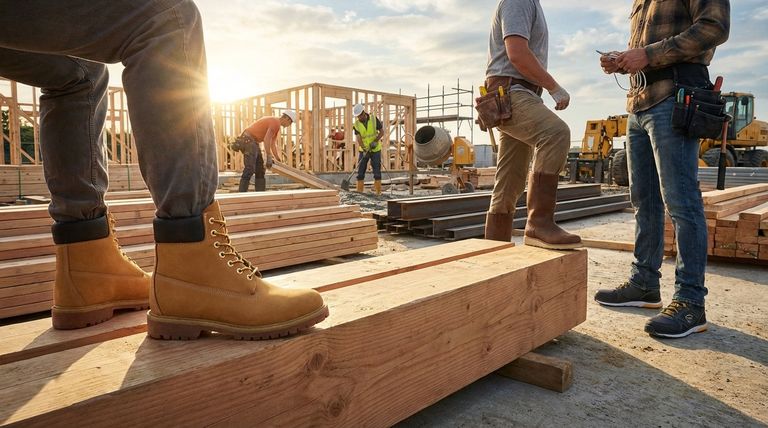
The Core Purpose of a Work Boot
Before comparing styles, it's essential to understand what all work boots have in common. They are not merely rugged footwear; they are a critical piece of personal protective equipment (PPE).
Built for Protection
A work boot's primary function is to protect your feet. This is achieved through reinforced construction, including steel toes or composite toes to shield against compression and impact from falling objects.
Many also feature steel sole plates to prevent punctures from sharp debris like nails or rebar, a common hazard in construction and manufacturing.
Designed for Support
Work boots are typically high-cut to provide crucial ankle support. This design helps prevent sprains and twists, especially when navigating uneven terrain or climbing ladders.
Reinforced arches are another key feature, specifically designed to offer stability and reduce foot fatigue for those who spend long periods standing or climbing.
Engineered for the Environment
Beyond direct impact, work boots protect you from the elements. They are often made from durable, moisture-resistant materials like leather and include moisture-wicking linings to keep your feet dry.
Specialized features like non-slip soles for traction and insulation against electrical hazards are standard in boots designed for specific high-risk professions.
Decoding the Common Work Boot Styles
Each style modifies the core work boot blueprint to excel in a particular context. Understanding these differences is the key to selecting the right tool for the job.
The Wellington (Pull-On) Boot
This style is defined by its pull-on design and high shaft. Its primary advantage is convenience and superior protection against water, mud, and debris getting inside the boot.
It is the go-to choice for farmers, ranchers, and anyone working in consistently wet or mucky conditions where a sealed lower leg is essential.
The Lace-Up Boot
The classic lace-up boot provides the most secure and adjustable fit. This makes it ideal for tasks requiring maximum stability and ankle support.
Workers who climb, navigate rough terrain, or need to prevent ankle rolls—such as loggers, arborists, and many construction professionals—rely on the lace-up design.
The Wedge Sole Boot
The distinguishing feature here is the sole: a single piece of material that runs from heel to toe, creating a large, flat surface area.
This design offers excellent traction on hard, flat surfaces like concrete or asphalt and sheds mud easily. It's favored by ironworkers, pavers, and factory workers who need grip without the aggressive lugs that can get caught.
The Western Boot
A variation of the pull-on, the Western work boot combines traditional styling with modern safety features. It features a durable high shaft and a distinct heel.
This boot is surprisingly versatile, used by electricians, ranchers, and construction workers who need a durable, protective boot that is also comfortable for long hours.
The Athletic Hybrid
These boots look and feel more like a modern sneaker but are built with safety features. They are significantly more lightweight and flexible than traditional boots.
This style is perfect for workers who need agility and cover a lot of ground, such as in logistics, light manufacturing, or for EMS personnel.
The Dress/Casual Boot
This style bridges the gap between the worksite and the office. It maintains a professional appearance while discreetly incorporating protective features like safety toes.
Site managers and engineers who frequently move between professional meetings and active job sites often choose this style for its versatility.
Understanding the Trade-offs
No single boot style is perfect for every situation. The right choice always involves a trade-off between competing benefits.
Convenience vs. Ankle Support
The Wellington boot is fast to put on and take off, but its loose-fitting shaft offers minimal ankle support compared to a lace-up boot, which provides a locked-in, stable fit.
All-Day Comfort vs. Maximum Protection
An athletic-style boot prioritizes low weight and flexibility, reducing fatigue over a long day. However, a traditional, heavy-duty steel-toe boot will almost always offer a higher level of raw protection against severe impacts and punctures.
Terrain-Specific Traction
A wedge sole is excellent on smooth, hard surfaces but lacks the deep lugs needed for reliable grip on loose dirt, mud, or steep, uneven ground. A lug sole excels in those conditions but can be less comfortable on concrete.
Making the Right Choice for Your Work
Your daily tasks and environment should be the ultimate guide in selecting a work boot style.
- If your primary focus is working in wet, muddy, or messy conditions: The tall, seamless shaft of a Wellington boot is your best choice.
- If your primary focus is stability on uneven ground or while climbing: The superior ankle support of a lace-up boot is non-negotiable.
- If your primary focus is long hours on concrete or asphalt: The full-contact, cushioned tread of a wedge sole boot will provide the most comfort.
- If your primary focus is agility and covering long distances on foot: An athletic hybrid offers safety features without the weight and rigidity of a traditional boot.
- If your primary focus is moving between an office and a job site: A dress/casual work boot provides the necessary protection without sacrificing a professional look.
By matching the boot's design to your daily reality, you ensure your footwear is an asset, not a liability.
Summary Table:
| Work Boot Style | Key Feature | Best For |
|---|---|---|
| Wellington (Pull-On) | Tall, seamless shaft | Wet, muddy, messy conditions |
| Lace-Up | Secure, adjustable fit | Uneven ground, climbing, maximum stability |
| Wedge Sole | Flat, full-contact sole | Long hours on concrete/asphalt |
| Western | Durable high shaft, distinct heel | Electricians, ranchers, versatile use |
| Athletic Hybrid | Lightweight, flexible | Agility, covering long distances |
| Dress/Casual | Professional appearance | Moving between office and job site |
Need a Reliable Source for All These Work Boot Styles?
As a large-scale manufacturer, 3515 produces a comprehensive range of durable work boots for distributors, brand owners, and bulk clients. Whether you need classic lace-ups for construction, waterproof Wellingtons for agriculture, or versatile dress boots for site managers, we have the production capabilities and expertise to meet your demands.
Contact 3515 today to discuss your work boot requirements and get a quote.
Visual Guide
Related Products
- Durable Leather Work Boots for Wholesale & Custom Manufacturing
- Durable Leather Work Boots for Wholesale & Custom OEM Manufacturing
- Durable Leather Work Boots Wholesale Manufacturer & Custom Factory
- Durable Leather Moc Toe Work Boots for Wholesale & Custom Manufacturing
- Wholesale Leather Work Boots with Customizable Wedge Sole for Brands
People Also Ask
- What is the difference between full-grain and top-grain leather? Premium Material Guide for Boot Manufacturers
- What are the common workplace hazards that can be mitigated with the right work boots? Protect Your Workforce
- What are the common foot issues workers face due to uncomfortable work boots? Prevent Pain & Deformities
- What are the advantages of leather versus synthetic work boots? A Guide to Choosing the Right Material
- What are the key components of modern work boots? Engineered for Ultimate Durability and Comfort