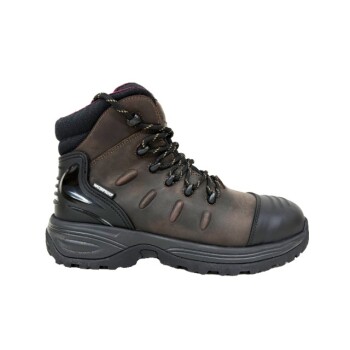
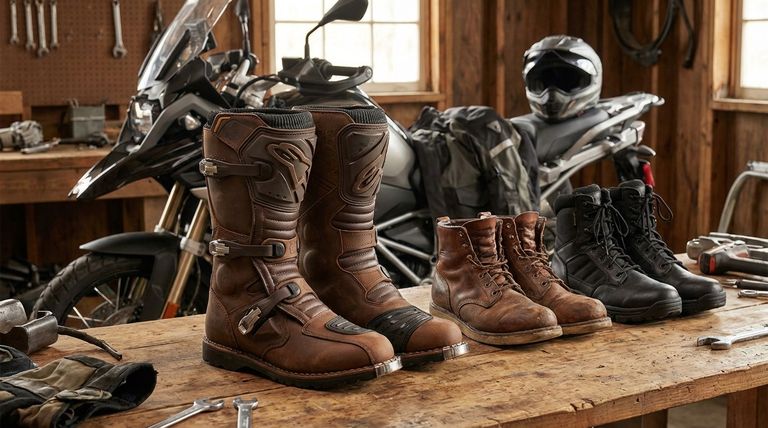
When purpose-built motorcycle boots are not an option, the most common alternatives are high-quality combat boots, sturdy leather work boots, and hybrid adventure-style boots. These options provide a significant increase in protection over casual footwear like sneakers or hiking boots by offering better ankle coverage and more durable construction.
The core issue isn't finding an alternative to a motorcycle boot, but understanding the specific safety features you are sacrificing. A good alternative is far better than no protection, but it is not a direct substitute for the torsion control, impact armor, and abrasion resistance of a CE-rated motorcycle boot.
What Defines True Motorcycle Protection?
Before evaluating the alternatives, it's essential to understand what makes a motorcycle boot a piece of dedicated safety equipment. Their design is a direct response to the most common types of foot and ankle injuries sustained in a crash.
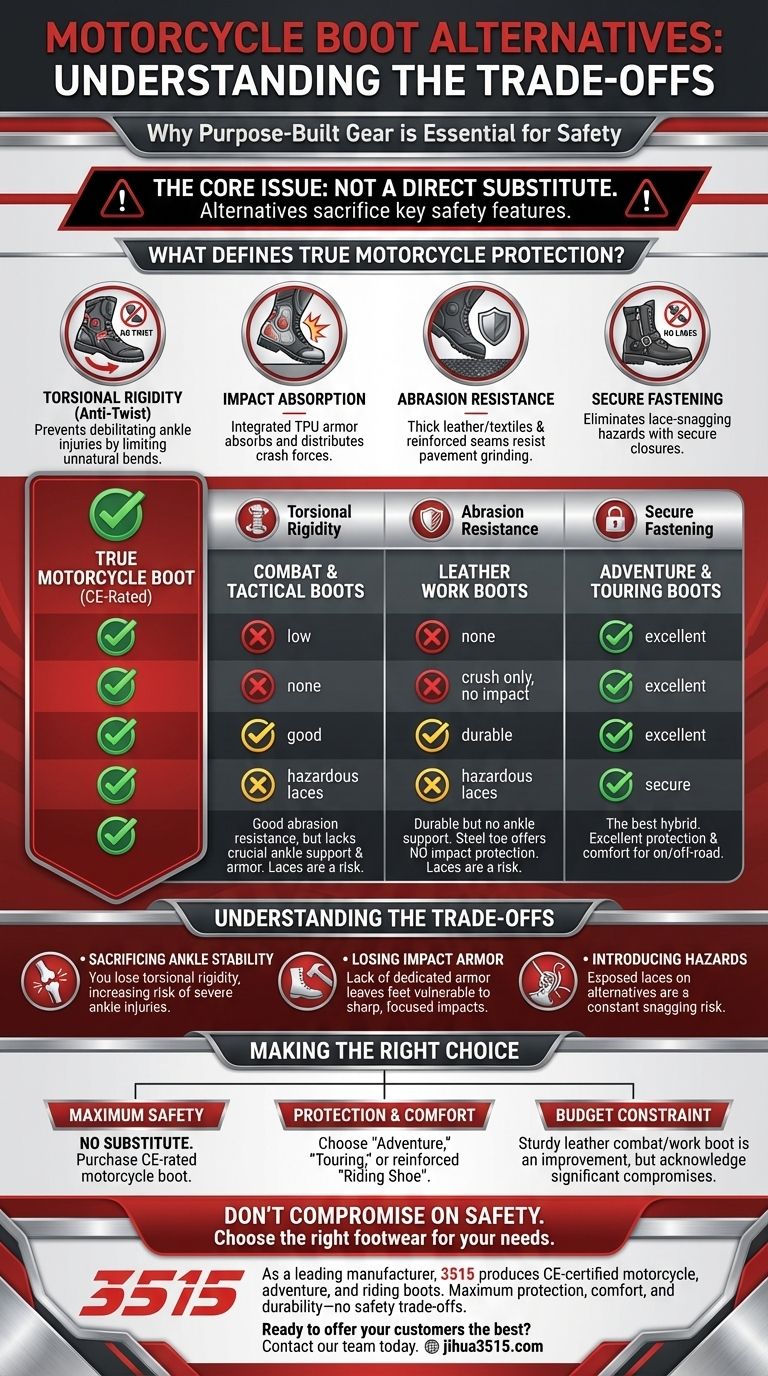
Torsional Rigidity (Anti-Twist)
This is the most critical feature. A proper motorcycle boot has a reinforced structure to prevent your ankle from twisting, hyper-extending, or bending in unnatural ways during a crash. This is the primary defense against debilitating ligament and bone damage.
Impact Absorption
Dedicated boots feature integrated armor, often made of TPU (thermoplastic polyurethane), over the heel, ankle, and shin. This hardened armor is designed to absorb and distribute the force of a direct impact, which is fundamentally different from crush protection (like a steel toe).
Abrasion Resistance
In a slide, your footwear is ground against the pavement. Motorcycle boots use thick, treated leather or advanced textiles to resist being worn through, protecting the skin and bone underneath. Seams are often double or triple-stitched for integrity.
Secure Fastening
Exposed laces are a significant hazard. They can easily get caught on a footpeg, shifter, or brake lever, leading to a loss of control. Motorcycle boots use zippers, buckles, or hook-and-loop systems, often with keepers to ensure they cannot come undone.
Evaluating the Common Alternatives
With the baseline for safety established, we can objectively assess how the most common alternatives perform.
Combat & Tactical Boots
These are a popular budget-friendly choice. Their over-the-ankle design and durable leather construction offer a good minimum level of abrasion resistance and support, making them vastly superior to a sneaker.
However, they typically offer very little torsional rigidity. They are designed for walking flexibility, not crash protection, and lack any form of hardened impact armor. Laces must be securely tucked in to mitigate snagging risks.
Leather Work Boots
Often featuring thick leather and rugged soles, work boots seem like a durable option. Many riders gravitate toward steel-toe versions, assuming they offer enhanced safety.
This assumption is a critical misunderstanding. A steel toe is designed for crush protection (e.g., a heavy object falling on your foot) but does not help with impact protection from a crash. More importantly, work boots have virtually no ankle support against twisting forces.
Adventure & Touring Boots
These are technically a category of motorcycle boot but are often seen as an alternative to race or sport boots. They are designed as a hybrid for both on-road riding and off-road use, where walking and flexibility are necessary.
They represent the best of both worlds. They offer excellent, purpose-built protection—including armor and torsional support—while being far more comfortable for all-day wear and walking than a rigid sport boot.
Understanding the Trade-offs
Choosing an alternative means consciously accepting a lower level of safety. Understanding precisely what you are giving up is key to making an informed decision.
You Are Sacrificing Ankle Stability
The single most important feature you lose with most non-motorcycle boots is torsional rigidity. Broken ankles are one of the most common and difficult-to-heal injuries in a motorcycle accident.
You Are Losing Impact Armor
Combat and work boots lack armor. In a crash where your foot is caught between the bike and the road, or hit by another object, there is nothing to distribute the sharp, focused impact.
You Are Introducing Potential Hazards
Unless you are meticulous about tucking them in every single time, the laces on combat or work boots present a constant snagging hazard that purpose-built boots are specifically designed to eliminate.
Making the Right Choice for Your Ride
Your choice of footwear is a personal risk assessment. Balance your riding style, budget, and daily needs against the non-negotiable physics of a motorcycle crash.
- If your primary focus is maximum safety: There is no substitute. Purchase a boot that is CE-rated for motorcycle use.
- If your primary focus is balancing protection and all-day comfort: Look into the "adventure," "touring," or reinforced "riding shoe" categories of motorcycle footwear.
- If your budget is the absolute constraint: A sturdy, all-leather, over-the-ankle combat or work boot is a major improvement over casual shoes, but you must acknowledge the significant safety compromises you are making.
Ultimately, the best gear is the gear you will wear on every single ride, so choose the most protective option that fits your circumstances and use it consistently.
Summary Table:
| Alternative Boot Type | Key Advantage | Major Safety Compromise |
|---|---|---|
| Combat/Tactical Boots | Good abrasion resistance; budget-friendly | Lacks torsional rigidity and impact armor |
| Leather Work Boots | Durable construction; widely available | No ankle support; steel toe offers crush, not impact, protection |
| Adventure/Touring Boots | Excellent protection with all-day comfort | Higher cost than non-motorcycle alternatives |
Don't compromise on safety. Choose the right footwear for your needs.
As a leading manufacturer, 3515 produces a comprehensive range of CE-certified motorcycle boots, adventure boots, and riding shoes. We equip distributors, brand owners, and bulk clients with footwear that combines maximum protection, comfort, and durability—without the safety trade-offs of standard alternatives.
Ready to offer your customers the best in riding gear? Contact our team today to discuss our production capabilities and find the perfect solution for your market.
Visual Guide
Related Products
- Durable Leather Work Boots for Wholesale & Custom Manufacturing
- High-Traction Suede Tactical Boots Wholesale & Custom Manufacturing
- Durable Leather Work Boots for Wholesale & Custom OEM Manufacturing
- Durable Leather Work Boots Wholesale Manufacturer & Custom Factory
- Wholesale Lightweight Tactical Boots Custom Manufacturer for Desert & Combat Use
People Also Ask
- What is the difference between full-grain and top-grain leather? Premium Material Guide for Boot Manufacturers
- What are the common workplace hazards that can be mitigated with the right work boots? Protect Your Workforce
- What are the common foot issues workers face due to uncomfortable work boots? Prevent Pain & Deformities
- What are the advantages of leather versus synthetic work boots? A Guide to Choosing the Right Material
- What are the key components of modern work boots? Engineered for Ultimate Durability and Comfort