At their core, packer boots are a specialized tool for a specific job. They are distinguished from regular boots by their significantly taller and more defined "Cuban" style heel. This is not a stylistic choice; it's a functional feature designed for stability in specific environments, which is why these boots are also renowned for their extremely durable, often rebuildable construction.
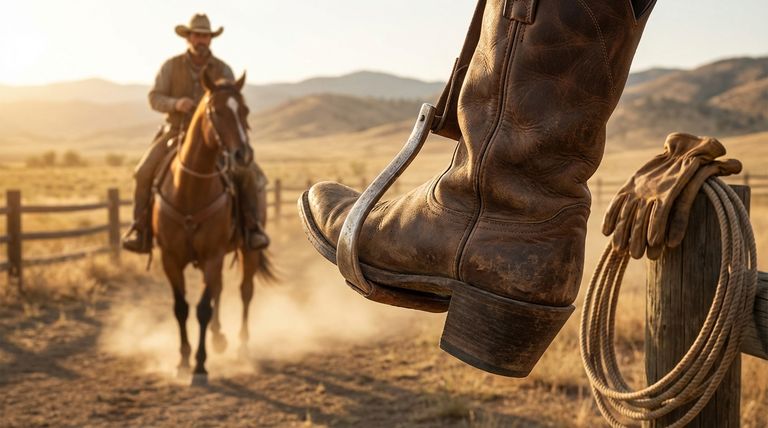
The critical difference isn't just the height of a packer boot's heel, but its purpose. This design is engineered to lock into a stirrup or onto a ladder rung, offering a level of stability and safety on uneven terrain that most regular boots simply cannot provide.
The Defining Anatomy of a Packer Boot
Understanding a packer boot requires looking beyond its appearance and focusing on the functional design elements that set it apart. These features are born from the demanding needs of ranchers, outfitters, and linemen.
The Purpose-Driven Heel
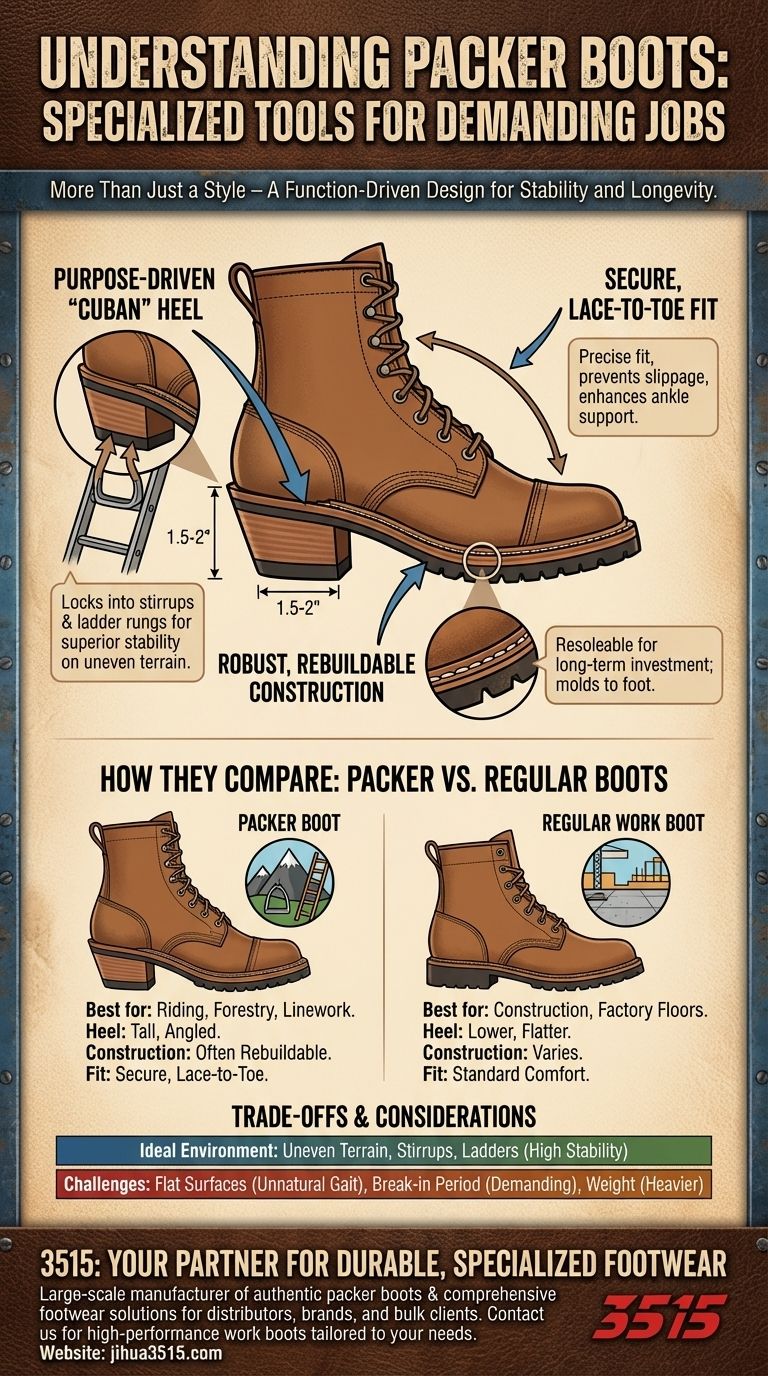
The most prominent feature is the tall, angled heel, typically 1.5 to 2 inches or more. This height allows the heel to hook securely onto a stirrup, preventing the foot from sliding too far forward while riding. For linemen, this same design provides a secure anchor on ladder rungs when climbing poles.
This design also provides exceptional arch support and positions your foot to dig in effectively when navigating steep inclines or declines, offering superior stability on rugged landscapes.
Robust, Rebuildable Construction
Packer boots are built for longevity in harsh conditions. They almost always feature a Goodyear welt or similar stitch-down construction, which allows the boot to be resoled multiple times. This transforms the boot from a disposable item into a long-term investment that molds to your foot over years of use.
The uppers are typically made from thick, high-quality leather that offers excellent support and protection. While this requires a significant break-in period, the result is a custom-fit feel and unparalleled durability.
A Secure, Lace-to-Toe Fit
Many packer styles feature a lace-to-toe design. This lacing pattern extends closer to the toe box than on a typical boot, allowing for a much more precise and secure fit across the entire foot. This is critical for preventing foot slippage inside the boot, which can cause blisters and instability on difficult terrain.
How Packers Compare to Other Specialized Boots
To truly understand the packer's role, it's useful to contrast it with other common types of work and utility footwear. Each is a tool designed for a different task.
Packer vs. Standard Work Boots
Standard heavy-duty work boots are often designed for flat, hard surfaces like concrete floors or construction sites. They may feature safety toes, puncture resistance, and flatter, wedge-style outsoles for maximum surface contact and slip resistance. Packers, by contrast, are less ideal on flat ground due to their aggressive heel.
Packer vs. Tactical Boots
Tactical boots prioritize being lightweight, flexible, and quiet for speed and agility. They are built for responsiveness. A packer boot is the opposite; it is typically heavier and more rigid, prioritizing ankle support and sheer durability over stealth or speed.
Packer vs. Wellington Boots
Wellington (pull-on) boots are designed for convenience and protection from mud and water. Their primary features are their waterproof material and high shaft. Packers focus on a secure, laced fit to provide ankle stability for work, sacrificing the easy on/off convenience of a Wellington.
Understanding the Trade-offs
No single boot design is perfect for every situation. The packer's specialized features create distinct disadvantages outside of its intended environment.
Not Ideal for Flat Surfaces
The same high heel that provides stability in a stirrup can create an unnatural walking gait and discomfort during long periods on flat, hard surfaces like pavement or warehouse floors.
A Demanding Break-in Period
The thick leather and rigid construction that make packers so durable also mean they often require a significant break-in period. This process can be uncomfortable, but it is necessary to achieve the boot's renowned long-term comfort.
Weight and Clumsiness
Packer boots are heavy. This weight, combined with their stiff soles, can feel cumbersome for tasks that require agility or for people unaccustomed to such substantial footwear.
Making the Right Choice for Your Needs
Selecting the correct footwear means matching the boot's design to your primary activity.
- If your primary focus is horseback riding, forestry, or utility line work: The packer boot's high heel and rugged support are specifically designed for the stability you need in stirrups and on uneven terrain.
- If your primary focus is construction or factory work: A standard heavy-duty work boot with safety features and a flatter, slip-resistant sole is a more appropriate and safer choice.
- If your primary focus is agility, speed, or law enforcement: A lightweight, flexible tactical boot will serve you far better than a heavy and rigid packer.
- If your primary focus is general outdoor work in wet conditions: A Wellington boot offers superior waterproofing and convenience for muddy environments.
Choosing the right boot begins with understanding the specific problem its design was built to solve.
Summary Table:
| Feature | Packer Boots | Regular Work Boots |
|---|---|---|
| Heel Design | Tall (1.5-2"), angled "Cuban" heel for stirrups/ladders | Lower, flatter heel for flat surfaces |
| Primary Use | Horseback riding, forestry, utility line work | Construction, factory floors, general labor |
| Construction | Often Goodyear welt, rebuildable for longevity | Varies, often less emphasis on rebuildability |
| Fit & Support | Lace-to-toe design for maximum security and ankle support | Standard lacing, focus on comfort for flat ground |
Need Durable, Specialized Footwear for Your Team?
As a large-scale manufacturer, 3515 produces a comprehensive range of durable footwear, including authentic packer boots built for stability and longevity. We serve distributors, brand owners, and bulk clients who require reliable, high-performance work boots.
Our production capabilities encompass all types of shoes and boots, tailored to your specific needs. Let us provide the right footwear solution for your workforce.
Contact us today to discuss your requirements and get a quote!
Visual Guide
Related Products
- Durable Leather Work Boots for Wholesale & Custom Manufacturing
- Durable Leather Work Boots for Wholesale & Custom OEM Manufacturing
- Durable Leather Work Boots Wholesale Manufacturer & Custom Factory
- Premium Waterproof High-Cut Industrial Safety Boots for Wholesale and Bulk Orders
- Wholesale Safety Boots Manufacturer for Custom & Private Label Orders
People Also Ask
- What is the difference between full-grain and top-grain leather? Premium Material Guide for Boot Manufacturers
- What are the common workplace hazards that can be mitigated with the right work boots? Protect Your Workforce
- What are the common foot issues workers face due to uncomfortable work boots? Prevent Pain & Deformities
- What are the advantages of leather versus synthetic work boots? A Guide to Choosing the Right Material
- What are the key components of modern work boots? Engineered for Ultimate Durability and Comfort