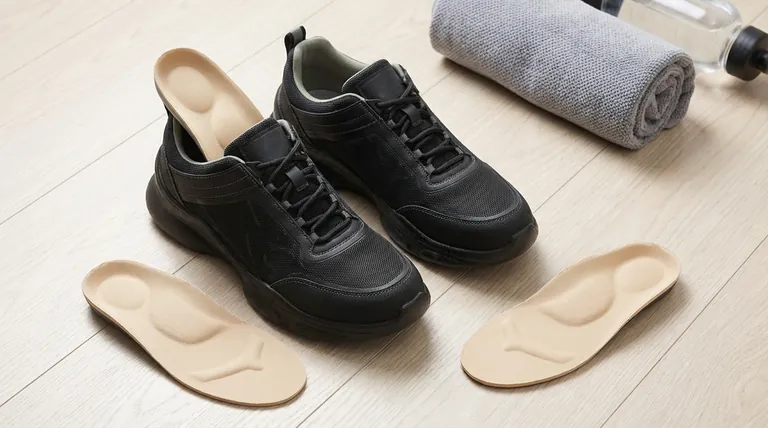
At their core, over-the-counter (OTC) orthotic inserts are designed to provide foundational support, cushioning, and pain relief for common, non-severe foot issues. They are used to address general foot pain, heel pain, and minor biomechanical problems like flat feet or overly high arches by offering better shock absorption and stability than a standard shoe insole.
The central purpose of an over-the-counter orthotic is to offer a generalized, accessible solution for foot discomfort. They are not designed to correct complex structural foot problems but rather to support and cushion the foot to alleviate strain from everyday activities.
What Problems Can OTC Inserts Address?
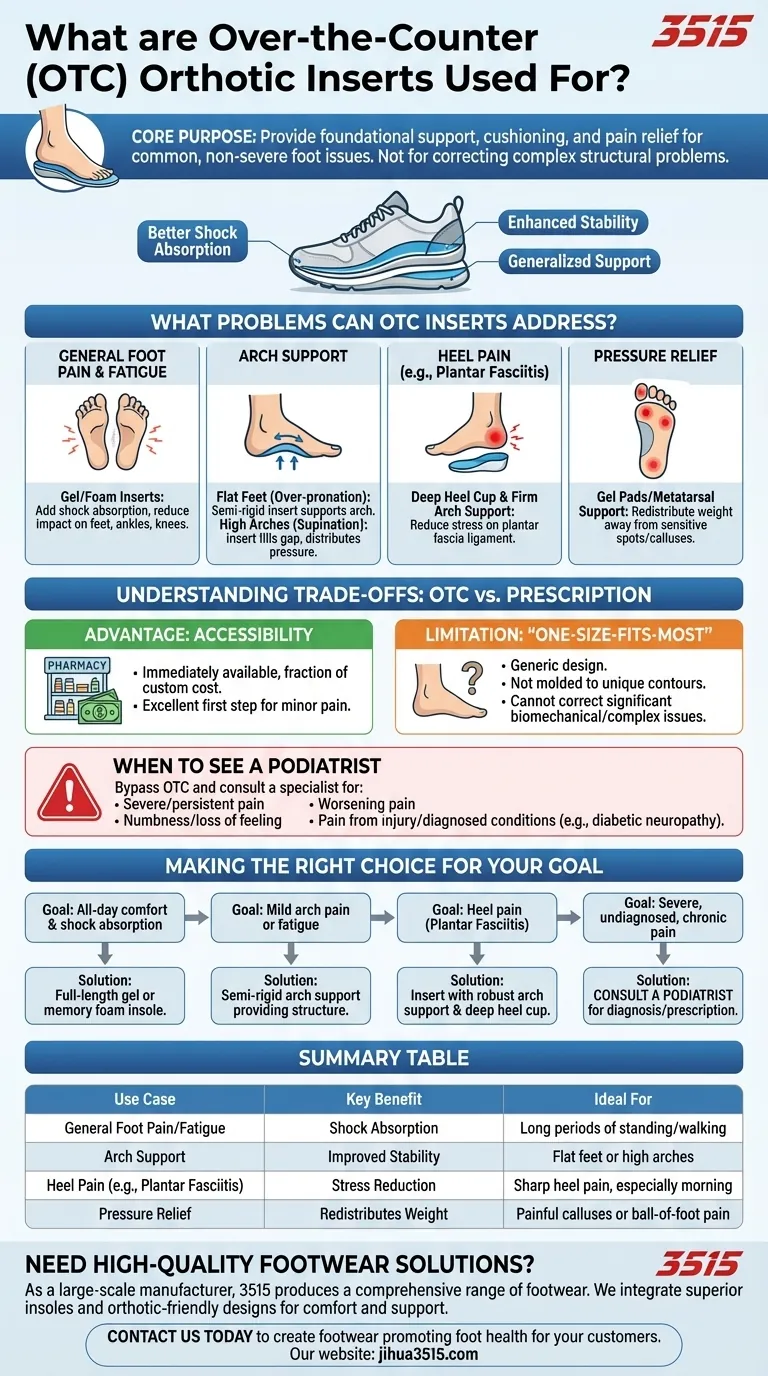
Over-the-counter inserts are built to tackle a range of common ailments by modifying the environment inside your shoe. They are most effective for mild to moderate conditions.
General Foot Pain and Fatigue
Many people experience tired, aching feet after long periods of standing or walking. Softer inserts, often made of gel or foam, are excellent for adding a layer of shock absorption, reducing the overall impact on your feet, ankles, and knees.
Arch Support
Arch supports are perhaps the most common type of OTC orthotic. They are designed for two primary issues:
- Flat Feet (Over-pronation): A semi-rigid insert can help support the arch, preventing the foot from rolling too far inward.
- High Arches (Supination): An insert can help fill the gap under a high arch, distributing pressure more evenly across the bottom of the foot.
Heel Pain
Conditions like Plantar Fasciitis are a frequent cause of sharp heel pain. Inserts with a deep, cushioning heel cup and firm arch support can help reduce stress on the plantar fascia ligament, providing significant relief.
Pressure Relief
Specific areas of the foot can develop painful pressure points or calluses. Gel pads or inserts with metatarsal support can help redistribute weight away from these sensitive spots, particularly the ball of the foot.
Understanding the Trade-offs: OTC vs. Prescription
While incredibly useful, it is critical to understand the limitations of a non-prescription solution. Choosing the right path depends on the severity and nature of your foot problem.
The Advantage of Accessibility
OTC inserts are the clear winner for convenience. They are immediately available at pharmacies and retail stores at a fraction of a custom orthotic's cost. This makes them an excellent first step for troubleshooting minor pain.
The Limitation of a "One-Size-Fits-Most" Approach
The key drawback is their generic design. An OTC insert is not molded to the unique contours of your foot. It cannot correct significant biomechanical imbalances or address complex structural issues diagnosed by a professional.
When to See a Podiatrist
You should bypass an OTC solution and consult a specialist if you experience any of the following:
- Severe or persistent pain that doesn't improve.
- Pain that worsens after using an insert.
- Numbness or loss of feeling in your feet.
- Pain resulting from a specific injury or diagnosed condition like diabetic neuropathy.
Making the Right Choice for Your Goal
Selecting an insert depends entirely on what you are trying to solve.
- If your primary focus is all-day comfort and shock absorption: Choose a full-length gel or memory foam insole.
- If your primary focus is mild arch pain or fatigue: Look for a semi-rigid arch support that provides structure without being overly hard.
- If your primary focus is heel pain from suspected plantar fasciitis: Select an insert that features both robust arch support and a deep, cushioned heel cup.
- If your primary focus is severe, undiagnosed, or chronic pain: Your best action is to consult a podiatrist for a proper diagnosis and a potential prescription for custom orthotics.
Choosing the right insert is an effective first step in managing your foot health and comfort.
Summary Table:
| Use Case | Key Benefit | Ideal For |
|---|---|---|
| General Foot Pain/Fatigue | Shock Absorption | Long periods of standing/walking |
| Arch Support | Improved Stability | Flat feet (over-pronation) or high arches |
| Heel Pain (e.g., Plantar Fasciitis) | Stress Reduction | Sharp heel pain, especially in the morning |
| Pressure Relief | Redistributes Weight | Painful calluses or ball-of-foot pain |
Need High-Quality Footwear Solutions?
As a large-scale manufacturer, 3515 produces a comprehensive range of footwear for distributors, brand owners, and bulk clients. Our production capabilities encompass all types of shoes and boots, and we can integrate superior insoles and orthotic-friendly designs to meet your market's needs for comfort and support.
Contact us today to discuss how we can partner to create footwear that promotes foot health and comfort for your customers.
Visual Guide
Related Products
- Lightweight Breathable Sneakers with Wet-Traction Grip for Wholesale & Private Label
- Wholesale Durable Safety Boots Manufacturer Customizable Steel Toe Work Boots
- Wholesale Breathable Athletic Sneakers - Custom Lightweight Cushioned Footwear Manufacturer
- Durable High-Ankle Tactical Boots Wholesale Manufacturer for Custom & Bulk Orders
- Lightweight Breathable Training Shoes for Wholesale & Custom OEM Manufacturing
People Also Ask
- Why are breathable sneakers necessary for tropical commuting? Stay Cool and Dry in High Humidity
- What role do lightweight training shoes play in urban traffic? Boost Agility and Reaction for Safer City Navigation
- How do lightweight shoes provide support? The Science of Efficient Cushioning & Stability
- How do lightweight shoes contribute to healthier feet? Reduce Fatigue & Prevent Foot Problems
- What are the style advantages of lightweight shoes? Sleek, Versatile & Modern Comfort