For the hiker seeking versatility, mid-height hiking boots are the jack-of-all-trades. They are best suited for day hikes on rough, unpredictable terrain and for multi-day backpacking trips with a moderate load, offering a crucial balance between the agility of a shoe and the robust support of a heavy boot.
The core purpose of a mid-height hiking boot is to provide a strategic compromise. It delivers enhanced ankle support and underfoot protection for challenging trails without the significant weight and rigidity of a full-scale mountaineering boot.

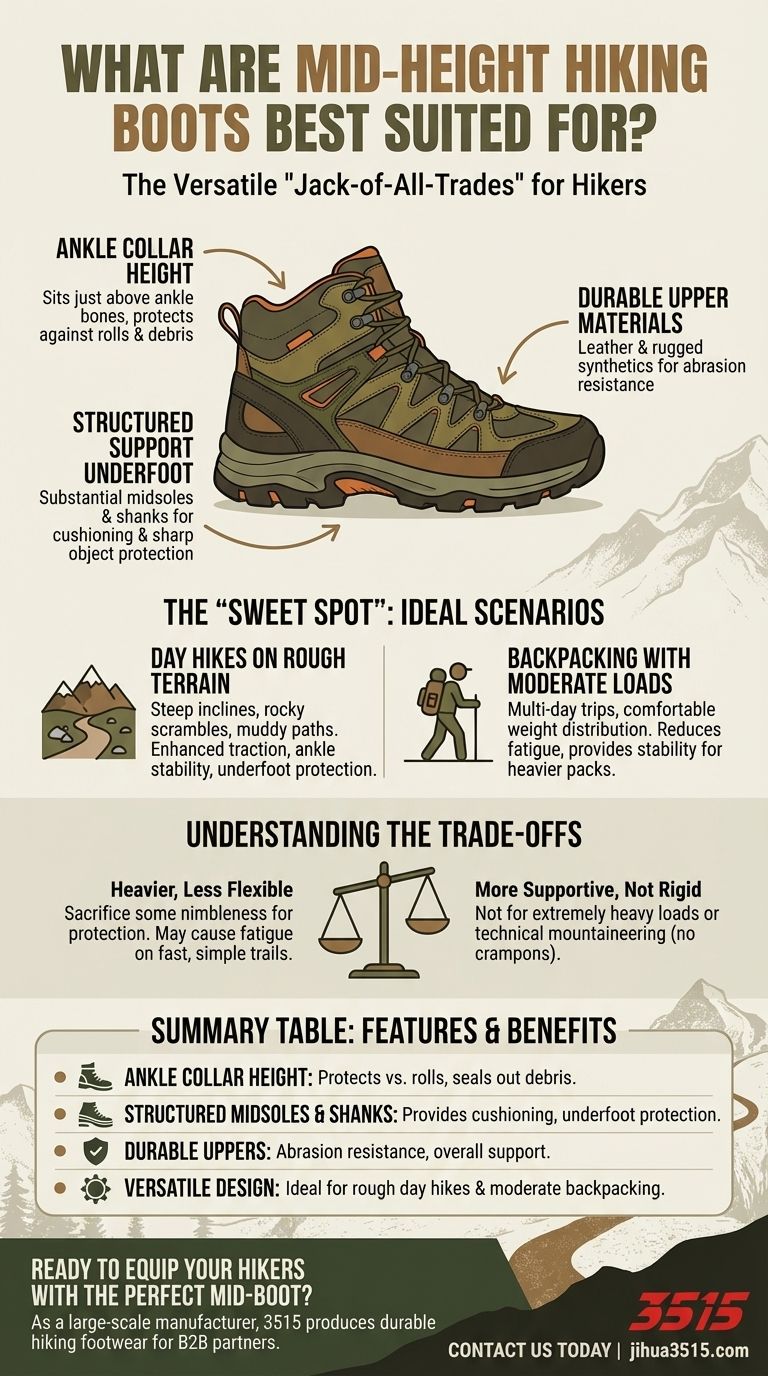
The Anatomy of the Mid-Height Boot
To understand where a mid-boot excels, we first need to understand its construction. It is purposefully designed to fill the gap between lightweight hiking shoes and heavy-duty backpacking boots.
The Defining Feature: Ankle Collar Height
The "mid" designation refers directly to the height of the boot's collar. It sits just above the ankle bones.
This design provides crucial protection against ankle rolls on uneven ground, a common risk on rocky or root-filled trails. It also helps seal out trail debris like pebbles and twigs far more effectively than a low-cut shoe.
Structured Support Underfoot
Mid-boots feature more substantial midsoles and internal plates called shanks compared to their low-cut counterparts.
This added structure serves two purposes. It cushions the sole from repeated impact and, more importantly, protects your foot from bruising when stepping on sharp rocks or roots. This underfoot protection is critical for comfort on long-distance hikes.
Durable Upper Materials
The uppers are typically constructed from more durable materials, often a combination of leather and rugged synthetics.
This not only increases the boot's lifespan but also provides better protection against abrasion from rocks and brush. The sturdier material contributes to the boot's overall supportive structure.
The "Sweet Spot": Ideal Scenarios for Mid-Boots
The unique combination of features makes mid-height boots the optimal choice for specific hiking scenarios where other footwear would be either insufficient or excessive.
Day Hikes on Rough Terrain
If your day hikes involve steep inclines, rocky scrambles, or muddy paths, a mid-boot is the perfect tool.
The enhanced traction, ankle stability, and underfoot protection give you the confidence to move across challenging surfaces where a simple hiking shoe might leave your feet feeling sore and your ankles vulnerable.
Backpacking with Moderate Loads
This is a primary use case for mid-height boots. They provide the necessary support to comfortably carry a multi-day pack without the extreme weight and stiffness of a heavyweight boot.
The structure is sufficient to manage the added stress on your feet and joints from the pack, ensuring stability and reducing fatigue over longer distances.
Understanding the Trade-offs
Choosing a mid-boot means accepting a set of compromises. Being aware of them ensures you are selecting the right footwear for your specific needs.
Weight vs. Agility
A mid-boot is inherently heavier and less flexible than a trail running shoe or a low-cut hiker.
While this weight translates to support and durability, it can also lead to more fatigue on very long or fast-paced hikes on simple terrain. You sacrifice some nimbleness for enhanced protection.
Support vs. Rigidity
While supportive, a mid-boot does not offer the rigid, locked-in feel of a heavy backpacking or mountaineering boot.
This makes them unsuitable for carrying extremely heavy loads or for technical mountaineering that requires crampon compatibility and absolute stiffness for traversing ice and snow.
Making the Right Choice for Your Hike
Selecting the correct footwear starts with an honest assessment of your hiking style and the terrain you plan to tackle.
- If your primary focus is day hiking on varied or challenging trails: A mid-boot provides the ideal blend of ankle protection, underfoot cushioning, and durability.
- If your primary focus is overnight or weekend backpacking with a moderate pack: A mid-boot offers the necessary support to carry the load comfortably without the penalty of a heavy, rigid boot.
- If your primary focus is moving fast and light on well-maintained paths: A lighter, more flexible low-cut hiking shoe or trail runner will likely serve you better.
Ultimately, choosing a mid-height boot is about equipping yourself with a versatile and reliable tool for the most common hiking challenges.
Summary Table:
| Feature | Benefit for Hikers |
|---|---|
| Ankle Collar Height | Protects against rolls and seals out debris on uneven ground. |
| Structured Midsoles & Shanks | Provides cushioning and underfoot protection from sharp rocks. |
| Durable Uppers | Offers abrasion resistance and contributes to overall support. |
| Versatile Design | Ideal for rough-terrain day hikes and moderate-load backpacking. |
Ready to Equip Your Hikers with the Perfect Mid-Boot?
As a large-scale manufacturer, 3515 produces a comprehensive range of durable and supportive footwear for distributors, brand owners, and bulk clients. Our production capabilities encompass all types of hiking boots, including the versatile mid-height designs perfect for your customers' adventures.
Contact us today to discuss how we can partner to deliver high-quality, reliable hiking footwear that meets market demand.
Visual Guide
Related Products
- Wholesale Durable Mid-Cut Tactical Boots for Custom & Private Label Brands
- Wholesale High-Traction Camo Boots - Custom Manufacturer for Brands
- Durable Mid-Cut Tactical Boots for Wholesale & Private Label
- High Performance Fire-Retardant Waterproof Safety Boots
- Durable Rubber Sole Outdoor Shoes Wholesale & Custom Manufacturing
People Also Ask
- How should tactical boots be stored to maintain their condition? Protect Your Gear Investment
- How does the extended self theory explain high-value footwear? Build Your Professional Identity and Status
- Can tactical boots be stylish for everyday wear? Yes, with the right styling and features.
- What are the main construction similarities between tactical boots and tactical sneakers? Built for Performance & Durability
- What are some key features of top-tier tactical boots for 2023? Find the Perfect Boot for Your Mission