
At their best, low, lightweight summer hiking shoes offer unparalleled comfort, agility, and breathability for the right conditions. They are specifically designed to reduce fatigue and increase your connection to the trail. However, this agility comes at the direct cost of the ankle support, underfoot protection, and load-bearing stability found in traditional hiking boots.
The decision to use a lightweight hiking shoe is not a judgment on quality, but a calculated choice about your specific hike. It is a trade-off: you are exchanging the armor-like protection of a boot for the speed and comfort of an athletic shoe.
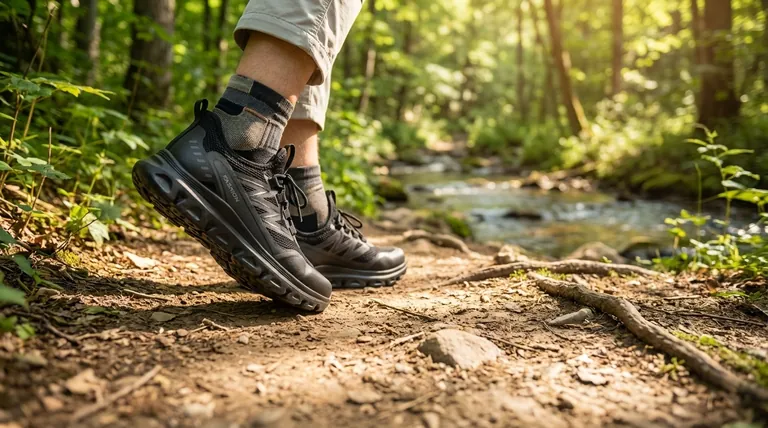
The Case for Lightweight Agility
The primary appeal of a low-cut hiking shoe is that it feels less like a tool and more like a natural extension of your foot. This design philosophy leads to several distinct advantages on the trail.
Reduced Fatigue and Effort
Less weight on your feet translates directly to less energy expended with every step. Over a full day of hiking, this energy savings is significant, resulting in reduced overall fatigue and making you less prone to blisters compared to heavier, stiffer boots.
Superior Breathability and Drying Speed
Designed for warm conditions, these shoes often feature mesh panels and lighter materials that allow heat and sweat to escape easily. If they do get wet from a stream crossing, their construction allows them to dry much faster than a thick leather or waterproof boot.
Enhanced Flexibility and Trail Feel
A flexible midsole allows your foot to bend and adapt naturally to the contours of the ground. This not only improves your balance and agility but also provides a better "feel" for the trail underfoot, a quality many experienced hikers prefer.
No Break-In Period
Unlike traditional, stiff hiking boots that can require weeks of wear to conform to your feet, lightweight hiking shoes are typically comfortable right out of the box. Their flexible materials and athletic-shoe design eliminate this painful process.
Understanding the Trade-offs and Limitations
The benefits of lightweight shoes are clear, but they are achieved by deliberately removing features common in heavier footwear. Understanding these compromises is critical to avoiding injury and discomfort.
Compromised Ankle Support
This is the most significant disadvantage. The low-cut design offers minimal protection against ankle rolls and twists. This risk is magnified for inexperienced hikers or anyone traversing rough, uneven, or rocky terrain.
Insufficient Support for Heavy Loads
The flexible soles that make these shoes comfortable for day hiking become a liability when carrying a heavy backpack. They lack the torsional rigidity needed to support your foot under a heavy load, leading to significant foot fatigue and potential strain on descents.
Limited Underfoot and Upper Protection
A lightweight shoe simply has less material between your foot and the trail. You will feel sharp rocks and roots more acutely, and the shoe offers less protection from direct impacts on the top or sides of your foot.
Reduced Long-Term Durability
While more durable than a standard trail runner, a lightweight hiking shoe will not last as long as a well-constructed hiking boot. The lighter materials are more susceptible to abrasion and will break down faster, especially under demanding use.
Making the Right Choice for Your Hike
Selecting the proper footwear is about matching the tool to the specific demands of your planned hike.
- If your primary focus is day hiking on established trails: A lightweight hiking shoe is almost certainly your best choice for its superior comfort and agility.
- If your primary focus is ultralight backpacking with a light pack: These shoes are a viable option, but only if you have strong, flexible ankles and are confident on varied terrain.
- If your primary focus is trekking with a heavy pack or on rough, technical ground: A traditional hiking boot is the safer and more appropriate choice for its critical support and protection.
Ultimately, choosing the right footwear is about honestly assessing the terrain, your pack weight, and your own physical preparedness for the adventure ahead.
Summary Table:
| Feature | Advantage | Disadvantage |
|---|---|---|
| Weight & Effort | Reduced fatigue, less energy per step | Less stability with heavy loads |
| Breathability | Superior airflow, fast drying in warm weather | Not suitable for cold/wet conditions |
| Ankle Support | Greater agility and flexibility | Minimal protection against twists/rolls |
| Durability | Comfortable right out of the box | Less long-term durability than heavy boots |
Ready to equip your next adventure with the perfect footwear?
As a large-scale manufacturer, 3515 produces a comprehensive range of hiking shoes and boots for distributors, brand owners, and bulk clients. Whether you need agile, lightweight models for summer trails or robust boots for heavy-duty trekking, our production capabilities cover all types of outdoor footwear to meet your market's demands.
Let's discuss how we can support your business with high-quality, purpose-built footwear. Contact our team today to request a catalog or discuss your specific needs.
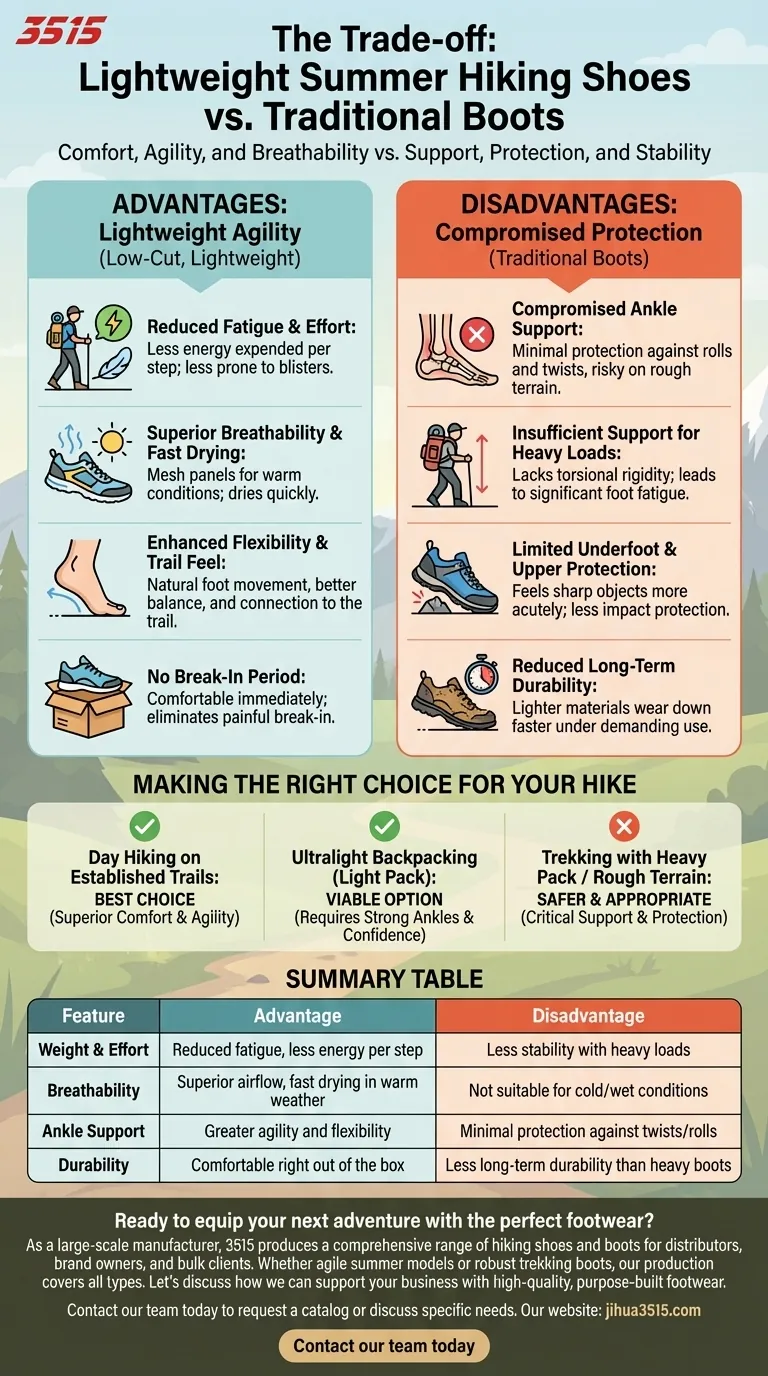
Visual Guide
Related Products
- Premium Lightweight Safety Shoes for Wholesale & Bulk Orders
- Lightweight Breathable Sneakers with Wet-Traction Grip for Wholesale & Private Label
- Durable Rubber Sole Outdoor Shoes Wholesale & Custom Manufacturing
- Lightweight Breathable Training Shoes for Wholesale & Custom OEM Manufacturing
- Wholesale Lightweight Tactical Boots with Dial Closure OEM & Bulk Orders
People Also Ask
- What workplace hazards indicate the need for safety shoes? Identify risks to protect your workforce.
- How is the absence of PPE (safety shoes & helmets) categorized in construction motion data labeling? Unlock Real-Time Safety Insights!
- What role does blockchain play in footwear supply chain transparency? Enhance Safety Shoe Traceability and Verification
- What is a recommended alternative to using hairspray for slip resistance? Ditch Unreliable Hacks for Real Safety
- What role do specialized safety shoes play in preventing falls? Engineering Stability in Industrial Environments









