Okay, so I'm tasked with crafting a guide for storing waterproofed hiking boots. My immediate thought? This isn't just about giving a quick "where" answer; it's about understanding the why behind proper storage. The user isn't just looking for a location; they're invested in preserving their gear and the effectiveness of their waterproofing treatment. That's the core need I'm addressing.
To nail this, I'm going to follow the proposed structure meticulously. I'll kick it off with a direct answer to the location question, drawing from the reference material about stable, moderate environments. Then I'll hit them with a clear, concise takeaway – the principle of stable, moderate conditions to prevent material degradation.
The meat of the guide will focus on the "why." I'll break down the critical reasons: the importance of storage as the final step in the waterproofing process, how heat and UV light degrade the treatment, and how extreme conditions can damage the boots themselves. I'll use headings to structure this logically.
Then, I'll dive into the ideal storage environment, pinpointing the key factors: stable temperature (avoiding those temperature-fluctuating zones like attics and garages), low humidity with good ventilation (to prevent mold and mildew), and minimal UV exposure (a critical synthesis point for an expert like me, since UV degrades many materials).
The "Pitfalls" section will directly address the common mistakes, framing the "bad places" from the reference as common pitfalls. I'll elaborate on the dangers of garages, damp basements, and, crucially, sealed plastic boxes, explaining how they trap moisture and create rot. This adds significant value, going beyond the basic reference.
Finally, a simple checklist for actionable advice – something practical and empowering. I'll phrase it in terms of longevity goals, offering advice based on whether they prioritize preserving the boot's life or the waterproofing treatment's integrity. It will provide maximum clarity and use a final empowering statement about protecting their investment.
Essentially, I'm taking the basic reference material and synthesizing it with my expertise. The core is the why – explaining the science behind each recommendation. I'll use short paragraphs, bold key terms like adhesives, and mildew, and the tone will be authoritative but friendly. This approach will deliver a high-quality guide, a deep dive into boot care that satisfies the user's need for preserving their valuable gear. After waterproofing your hiking boots, you must store them in a location with stable, moderate temperatures and good air circulation. The ideal spot is an indoor closet or a cool, dry mudroom, well away from direct heat sources or sunlight.
The core principle is simple: treat your boots like any other valuable piece of clothing. Storing them in an environment where you would be comfortable is the best way to protect the boot materials and the waterproofing treatment you just applied.
Why Proper Storage is the Final Step of Waterproofing
You've done the work of cleaning and treating your boots. Improper storage can undo that effort and actively damage the boot itself.
Preserving the Waterproofing Treatment
The chemical compounds in waterproofing sprays, waxes, and creams are sensitive. High heat can cause them to break down or become less effective, while UV light can degrade them over time.
Protecting Boot Materials
The glues and adhesives holding your boots together are the most vulnerable components. Extreme temperature fluctuations, like those in a garage or car trunk, cause materials to expand and contract, weakening these bonds and leading to delamination.
Similarly, damp environments encourage the growth of mold and mildew, which can permanently stain and weaken leather, fabrics, and even rubber.
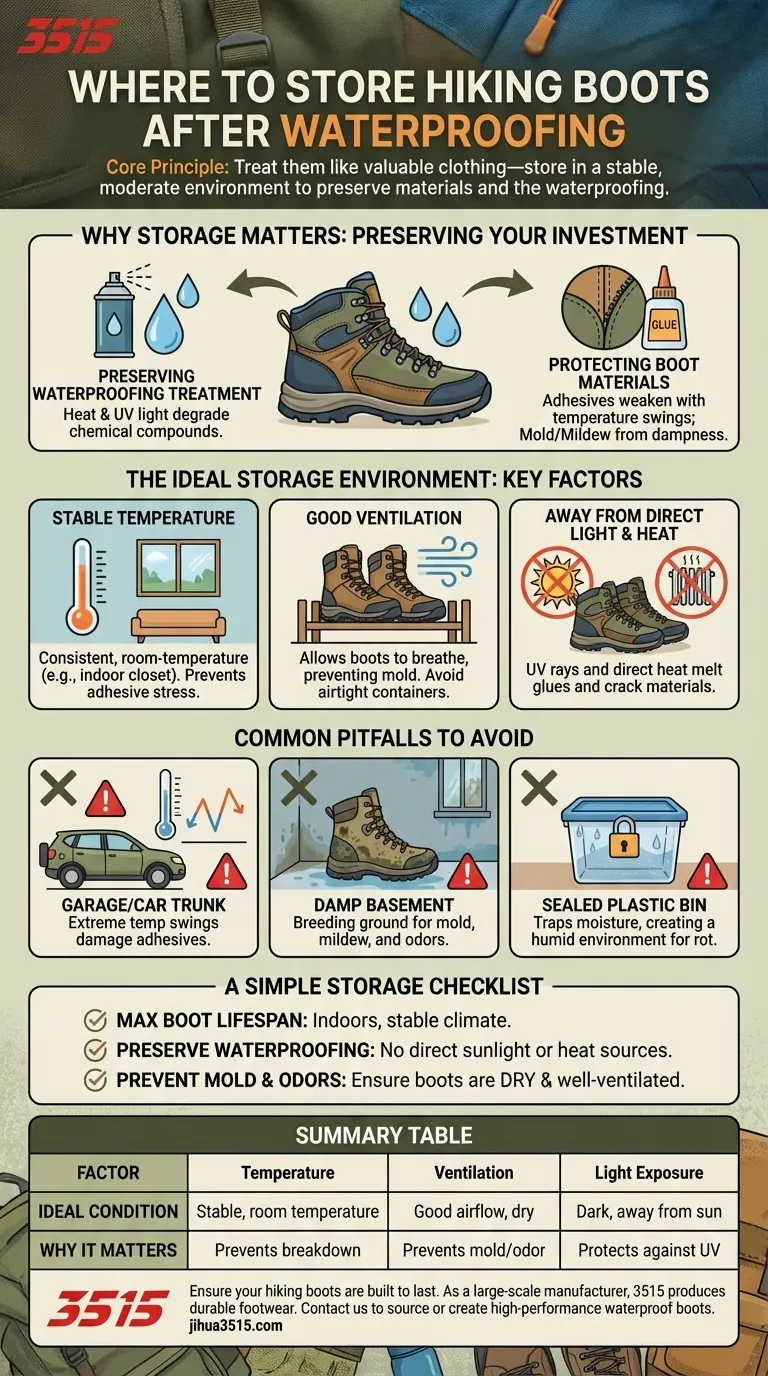
The Ideal Storage Environment: Key Factors
Your goal is to find a location that is stable and neutral. Think "boring" and "predictable."
Stable Temperature
A consistent, room-temperature environment is best. This prevents the constant expansion and contraction that stresses seams and destroys adhesives.
Good Ventilation
Airflow is critical for preventing moisture buildup. Boots need to breathe to dissipate any residual moisture from your last hike or the application process, which prevents mold.
Away from Direct Light and Heat
UV rays from sunlight break down leather, synthetic fabrics, and rubber. Likewise, storing boots near a radiator, furnace vent, or fireplace can dry out leather, causing it to crack, and can melt glues.
Common Storage Mistakes to Avoid
Where you store your boots matters just as much as how you treat them. Avoid these common but damaging locations.
The Garage or Car Trunk
These spaces experience dramatic temperature swings. The intense heat of a summer day and the freezing cold of winter will rapidly degrade the adhesives that hold your boot's sole to its upper.
The Damp Basement
While often cool, a damp or musty basement is a breeding ground for mold and mildew. This will ruin the boot's materials and create a persistent odor.
The Sealed Plastic Bin
It may seem like a good way to protect them, but an airtight container is a mistake. It traps any residual moisture inside the boot, creating a perfect humid environment for mold and bacteria to flourish.
A Simple Checklist for Proper Boot Storage
Follow these steps to ensure your boots are ready for your next adventure.
- If your primary focus is maximum boot lifespan: Store them indoors in a climate-controlled space, like a bedroom closet, where temperature and humidity are stable.
- If your primary focus is preserving the waterproofing: Keep them out of direct sunlight and away from all heat sources to prevent the treatment from degrading.
- If your primary focus is preventing mold and odors: Ensure they are completely dry before storing and are kept in a well-ventilated area, never an airtight container.
Properly storing your boots protects your investment and ensures they perform when you need them most.
Summary Table:
| Storage Factor | Ideal Condition | Why It Matters |
|---|---|---|
| Temperature | Stable, room temperature | Prevents adhesive breakdown and material stress |
| Ventilation | Good airflow, dry area | Prevents mold, mildew, and odor buildup |
| Light Exposure | Dark, away from direct sunlight | Protects materials and waterproofing from UV degradation |
| Common Pitfalls | Avoid garages, damp basements, sealed plastic bins | These areas cause rapid deterioration due to temperature swings and moisture |
Ensure your hiking boots are built to last. As a large-scale manufacturer, 3515 produces a comprehensive range of durable footwear for distributors, brand owners, and bulk clients. Our production capabilities encompass all types of high-performance shoes and boots designed to withstand the elements. Let us help you source or create footwear that combines superior waterproofing with long-lasting durability. Contact our expert team today to discuss your specific needs and elevate your product line.
Visual Guide
Related Products
- Wholesale High-Traction Camo Boots - Custom Manufacturer for Brands
- Durable Rubber Sole Outdoor Shoes Wholesale & Custom Manufacturing
- Durable Spiked Camouflage Boots Wholesale & Factory Production
- Wholesale Lightweight Tactical Boots Custom Manufacturer for Desert & Combat Use
- Wholesale Waterproof Tactical Boots Custom Suede & High-Traction Soles
People Also Ask
- What are the key features of the new line of camo boots? Built for Extreme Cold & Rugged Terrain
- Are camo boots necessary for hunting success? Prioritize Performance Over Pattern
- How does the Rank Score Test identify the primary causes of premature failure in tactical and work boots? Key Insights
- What is the technical logic behind using closed-eye testing for tactical boots? Unlocking Peak Footwear Stability
- What shoes to wear for a security job? Durable, Protective Footwear for Long Shifts