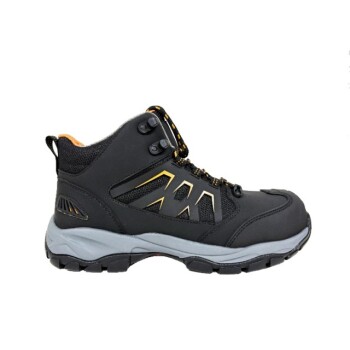
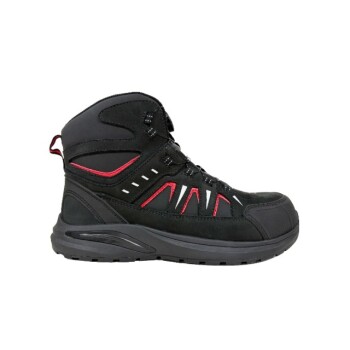
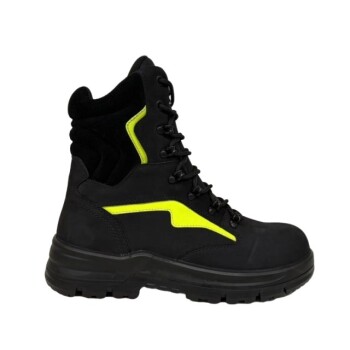
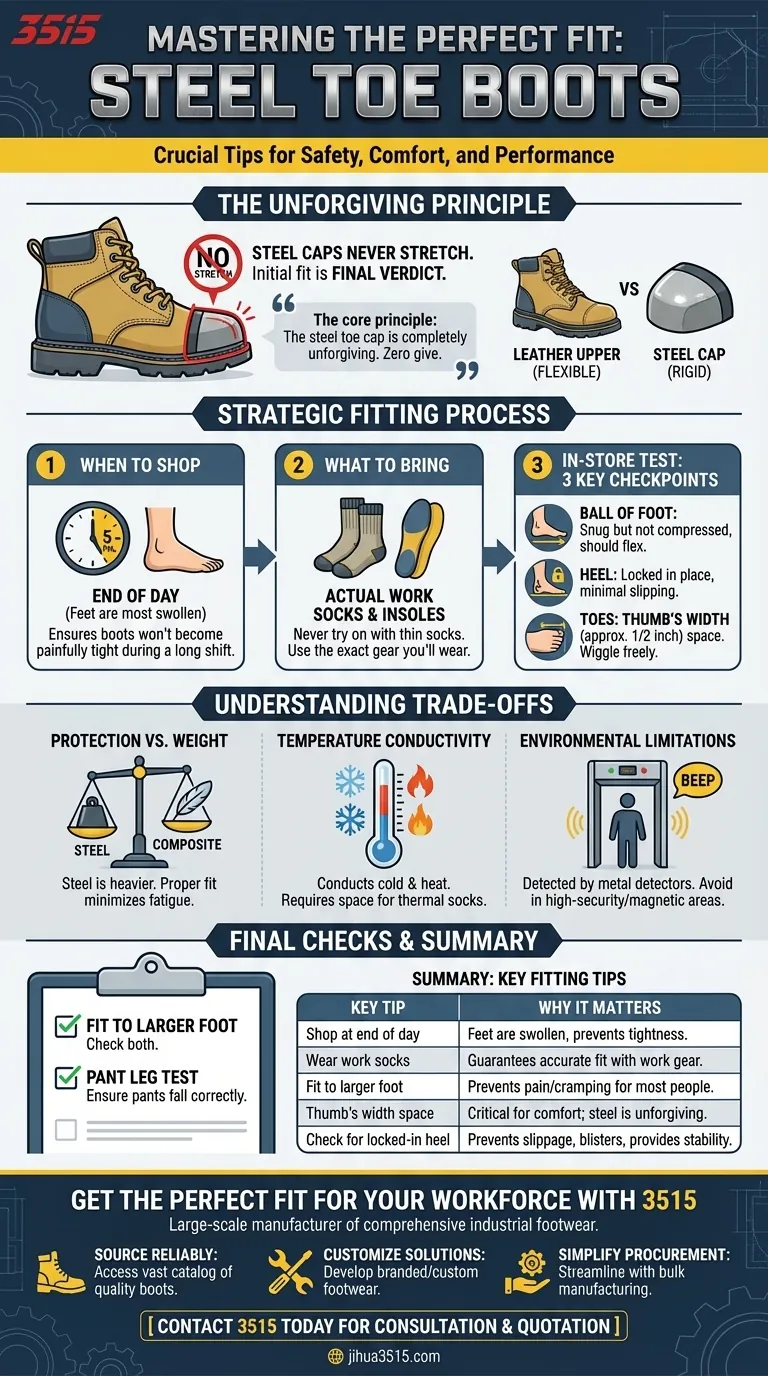
To correctly fit steel toe boots, you must shop at the end of the day when your feet are most swollen, wear the exact socks you'll use for work, and fit the boot to your larger foot. The goal is to find a boot that locks your heel in place to prevent blisters while allowing a thumb's width of space between your longest toe and the end of the rigid steel cap.
The core principle to understand is that the steel toe cap is completely unforgiving—it will never stretch or "break in." Therefore, the initial fit is not a starting point for comfort; it is the final verdict on the boot's safety and wearability for its entire lifespan.
The Unforgiving Principle: Why Fit Is Critical
Steel toe boots are fundamentally different from casual footwear. Their primary purpose is protection, and this design principle dictates a rigid structure that demands a precise fit from day one.
The Steel Cap Doesn't Stretch
The reinforced steel toe box is the boot's main safety feature. Unlike leather or synthetic uppers, this component has zero give.
If your toes are cramped against the steel, they will remain cramped. This constant pressure can lead to significant pain, calluses, and other foot ailments.
The Consequences of a Poor Fit
An improper fit doesn't just cause discomfort; it creates a safety hazard.
Boots that are too loose can cause your heel to slip, leading to painful blisters and instability. Boots that are too tight can restrict circulation and create pressure points, distracting you from the task at hand.
A Strategic Approach to the Fitting Process
Finding the right fit isn't about luck; it's about a methodical process. By controlling the variables, you can accurately assess how a boot will perform on the job.
The Right Time to Shop
Always try on work boots at the end of the workday or after you've been on your feet for several hours.
Throughout the day, your feet naturally swell. Fitting the boots to your feet at their largest ensures they won't become painfully tight during a long shift.
What to Bring With You
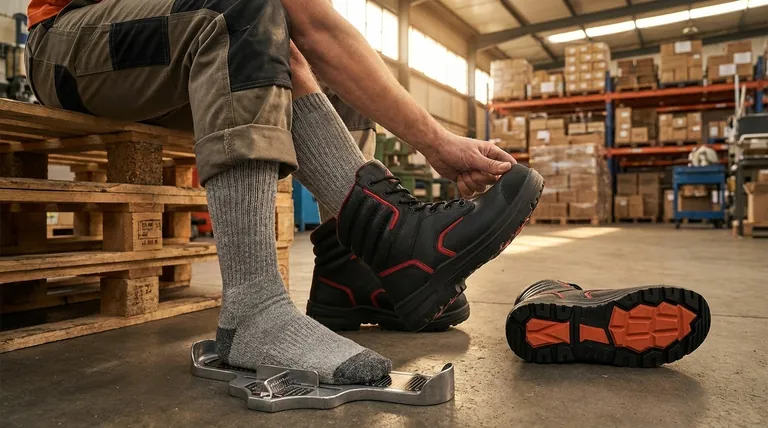
Never try on work boots with thin athletic or dress socks.
Bring the actual pair of moisture-wicking work socks you intend to wear on the job. If you use custom orthotics or specialized insoles, bring those as well to ensure they fit inside the boot without compromising space.
The In-Store Test: Three Key Checkpoints
Once you have the boots on, walk around the store for several minutes. Pay close attention to three specific areas.
- The Ball of Your Foot: The boot should flex at the ball of your foot, and this area—the widest part of your foot—should feel snug but not compressed.
- Your Heel: As you walk, your heel should feel locked in place. A small amount of movement is normal, but significant slipping indicates the boot is too large and will cause chafing.
- Your Toes: Stand up straight and ensure there is about a half-inch (a thumb's width) of space between your longest toe and the end of the steel cap. You should be able to wiggle your toes freely.
Understanding the Trade-offs of Steel Toe Protection
Steel toe boots offer exceptional impact and compression resistance, but this protection comes with inherent characteristics you must manage.
Protection vs. Weight
Steel is robust, but it is also heavy compared to composite toe alternatives. This weight can contribute to fatigue over a long day, making a proper, supportive fit even more important to minimize strain.
Temperature Conductivity
Steel is an excellent conductor of temperature. In cold environments, your boots can feel frigid, while in extreme heat, they can retain warmth. A correct fit that allows for thermal socks without cutting off circulation is essential for managing this.
Environmental Limitations
The steel in your boots will be detected by metal detectors. This makes them unsuitable for certain high-security environments. They can also be a hazard around powerful magnetic surfaces.
Final Checks Before You Commit
Before making a final decision, run through two last assessments that mimic real-world conditions.
Inspect Both Boots
Put on both the left and right boot. Most people have one foot that is slightly larger than the other, so always fit to the larger foot. Check both boots for any internal seams or manufacturing defects that could cause irritation.
The Pant Leg Test
If possible, wear or bring the work pants you typically use. Ensure the pant legs fall correctly over the top of the boots without catching or creating a tripping hazard.
Making the Right Choice for Your Job
Your specific work environment and priorities should guide your final decision.
- If your primary focus is all-day comfort in a less hazardous role: Prioritize a locked-in heel and ample toe-wiggling room, as this combination prevents the most common sources of pain and fatigue.
- If your primary focus is maximum safety in heavy industry: Ensure the boot fits perfectly with your thickest work socks and any required orthotics, accepting zero compromise on the placement and space around the steel toe cap.
- If you work in highly variable temperatures: Acknowledge that the steel will conduct heat and cold; a proper fit that allows for thermal socks without restricting circulation is non-negotiable.
Investing the time to find the perfect fit transforms your work boot from a simple requirement into your most reliable and protective tool.
Summary Table:
| Key Fitting Tip | Why It Matters |
|---|---|
| Shop at the end of the day | Feet are naturally swollen, ensuring the boot won't become tight during a long shift. |
| Wear your work socks | Guarantees an accurate fit with the exact thickness of socks you'll use on the job. |
| Fit to your larger foot | Most people have one foot slightly larger; this prevents pain and cramping. |
| Thumb's width of toe space | The steel toe cap is unforgiving; this space is critical for long-term comfort and safety. |
| Check for a locked-in heel | Prevents slippage and blisters, providing stability and support. |
Get the Perfect Fit for Your Workforce with 3515
As a large-scale manufacturer, 3515 produces a comprehensive range of industrial footwear for distributors, brand owners, and bulk clients. Our production capabilities encompass all types of safety boots and shoes, engineered for durability, protection, and superior comfort right out of the box.
We help you:
- Source Reliably: Access a vast catalog of consistently high-quality steel toe boots.
- Customize Solutions: Develop branded or custom-spec footwear tailored to your workforce's unique needs and environments.
- Simplify Procurement: Streamline your supply chain with our bulk manufacturing expertise.
Ready to equip your team with safety footwear that fits perfectly from day one? Let's discuss your requirements.
Contact 3515 today for a consultation and quotation.
Visual Guide
Related Products
- Durable Steel Toe Safety Boots Wholesale & Custom Manufacturing
- Wholesale Durable 6-Inch Work Boots | Custom & Private Label Manufacturer
- Wholesale Durable Breathable Safety Boots Custom OEM Manufacturer
- Puncture-Resistant Velcro Safety Boots for Wholesale & Custom Manufacturing
- Premium Sport Style Safety Boots for Bulk Orders
People Also Ask
- Why are industrial safety boots with steel toes necessary for machine operators? Essential Foot Protection for Safety
- Why is it mandatory to wear safety shoes with steel toe protection during metal loading? Prevent Crushing Injuries
- What are the main materials used in steel toe safety shoes? A Guide to Protective Footwear Construction
- What are the characteristics of steel toe safety boots? Maximum Protection, Key Trade-offs
- Is it true that steel toes can cause toes to get cut off? Debunking the Dangerous Myth