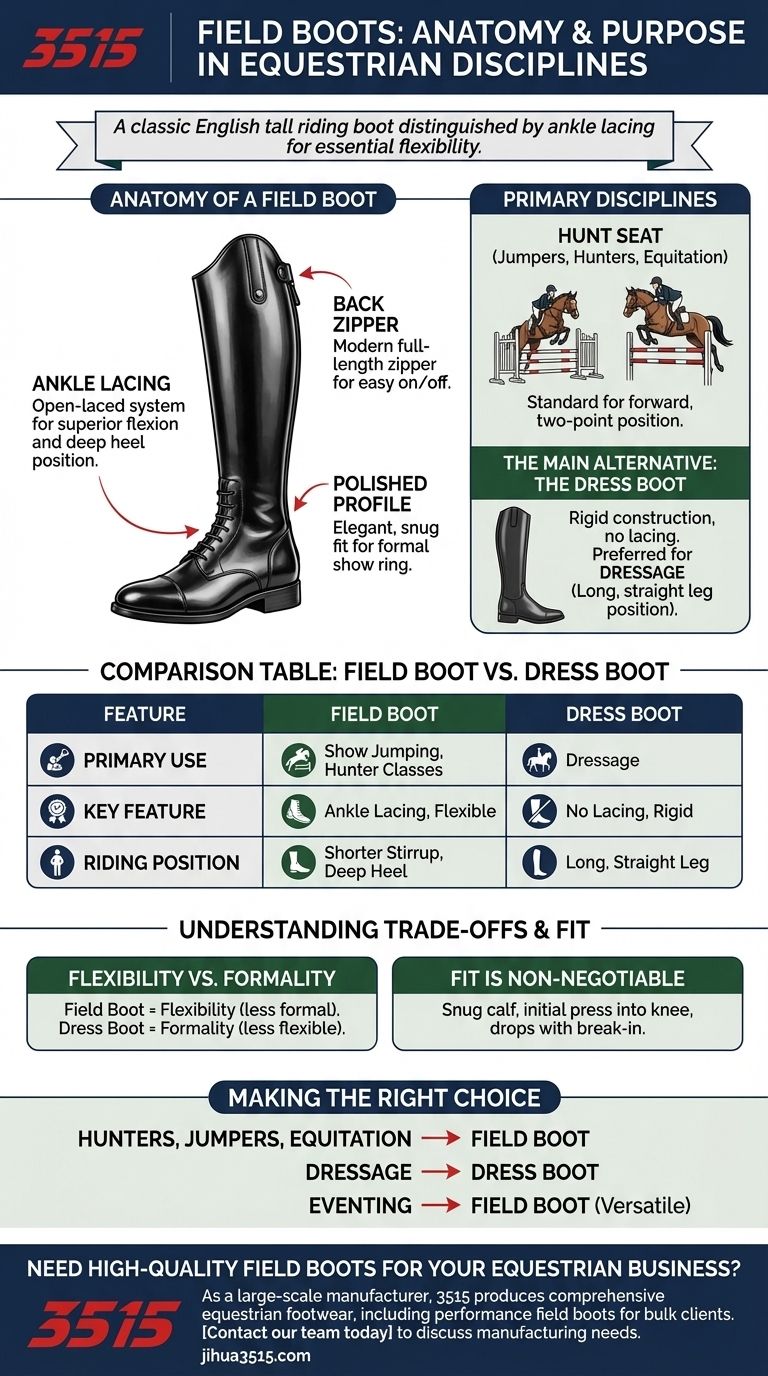
In short, a field boot is a classic style of English tall riding boot distinguished by the lacing at the ankle. This design is not merely for aesthetics; its primary purpose is to provide flexibility, making it the standard choice for "hunt seat" disciplines like show jumping and hunter classes where a shorter stirrup and deep heel are required.
The core takeaway is that a field boot's defining ankle laces provide essential flexibility for jumping disciplines. Understanding this functional purpose is the key to distinguishing it from other tall boots and choosing the right equipment for your riding goals.
The Anatomy of a Field Boot
To understand when and why field boots are used, it's essential to look at how their specific design features serve the rider.
The Defining Feature: Ankle Lacing
The series of laces over the instep is the most recognizable feature of a field boot. This "open-laced" system allows the ankle to flex more easily.
This added flexibility is critical for riders in jumping disciplines. It allows them to shorten their stirrups and sink their weight down into a deep, secure heel position, which is fundamental for balance and safety when going over fences.
A Polished, Traditional Profile
Despite the functional laces, field boots maintain a highly polished and elegant appearance suitable for the show ring.
They are tall, traditionally made of black leather, and designed to fit snugly against the calf. This creates a long, clean leg line that is a hallmark of formal English riding attire.
Modern Conveniences: Zippers
While traditional field boots were pull-on, virtually all modern versions include a full-length zipper up the back of the boot. This makes the process of putting on and taking off these skintight boots significantly easier without sacrificing the classic profile.
Field Boots in Context: The Right Tool for the Job
The choice between different styles of tall boots is dictated almost entirely by the rider's discipline. The field boot is purpose-built for specific equestrian sports.
The Primary Disciplines: Hunt Seat Riding
Field boots are the standard and often required footwear for all "hunt seat" disciplines. This category includes show hunters, jumpers, and equitation classes.
In all these events, the rider must adopt a forward, two-point position and maintain a deep heel over obstacles, making the ankle flexibility of a field boot indispensable.
The Main Alternative: The Dress Boot
The other primary type of English tall boot is the dress boot. Dress boots are stylistically simpler, lacking the ankle lacing for a stiffer, more formal look.
This rigidity is preferred in dressage, where the rider maintains a long, straight leg position and does not require the same degree of ankle flexion. The dress boot offers a clean, uninterrupted line that complements the formal nature of the discipline.
Understanding the Trade-offs
Choosing a boot isn't just about following rules; it's about understanding the functional compromises of each design.
Flexibility vs. Formality
The core trade-off is simple. Field boots offer superior ankle flexibility at the cost of a slightly less formal appearance due to the lacing.
Dress boots provide a more formal, rigid profile but lack the flexion needed for high-performance jumping. This makes them unsuitable for hunter/jumper disciplines.
Fit is Non-Negotiable
For any tall boot, a correct fit is paramount. An ill-fitting boot can be painful, inhibit your riding, and wear out quickly.
Boots should be snug through the calf and tall enough that they initially press into the back of the knee. They will "drop" or sink down around the ankle by an inch or more as the leather breaks in.
Making the Right Choice for Your Discipline
Your decision should be guided by the specific demands of the sport you pursue.
- If your primary focus is hunters, jumpers, or equitation: The field boot is the standard, correct, and most functional choice for your needs.
- If your primary focus is dressage: The dress boot is the traditional and preferred choice for its formal appearance and supportive, rigid construction.
- If your primary focus is eventing: The field boot is the most versatile option, as it is perfectly suited for the show jumping and cross-country phases.
Ultimately, selecting the correct boot is about aligning your equipment with the functional demands of your discipline.
Summary Table:
| Feature | Field Boot | Dress Boot |
|---|---|---|
| Primary Use | Show Jumping, Hunter Classes | Dressage |
| Key Feature | Ankle Lacing for Flexibility | No Lacing, Rigid Construction |
| Riding Position | Shorter Stirrup, Deep Heel | Long, Straight Leg |
Need High-Quality Field Boots for Your Equestrian Business?
As a large-scale manufacturer, 3515 produces a comprehensive range of equestrian footwear for distributors, brand owners, and bulk clients. Our production capabilities encompass all types of riding boots, including the precise construction and premium materials required for performance field boots.
Let us help you equip riders with the perfect footwear for their discipline. Contact our team today to discuss your manufacturing needs and get a quote.
Visual Guide
Related Products
- Durable Military Combat Boots with Water Drainage for Wholesale & OEM
- High-Traction Suede Tactical Boots Wholesale & Custom Manufacturing
- Wholesale Lightweight Tactical Boots Custom Manufacturer for Desert & Combat Use
- Durable Leather Tactical Boots Wholesale & Custom Manufacturing for Brands
- Durable Leather Work Boots for Wholesale & Custom Manufacturing
People Also Ask
- Why must gait validation for military applications be conducted in combat boots? Ensure Data Accuracy for Soldiers
- What are the common types of combat boots? Find the Right Boot for Your Mission
- What factors should be considered when choosing military boots for hiking? Durability vs. Weight for Your Terrain
- What are the key considerations when choosing military boots? Prioritize Compliance, Environment & Fit
- How should the midfoot and heel fit in military boots? Achieve a Snug, Secure Fit for Blister Prevention