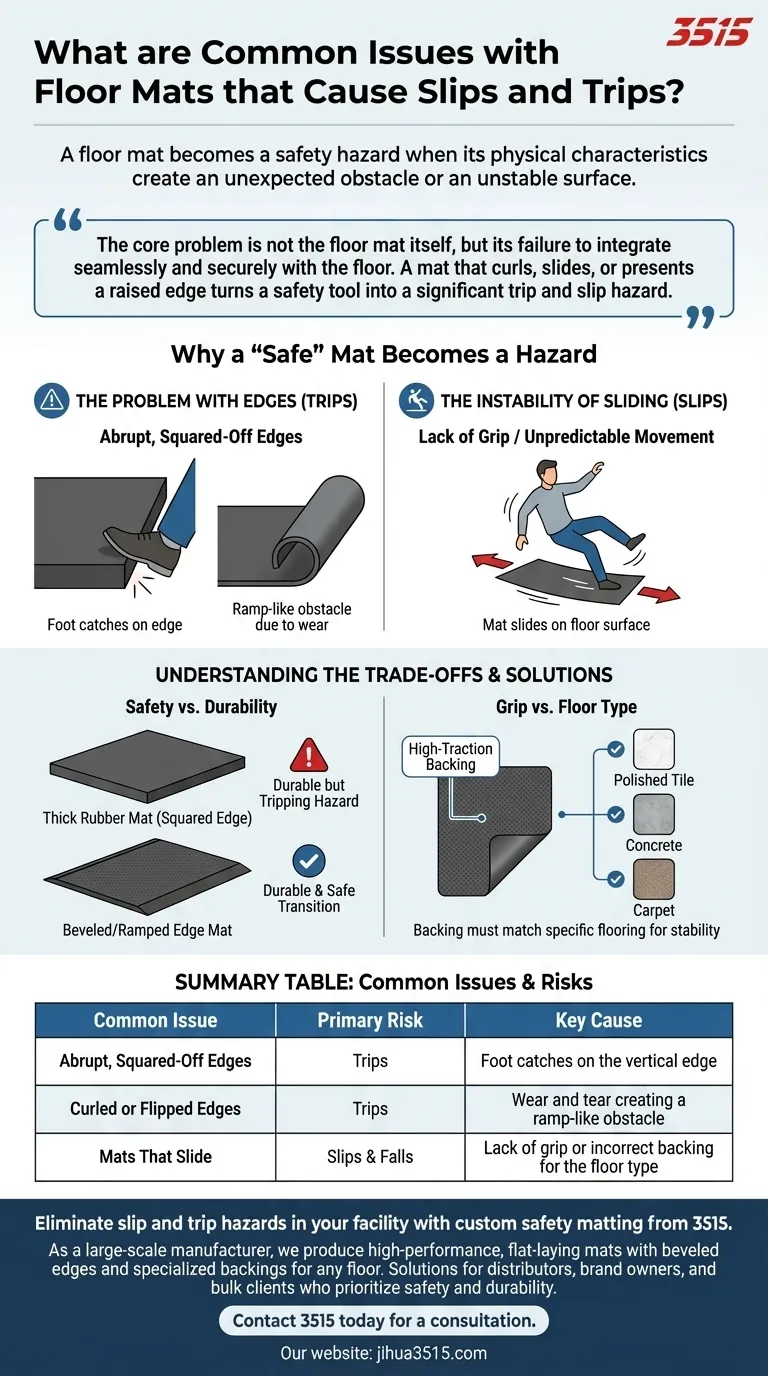
A floor mat becomes a safety hazard when its physical characteristics create an unexpected obstacle or an unstable surface. The most common issues are edges that are either too abrupt, curled, or damaged, and mats that lack sufficient grip, causing them to slide out of position.
The core problem is not the floor mat itself, but its failure to integrate seamlessly and securely with the floor. A mat that curls, slides, or presents a raised edge turns a safety tool into a significant trip and slip hazard.
Why a "Safe" Mat Becomes a Hazard
Floor mats are intended to improve safety by providing traction or capturing debris. However, they introduce a new element into the walking environment, and any flaw in their design or condition can create a serious risk.
The Problem with Edges
The perimeter of a mat is the most common point of failure.
- Abrupt, Squared-Off Edges: Mats with thick, vertical edges act like a small curb. This design can easily catch a person's foot, especially if they are not lifting their feet high, leading to a trip and fall.
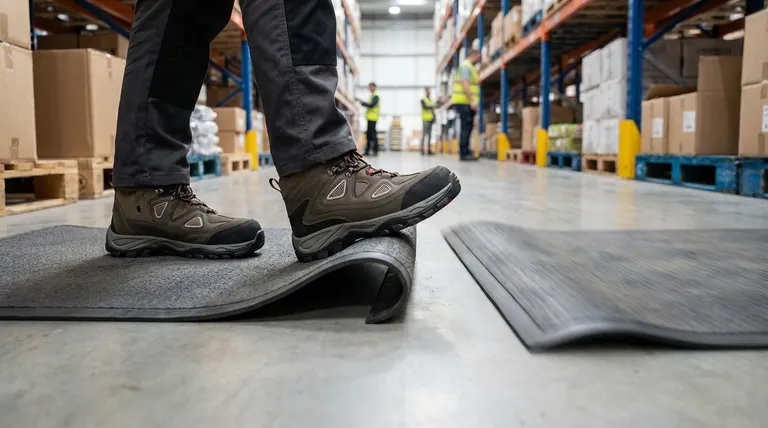
- Curled or Flipped Edges: Over time, from use or poor quality, the edges of a mat can curl upwards. This creates a ramp-like obstacle that is a primary cause of trips, as it presents a direct impediment to a smooth stride.
The Instability of Sliding
A mat is only effective if it stays in one place.
- Lack of Grip: If the backing of the mat is worn, dirty, or simply not designed for the floor surface it's on (e.g., a standard mat on a polished tile floor), it will slide easily.
- Unpredictable Movement: When a person steps on a sliding mat, it can move unexpectedly from under their feet. This sudden shift in the walking surface is a classic cause of slip-and-fall incidents.
Understanding the Trade-offs
When selecting a floor mat, the goal is to mitigate one set of risks without introducing another.
Safety vs. Durability
High-durability, thick rubber mats often provide excellent traction on their top surface. However, this thickness can also result in the abrupt, squared-off edges that create a tripping hazard. A beveled or ramped edge is a critical feature to look for.
Grip vs. Floor Type
A mat with an aggressive, high-grip backing may stay put on one type of floor but could be ineffective or even damage another. The backing must be matched to the specific flooring material to ensure it remains stationary without causing harm to the surface beneath it.
Making the Right Choice for Your Environment
To ensure a mat enhances safety rather than compromises it, analyze its features in the context of its placement.
- If your primary focus is preventing trips in high-traffic areas: Prioritize mats with low-profile, beveled, or ramped edges that lie completely flat.
- If your primary focus is preventing slips on smooth surfaces: Select a mat with a high-traction backing specifically certified for the type of flooring you have.
- If you are placing a mat in a dynamic environment: Regularly inspect for any signs of curling, wear, or damage and replace it immediately if it fails to lie perfectly flat.
Ultimately, the safest floor mat is one you don't notice, because it stays flat, stays put, and does its job without creating a new hazard.
Summary Table:
| Common Issue | Primary Risk | Key Cause |
|---|---|---|
| Abrupt, Squared-Off Edges | Trips | Foot catches on the vertical edge |
| Curled or Flipped Edges | Trips | Wear and tear creating a ramp-like obstacle |
| Mats That Slide | Slips & Falls | Lack of grip or incorrect backing for the floor type |
Eliminate slip and trip hazards in your facility with custom safety matting from 3515. As a large-scale manufacturer, we produce a comprehensive range of high-performance, flat-laying mats with beveled edges and specialized backings for any floor surface. Our solutions are designed for distributors, brand owners, and bulk clients who prioritize safety and durability. Let us help you select the perfect mat to protect your employees and customers.
Contact 3515 today for a consultation and ensure your floors are truly safe.
Visual Guide
Related Products
- Lightweight Breathable Sneakers with Wet-Traction Grip for Wholesale & Private Label
- Wholesale Breathable Perforated Slip-On Loafers Custom Manufacturing
- Custom Manufactured Air Cushion Leather Business Shoes for Wholesale
- Wholesale Lightweight Cushioned Athletic Sneakers for Custom Bulk Production
- Wholesale Breathable Athletic Sneakers - Custom Lightweight Cushioned Footwear Manufacturer
People Also Ask
- Why are breathable sneakers necessary for tropical commuting? Stay Cool and Dry in High Humidity
- What role do lightweight training shoes play in urban traffic? Boost Agility and Reaction for Safer City Navigation
- How do lightweight shoes provide support? The Science of Efficient Cushioning & Stability
- What are the style advantages of lightweight shoes? Sleek, Versatile & Modern Comfort
- How do lightweight shoes contribute to healthier feet? Reduce Fatigue & Prevent Foot Problems