
In essence, a ballet flat is a lightweight, flat-soled shoe directly inspired by the soft slippers worn by ballet dancers. Characterized by its minimalist construction and typically rounded toe, it has evolved from a niche, dance-inspired piece into a foundational element of modern footwear. Its enduring appeal lies in its ability to bridge the gap between casual comfort and understated elegance.
The ballet flat is more than just a shoe; it is a symbol of practical elegance. Its journey from the dance studio to everyday fashion reflects a timeless desire for a style that is both comfortable and chic, making it a permanent fixture in the modern wardrobe.
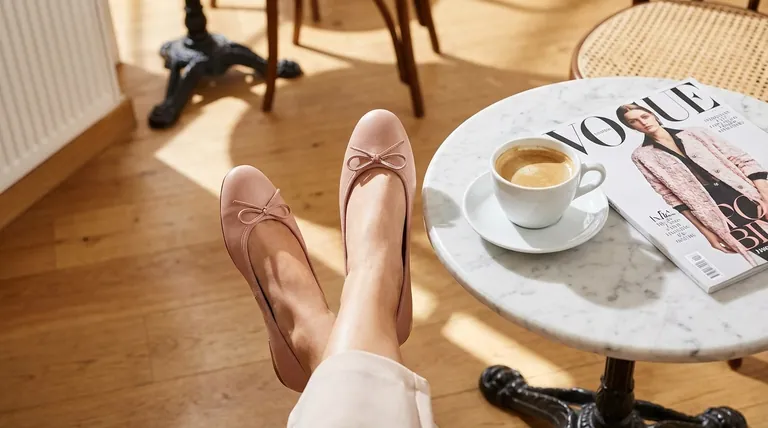
The Anatomy of a Classic: Defining Features
To understand the ballet flat's evolution, we must first recognize its core components, which have remained remarkably consistent over time.
The Rounded Toe
The classic silhouette features a closed, rounded toe. This design directly mirrors the shape of a traditional ballet slipper, creating a soft, feminine aesthetic that is less severe than a pointed or squared-off shoe.
The Flat Sole
The defining characteristic is its minimal, flexible sole. This provides a "close-to-the-ground" feeling, offering flexibility and lightweight comfort that distinguishes it from more structured loafers or sneakers.
The Signature Bow
Many traditional ballet flats feature a delicate bow at the top of the toe box. This is a stylistic nod to the functional drawstring on real ballet slippers, which dancers use to tighten the shoe for a perfect fit. Modern variations often omit this detail for a more minimalist look.
A Brief History: From Stage to Street
The ballet flat's transition from performance wear to a fashion staple was a gradual process, marked by key cultural moments.
Origins in Dance
The shoe's lineage begins with the soft, pliable slippers of the ballet world. Their simple, functional design was engineered for maximum flexibility and grace, a quality that would later define their appeal in mainstream fashion.
The Mid-Century Style Icon
The leap to streetwear occurred in the mid-20th century. Icons like Audrey Hepburn famously wore them, pairing the simple flats with cropped trousers and elegant silhouettes. This cemented the shoe's status as a symbol of effortless, gamine chic.
The 21st Century Revival
As noted, the early 2000s saw a massive resurgence in the ballet flat's popularity. It became the go-to shoe for a generation, prized for its versatility and comfort, easily paired with everything from jeans to dresses.
Understanding the Trade-offs
While celebrated for its style and comfort, the minimalist design of the ballet flat comes with practical limitations.
The Lack of Arch Support
The most significant drawback of a traditional ballet flat is its completely flat insole. Prolonged wear, especially for individuals requiring arch support, can lead to foot fatigue or discomfort.
Limited Protection
The thin, flexible sole offers minimal protection from rough terrain or impact. They are best suited for urban environments like offices, sidewalks, and indoor settings rather than for long-distance walking on uneven surfaces.
The Modern Evolution: Variations on a Theme
Today's ballet flat has evolved far beyond its simple, classic form, adapting to contemporary trends while retaining its core identity.
Material and Pattern Diversity
The modern flat is a canvas for expression. While classic leather remains popular, they are now produced in a vast array of materials including suede, canvas, and patent leather, and feature countless patterns, from animal prints to bold colors.
The Shift in Silhouette
Designers continuously reinterpret the classic shape. Modern variations include flats with pointed toes for a sharper, more professional look, or squared-off toes that reflect current trends. Elasticized toplines and varied embellishments have also become common.
Making the Right Choice for Your Goal
Selecting the right ballet flat depends entirely on your specific needs for style and function.
- If your primary focus is timeless elegance: Opt for a classic, round-toe flat in a neutral leather like black, tan, or navy, often featuring the traditional bow.
- If your primary focus is modern trends: Explore flats with updated silhouettes like a pointed or square toe, or choose a pair in a bold color or eye-catching pattern.
- If your primary focus is all-day comfort: Seek out modern versions specifically designed with cushioned insoles, built-in arch support, or slightly more substantial rubber soles.
Ultimately, the ballet flat has secured its place as a versatile and enduring wardrobe staple for its unique blend of simplicity and sophistication.
Summary Table:
| Feature | Classic Design | Modern Variations |
|---|---|---|
| Toe Shape | Rounded | Pointed, Square |
| Sole | Thin, Flexible | Cushioned, Rubber |
| Embellishment | Signature Bow | Elasticized Topline, Minimalist |
| Primary Use | Casual Chic, Office Wear | Trend-Driven, All-Day Comfort |
Looking for a reliable manufacturer for your next footwear collection?
As a large-scale manufacturer, 3515 produces a comprehensive range of footwear for distributors, brand owners, and bulk clients. Our production capabilities encompass all types of shoes and boots, including classic and modern ballet flats tailored to your market's needs.
We combine quality craftsmanship with scalable production to bring your designs to life. Contact us today to discuss your manufacturing requirements and get a quote.
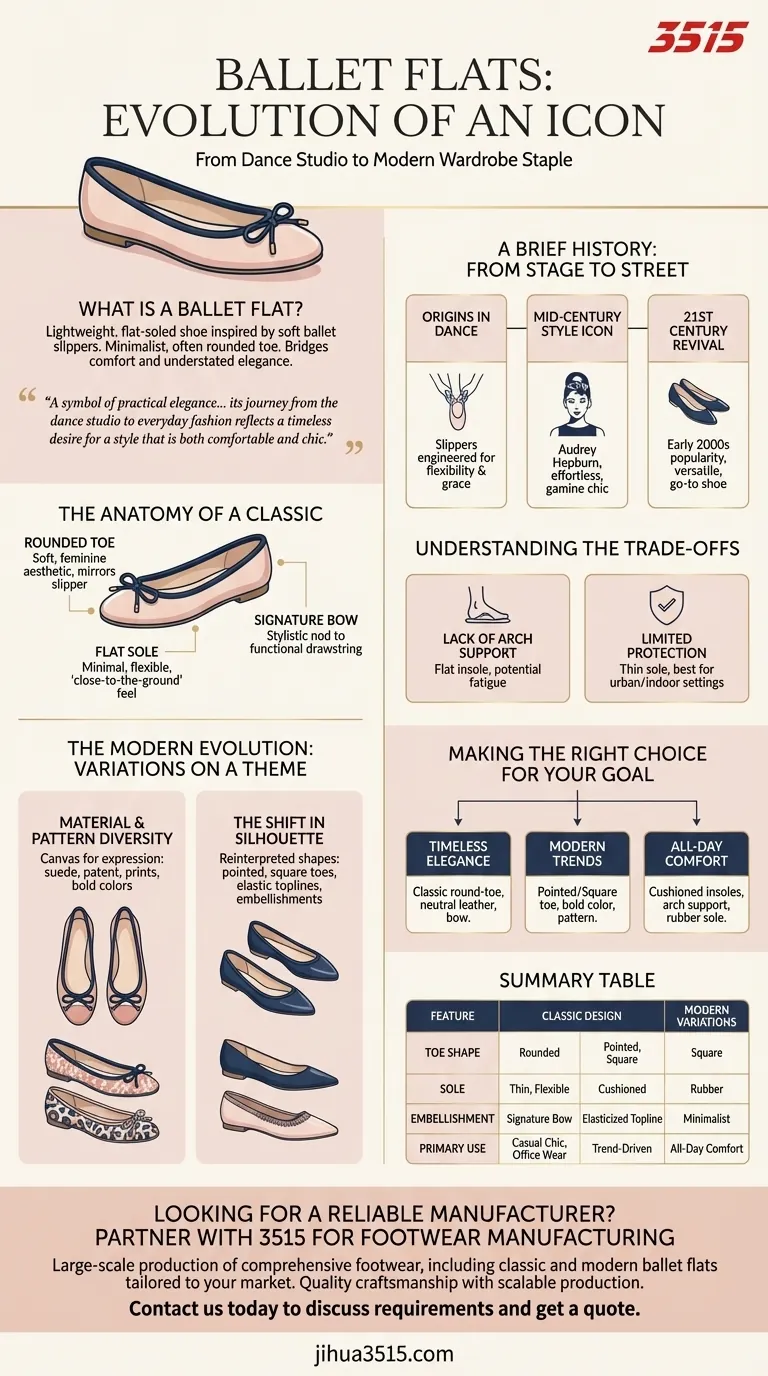
Visual Guide
Related Products
- Wholesale Durable Camouflage Canvas Shoes with High-Traction Cleated Rubber Sole
- Lightweight Breathable Training Shoes for Wholesale & Custom OEM Manufacturing
- Wholesale Durable & Breathable Training Shoes for Custom Brands
- Wholesale Breathable Training Shoes Custom Athletic Footwear Manufacturer
People Also Ask
- Why is the selection of high-strength fabric materials necessary in the production of canvas shoes and training shoes?
- What are the properties of canvas as a shoe material? A Guide to Lightweight Comfort & Style
- Can canvas shoes be worn in rainy conditions? The Truth About Water Resistance
- What are some examples of vulcanized shoes? Discover the Flexibility and Board Feel of Classic Sneakers
- What are the characteristics of canvas as a shoe material? A Guide to Lightweight, Breathable Footwear



