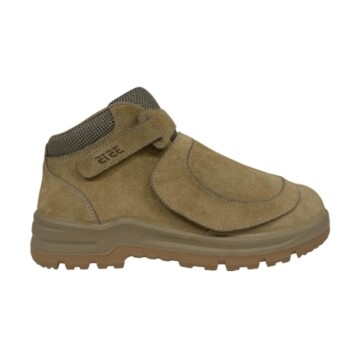
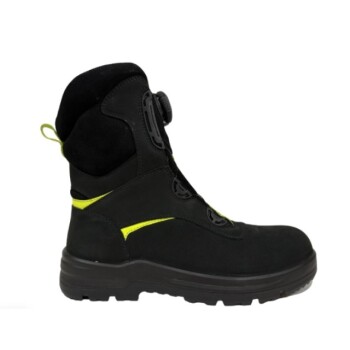
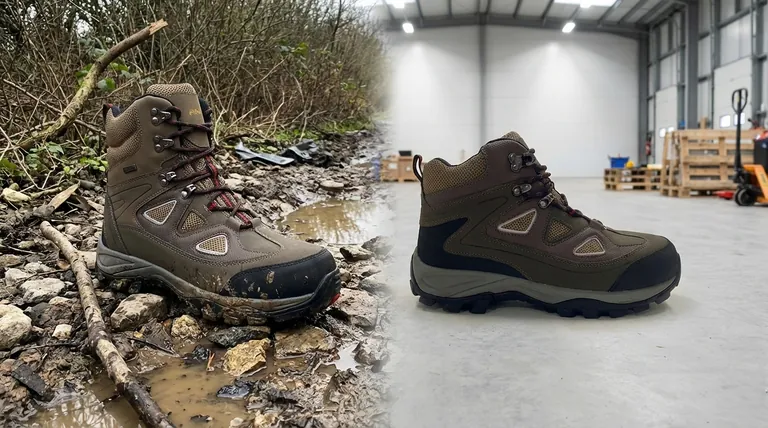
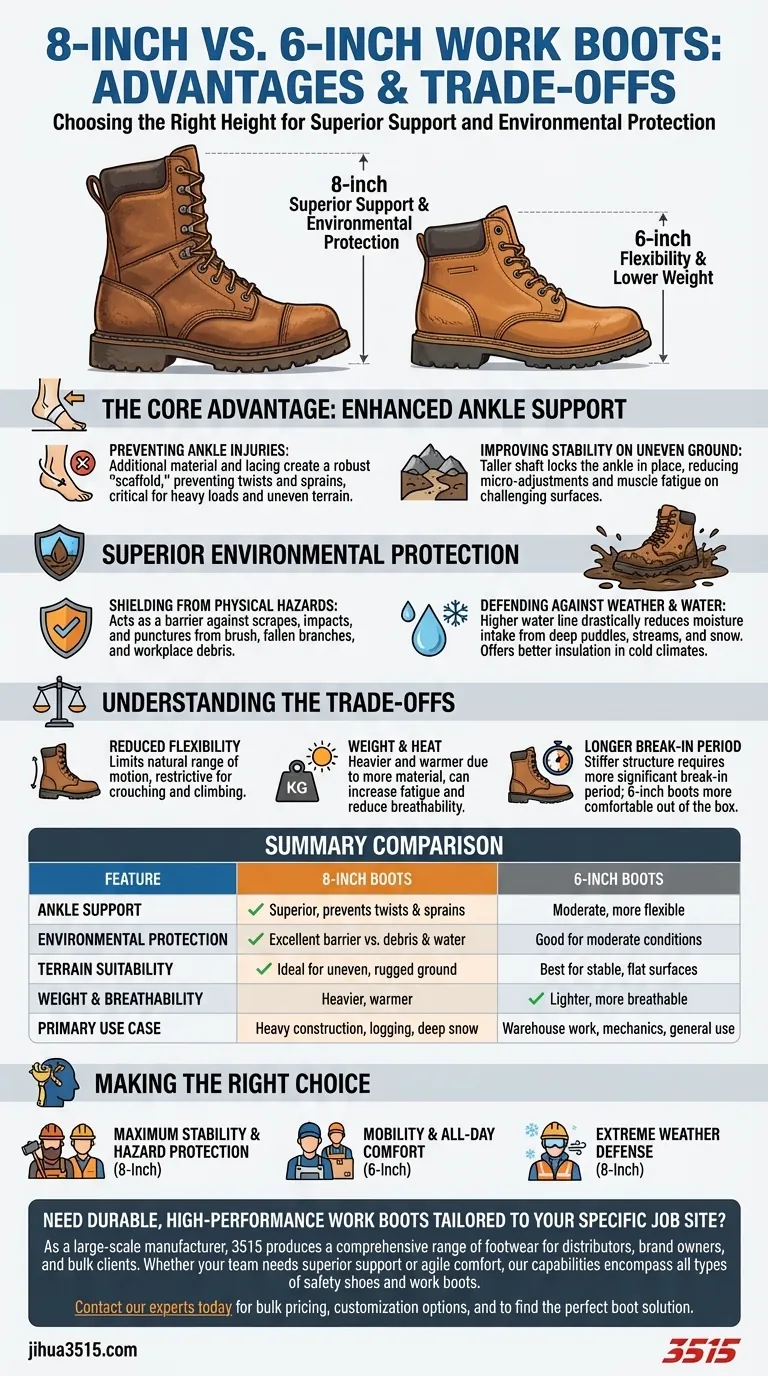
When choosing between boot heights, the primary advantages of an 8-inch full-height boot over a 6-inch ankle-height boot are fundamentally about superior support and environmental protection. The taller shaft provides a more rigid structure around the ankle and creates a more effective barrier against external hazards.
The decision between a 6-inch and 8-inch boot is a direct trade-off between ankle stability and environmental defense versus flexibility and lower weight. Your specific work environment and daily tasks should be the deciding factor.
The Core Advantage: Enhanced Ankle Support
An 8-inch boot extends well past the ankle joint, allowing it to provide a level of stability that a 6-inch boot cannot match.
Preventing Ankle Injuries
The additional two inches of material and lacing create a more robust "scaffold" around your ankle. This structure helps prevent twists, sprains, and rolls, which is especially critical when carrying heavy loads or navigating uneven, unpredictable terrain.
Improving Stability on Uneven Ground
For those working on rocky surfaces, debris-filled construction sites, or off-trail environments, the taller boot helps lock the ankle in place. This reduces micro-adjustments and muscle fatigue over a long day.
Superior Environmental Protection
The taller shaft of an 8-inch boot acts as a more effective gaiter, sealing the gap between your pants and footwear.
Shielding from Physical Hazards
The added height provides a crucial barrier against scrapes, impacts, and punctures from thick brush, fallen branches, or workplace debris. This is a significant safety factor in forestry, landscaping, and certain industrial settings.
Defending Against Weather and Water
When traversing deep puddles, streams, or significant snowfall, an 8-inch boot offers a clear advantage. The higher water line drastically reduces the chance of moisture seeping in from the top, keeping your feet dry and comfortable.
Providing Better Insulation
In cold climates, the extra coverage of an 8-inch boot offers more insulation for the lower leg. This small difference can have a noticeable impact on warmth and comfort during prolonged exposure to cold.
Understanding the Trade-offs
While 8-inch boots offer clear benefits in protection, these advantages come with inherent compromises.
The Cost of Support: Reduced Flexibility
The same rigidity that provides excellent ankle support also limits its natural range of motion. This can feel restrictive for tasks that require frequent crouching, climbing, or agile footwork.
The Impact of More Material: Weight and Heat
Taller boots are invariably heavier and warmer due to the simple fact that they use more material. Over a long shift, this extra weight can contribute to fatigue, while the reduced breathability can be a disadvantage in hot climates.
A Longer Break-in Period
The stiffer, taller structure of most 8-inch boots often requires a more significant break-in period to achieve optimal comfort. 6-inch boots are typically more comfortable out of the box.
Making the Right Choice for Your Goal
Your specific application is the deciding factor. Evaluate your daily environment to determine which boot height truly serves your needs.
- If your primary focus is maximum stability and hazard protection: The 8-inch boot is the clear choice for logging, heavy construction, or rugged off-trail hiking.
- If your primary focus is mobility and all-day comfort in moderate conditions: The 6-inch boot provides a better balance for mechanics, warehouse work, or general-purpose use on stable surfaces.
- If your primary focus is working in extreme weather: The additional height of an 8-inch boot provides an essential defense against deep snow, mud, or water.
Choosing the correct boot height is a foundational step in ensuring your safety, comfort, and performance for the task at hand.
Summary Table:
| Feature | 8-Inch Boots | 6-Inch Boots |
|---|---|---|
| Ankle Support | Superior, prevents twists & sprains | Moderate, more flexible |
| Environmental Protection | Excellent barrier vs. debris & water | Good for moderate conditions |
| Terrain Suitability | Ideal for uneven, rugged ground | Best for stable, flat surfaces |
| Weight & Breathability | Heavier, warmer | Lighter, more breathable |
| Primary Use Case | Heavy construction, logging, deep snow | Warehouse work, mechanics, general use |
Need durable, high-performance work boots tailored to your specific job site?
As a large-scale manufacturer, 3515 produces a comprehensive range of footwear for distributors, brand owners, and bulk clients. Whether your team needs the superior support of 8-inch boots or the agile comfort of 6-inch boots, our production capabilities encompass all types of safety shoes and work boots to meet your exact requirements.
Contact our experts today for bulk pricing, customization options, and to find the perfect boot solution for your workforce.
Visual Guide
Related Products
- Wholesale Durable Leather Work Boots | 8-Inch Goodyear Welt Manufacturer
- Durable High-Ankle Tactical Boots Wholesale Manufacturer for Custom & Bulk Orders
- Durable Leather High-Ankle Tactical Boots for Wholesale & Custom Manufacturing
- Durable High-Ankle Tactical Boots for Wholesale & Custom Manufacturing
- High-Traction Suede Tactical Boots Wholesale & Custom Manufacturing
People Also Ask
- What is the difference between full-grain and top-grain leather? Premium Material Guide for Boot Manufacturers
- What is the complete process for deep cleaning leather work boots? A Step-by-Step Guide to Preserve Your Investment
- Why is it important to waterproof leather work boots? Protect Your Investment and Performance
- What are the advantages of leather as an upper material for work boots? Unmatched Durability & Custom Comfort
- What are the key qualities of leather for work boots? Superior Durability, Breathability & Custom Fit