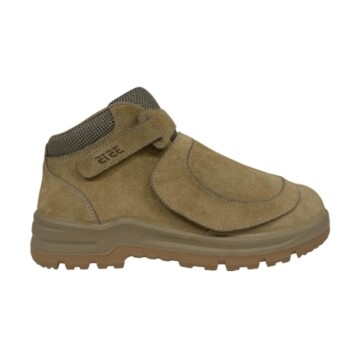
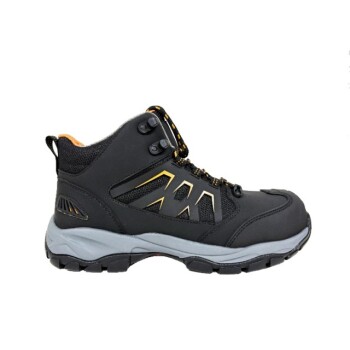
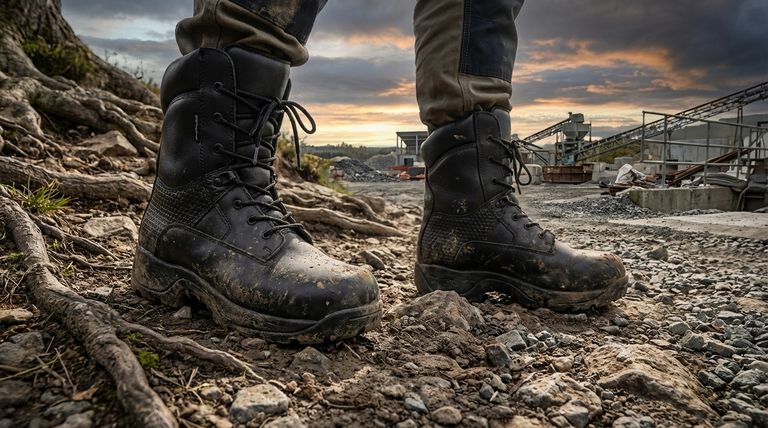
The single greatest advantage boots with ankle support offer is the versatility to navigate virtually any type of terrain with confidence. By stabilizing the foot and ankle, these boots create a secure foundation that protects against injury on surfaces ranging from smooth pavement to rugged, unpredictable ground.
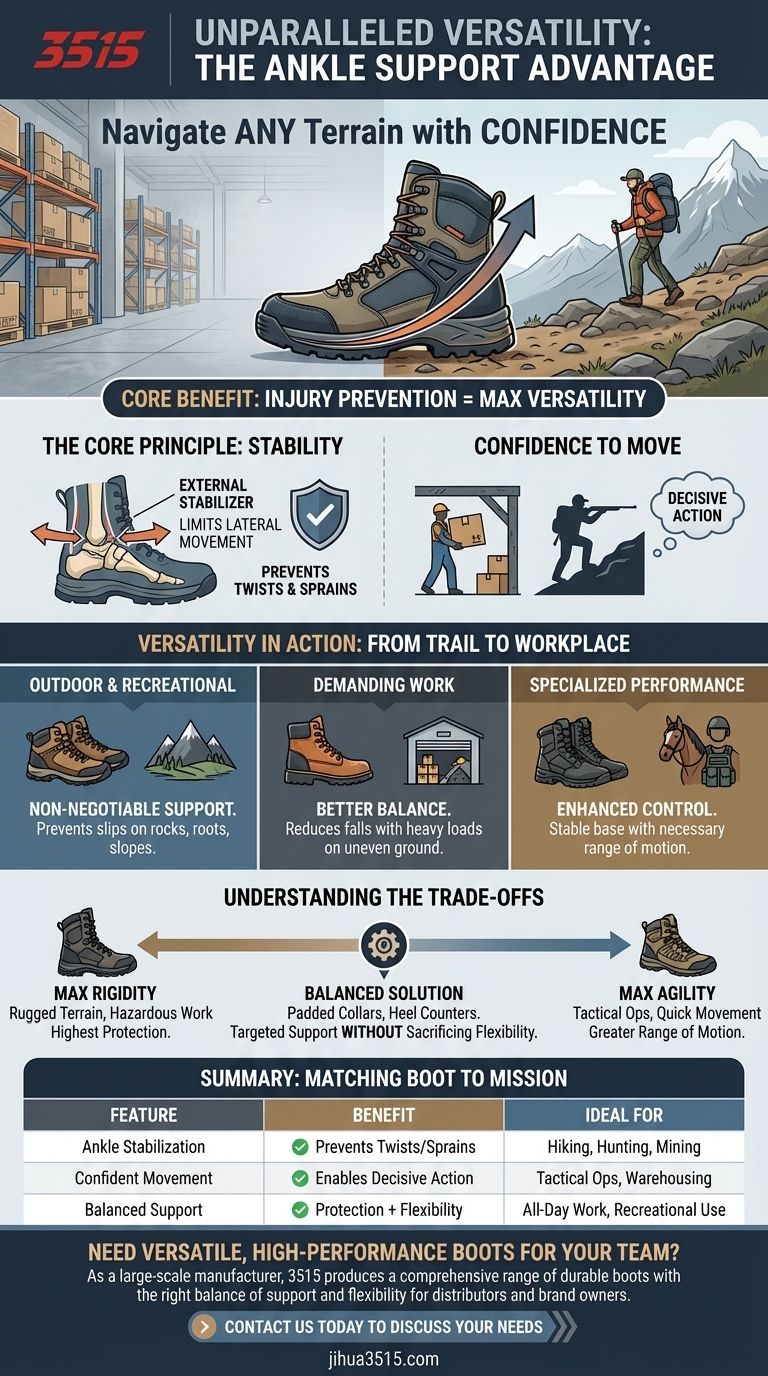
The versatility of ankle-support boots comes from one core function: injury prevention. By minimizing the risk of twists and sprains, they enable the wearer to confidently engage in a wide array of activities—from industrial work to wilderness hiking—without changing their footwear.
The Core Principle: Stability Across Environments
The fundamental purpose of ankle support is to control movement and maintain proper foot alignment, especially when external forces try to push it out of position.
How Ankle Support Prevents Injury
When you walk on uneven ground, like a rocky trail or a cluttered work site, your ankle is constantly at risk of rolling or twisting. Ankle support acts as an external stabilizer, physically limiting the joint's ability to move into an injury-prone position.
This is particularly critical for preventing sprains, which occur when ligaments are stretched or torn. A boot that laces up firmly above the ankle provides this essential structural reinforcement.
The Confidence to Move Freely
This physical protection creates a significant psychological benefit. Knowing your ankles are secure gives you the confidence to move more decisively over challenging surfaces, whether you're carrying heavy objects in a mine or navigating a steep incline on a hunt.
Versatility in Action: From the Trail to the Workplace
The need for a stable footing is nearly universal, which is why ankle support is a key feature in footwear designed for vastly different purposes.
For Outdoor and Recreational Use
For hikers and hunters, the terrain is rarely flat or predictable. Good ankle support is non-negotiable to prevent a day outdoors from ending with a painful injury caused by a slip on loose rocks, tree roots, or steep slopes.
For Demanding Work Environments
In industrial settings like mining or warehouse work, workers face uneven surfaces, potential slips, and the added stress of carrying heavy loads. Ankle support provides the stability needed for better balance, reducing the risk of falls and injuries.
For Specialized Performance
Even in more specific activities, this feature is key. In riding boots, it enhances saddle grip and control. In tactical boots, it provides a stable base for movement over rough terrain while still allowing for a necessary range of motion.
Understanding the Trade-offs: Support vs. Flexibility
While ankle support is crucial, the amount of support required involves a trade-off between maximum rigidity and necessary flexibility.
The Need for Maximum Rigidity
For activities like navigating extremely rugged terrain or working in hazardous industrial environments, a high-cut, rigid boot is often essential. This design offers the highest level of protection against severe ankle rolls and impacts.
The Importance of Agility
In other contexts, such as tactical operations, too much rigidity can be a liability. Users need to be able to move quickly and quietly, which requires a greater range of ankle motion. Here, flexible ankle support is prioritized to balance protection with agility.
Finding the Right Balance
Modern boots often use features like padded ankle collars and internal or external heel counters. These elements provide targeted support and enhance stability without completely sacrificing the boot's flexibility, offering a balanced solution for many users.
Matching the Boot to Your Mission
Choosing the right boot depends entirely on the demands of your primary activity.
- If your primary focus is maximum protection on rugged terrain (hiking, hunting, mining): Prioritize a high-cut boot with rigid ankle support to prevent twists and sprains.
- If your primary focus is agility and a wide range of motion (tactical use): Seek boots with flexible ankle supports that protect the joint without overly restricting movement.
- If your primary focus is all-day stability in a work environment (warehousing, logistics): Look for boots with features like padded collars and strong heel counters for consistent balance and support.
Ultimately, the right ankle support transforms a simple boot into a versatile tool, empowering you to perform safely and effectively across any environment.
Summary Table:
| Feature | Benefit | Ideal For |
|---|---|---|
| Ankle Stabilization | Prevents twists and sprains on uneven ground | Hiking, Hunting, Mining |
| Confident Movement | Enables decisive action on challenging surfaces | Tactical Operations, Warehousing |
| Balanced Support | Combines protection with necessary flexibility | All-Day Work, Recreational Use |
Need versatile, high-performance boots for your team or brand?
As a large-scale manufacturer, 3515 produces a comprehensive range of footwear for distributors, brand owners, and bulk clients. Our production capabilities encompass all types of durable boots with the right balance of ankle support and flexibility for any mission—from industrial work boots to rugged hiking and tactical footwear.
Contact us today to discuss your specific needs and discover how we can deliver the perfect boot solution for your market.
Visual Guide
Related Products
- Durable High-Ankle Tactical Boots for Wholesale & Custom Manufacturing
- Durable High-Ankle Tactical Boots Wholesale Manufacturer for Custom & Bulk Orders
- Durable Leather High-Ankle Tactical Boots for Wholesale & Custom Manufacturing
- Wholesale Leather Ankle Boots with Lug Soles for Custom Brand Manufacturing
- Wholesale Classic Leather Lace-Up Ankle Boots for Brand Manufacturing
People Also Ask
- How do tactical boots protect against injuries? Discover the Integrated Safety System
- How does additive manufacturing equipment reduce environmental risks? Sustainable Tactics for Modern Footwear Production
- What is the role of high-frequency acquisition hardware in technical skill analysis for outdoor and tactical boots?
- How is the compatibility of polymer materials demonstrated in smart footwear? Enhancing Tactical & Training Performance
- What are the main construction similarities between tactical boots and tactical sneakers? Built for Performance & Durability