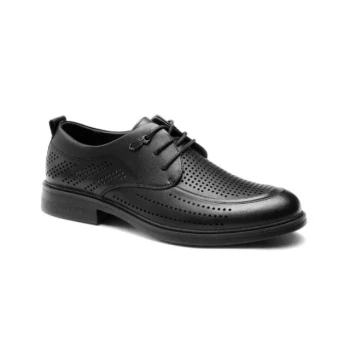
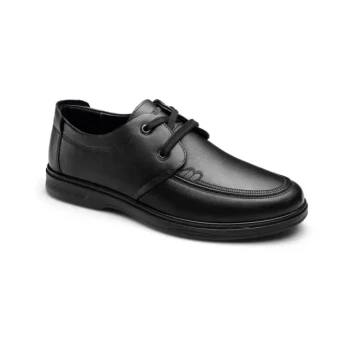
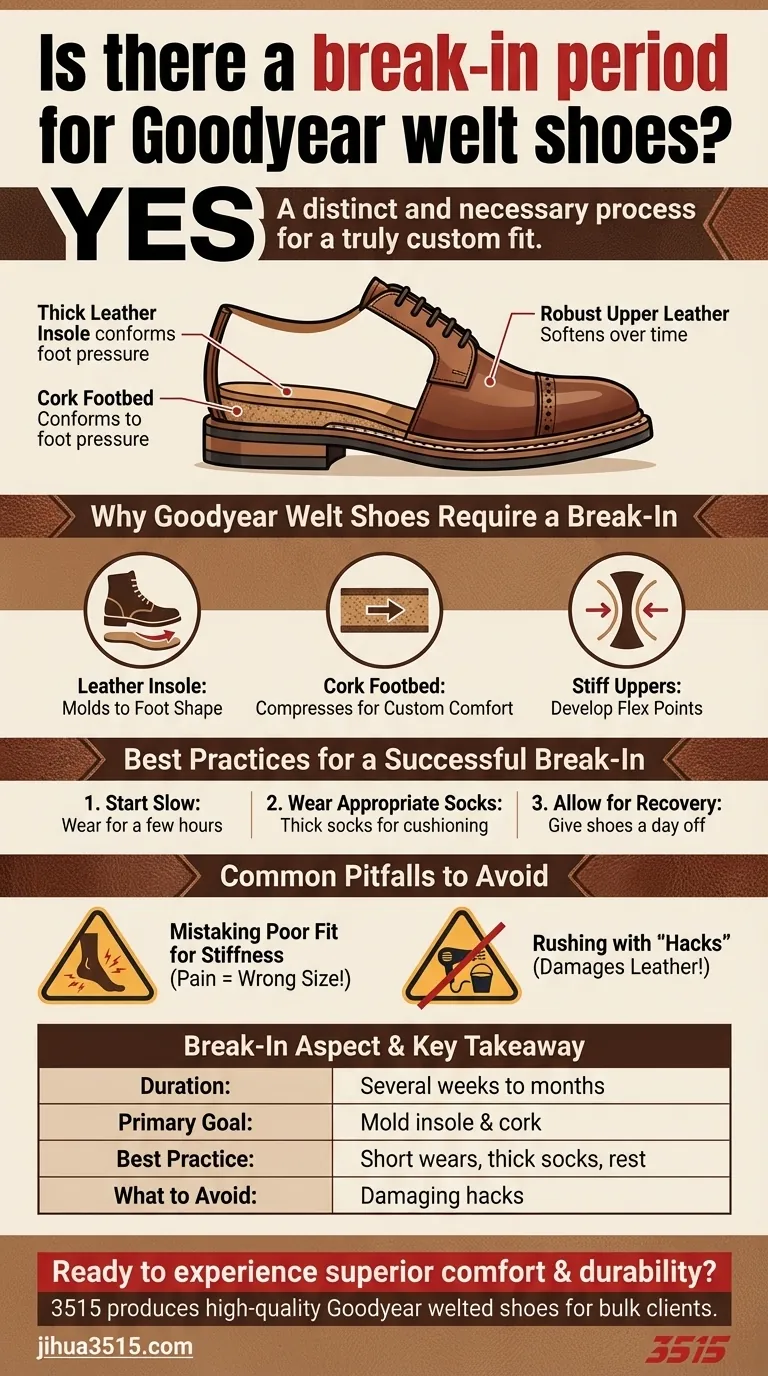
Yes, there is a distinct and necessary break-in period for Goodyear welt shoes. Their robust, multi-layered construction is intentionally stiff when new. This initial rigidity is not a flaw but a fundamental part of a process that allows the shoe to gradually mold to the unique shape of your foot, creating a truly custom fit over time.
The initial stiffness of a Goodyear welt shoe is the precursor to its greatest strength. The break-in period is the active process of the shoe’s leather insole and cork footbed conforming to your foot, resulting in unparalleled long-term comfort and support.
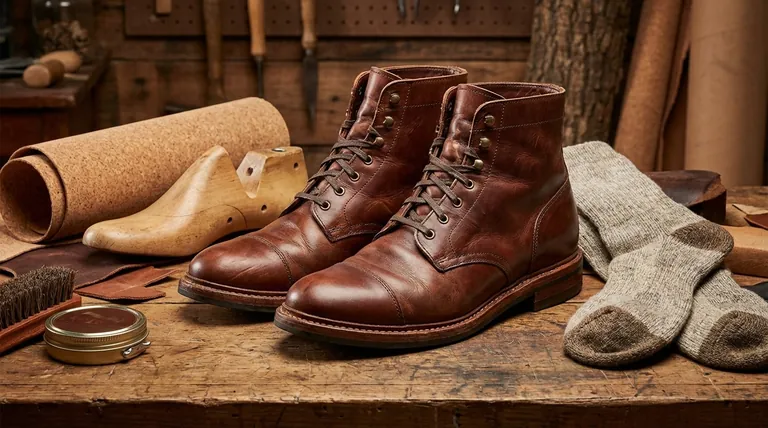
Why Goodyear Welt Shoes Require a Break-In
Unlike a sneaker or a cemented shoe designed for immediate comfort, a Goodyear welted shoe is built for longevity and adaptation. The break-in process involves several key components of the shoe's anatomy conforming to your foot's pressure and heat.
The Sturdy Leather Insole
The foundation of the shoe is a thick, structural leather insole. Initially, this insole is flat and unyielding. As you wear the shoe, your body weight and heat slowly create a permanent, customized impression of your foot in the leather, much like a footprint in wet sand.
The Cork Footbed's Transformation
Between the insole and the outsole lies a layer of granulated cork. This material is the secret to the signature comfort of a well-worn Goodyear welt shoe. During the break-in period, this cork layer compresses and molds precisely to the contours of your foot, creating a personalized, supportive orthotic.
The Role of Stiff Uppers
Goodyear welt shoes are typically made with thick, high-quality upper leathers chosen for durability. These leathers need time to soften and develop flex points that align with your ankle and foot's natural movement, especially around the instep and heel.
Best Practices for a Successful Break-In
Patience is the most important tool for breaking in a new pair of Goodyear welted shoes. The process can take anywhere from a few weeks to a couple of months of regular wear.
Start Slow and Increase Gradually
Begin by wearing your new shoes for just a few hours at a time, preferably at home or around the office. Do not wear them for a full day of walking right out of the box. Gradually increase the wear time as they become more comfortable.
Wear Appropriate Socks
Wear a good pair of thick socks, preferably wool or a quality cotton blend. This provides cushioning and helps manage moisture, which can reduce the friction that causes blisters and hotspots.
Allow for Recovery Time
Give your feet and your shoes a day off between wears. This allows your feet to recover and gives the leather time to rest and dry out completely, which is crucial for its long-term health.
Common Pitfalls to Avoid
Forcing the break-in process or misinterpreting discomfort can lead to frustration and potential damage to your shoes or your feet.
Mistaking a Poor Fit for Stiffness
A break-in period can make a good fit perfect, but it cannot fix a bad fit. The shoe should feel snug but not painfully tight when new. If your toes are cramped or you feel sharp, pinching pain, the shoe is likely the wrong size or last shape for your foot.
Rushing the Process with "Hacks"
Avoid shortcuts you might see online, such as soaking the shoes in water or blasting them with a hairdryer. These methods can dry out and permanently damage the leather, strip essential oils, and compromise the shoe's structural integrity.
Making the Right Choice for Your Goal
Understanding the break-in process is key to appreciating what makes Goodyear welted footwear exceptional. It is an investment of time that pays off in durability and a truly personalized fit.
- If your primary focus is immediate comfort: You may want to consider footwear with a different construction, like a cemented sole, which is flexible from the first wear.
- If your primary focus is a custom fit and long-term durability: The break-in period of a Goodyear welt shoe is a worthwhile investment that results in a shoe that uniquely supports your foot.
- If you are currently breaking in a pair: Be patient, start with short wears, and trust the process. The initial stiffness will give way to exceptional comfort.
Ultimately, breaking in a pair of Goodyear welted shoes is the process of making them uniquely yours.
Summary Table:
| Break-In Aspect | Key Takeaway |
|---|---|
| Duration | Several weeks to a few months of regular, gradual wear. |
| Primary Goal | To mold the leather insole and cork footbed to your foot's unique shape. |
| Best Practice | Start with short wears (a few hours) using thick socks; allow shoes to rest between wears. |
| What to Avoid | Rushing the process with damaging hacks like soaking or using heat. |
Ready to experience the superior comfort and durability of custom-molded footwear?
As a large-scale manufacturer, 3515 produces a comprehensive range of high-quality Goodyear welted shoes and boots for distributors, brand owners, and bulk clients. Our production capabilities ensure you receive durable, comfortable footwear built to last.
Contact us today to discuss your footwear needs and discover how we can bring value to your business.
Visual Guide
Related Products
- Durable Goodyear Welt Leather Work Boots for Wholesale & Private Label
- Wholesale Durable Leather Work Boots | 8-Inch Goodyear Welt Manufacturer
- Wholesale Durable & Breathable Training Shoes for Custom Brands
- Custom OEM Training Shoes Wholesale Manufacturer Durable & Breathable
- Lightweight Breathable Training Shoes for Wholesale & Custom OEM Manufacturing
People Also Ask
- What is the difference between full-grain and top-grain leather? Premium Material Guide for Boot Manufacturers
- What are the advantages of leather as an upper material for work boots? Unmatched Durability & Custom Comfort
- Why is it important to waterproof leather work boots? Protect Your Investment and Performance
- How should new leather work boots be broken in? A Guide to Comfort and Durability
- What are the advantages of leather uppers in work boots? Unmatched Durability & Protection