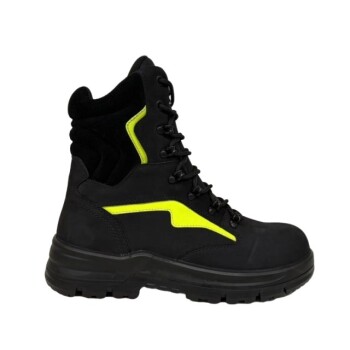
The synergy between assistive devices and protective footwear functions as a comprehensive stability system during the acute recovery phase. While crutches (axillary or elbow) provide additional support points to offload vertical weight and alleviate pain, protective footwear secures the foot's interaction with the ground to compensate for compromised balance.
This combination bridges the gap between immobility and movement, allowing patients to manage pain through load reduction while relying on footwear to correct weight-bearing symmetry during critical transitions like standing and walking.
The Mechanics of Load Redistribution
Reducing Vertical Load
During early recovery, the injured limb cannot sustain full body weight without pain or risk of re-injury. Assistive devices like crutches act as auxiliary pillars. They physically share the vertical load, diverting pressure away from the healing tissue and through the upper body.
Alleviating Acute Pain
Pain is often the limiting factor in early mobilization. By mechanically reducing the weight placed on the limb, crutches directly mitigate this pain. This creates a window of opportunity where movement is possible without exacerbating the injury.
The Role of Protective Footwear
Providing Balance Protection
While crutches manage weight from above, protective footwear manages stability from below. The acute phase often disrupts a patient's natural proprioception (sense of position) and balance. Stable protective footwear provides a rigid, trustworthy base that prevents wobbling or slipping.
Correcting Asymmetry
Recovery often leads to poor "weight-bearing symmetry," where a patient favors the uninjured side to a detriment. Specialized footwear encourages a more normalized stance. It provides the confidence needed to place the foot flat, even if it is not bearing full weight.
Achieving Synergy in Movement
Safe Transitions from Sitting to Standing
The most dangerous moments in early recovery often occur during transitional movements. This is where the synergy is most apparent. The footwear grips the floor to prevent sliding, while the crutches provide the leverage needed to hoist the body upward.
Enabling Initial Walking Exercises
Static standing is different from dynamic walking. To perform initial walking exercises, the patient needs a feedback loop of safety. The crutches offer a "bail-out" for weight, and the footwear ensures that when the foot touches down, it lands securely.
Understanding the Trade-offs
The Risk of Improper Fit
The synergy described above relies entirely on proper equipment configuration. If crutches are set to the wrong height, they can alter gait mechanics negatively. Similarly, footwear that is protective but ill-fitting can cause friction or instability, negating the benefits of the crutches.
Balancing Support with Atrophy
While this system is essential for the acute phase, there is a long-term trade-off regarding muscle usage. Prolonged, excessive reliance on this support system can lead to muscle atrophy. The goal is to use the synergy for protection, not as a permanent crutch that prevents the gradual reintroduction of natural load.
Optimizing Your Recovery Strategy
To effectively leverage this equipment combination, you must adjust your approach based on your immediate recovery goals.
- If your primary focus is Pain Management: Prioritize the use of crutches to bear the majority of the vertical load, using the footwear solely for ground contact stability without pressure.
- If your primary focus is Restoring Mobility: Rely on the stability of the protective footwear to establish a natural foot position, using crutches primarily for balance rather than total weight removal.
The ultimate goal is to use this external support system to facilitate a safe, gradual return to independent movement.
Summary Table:
| Feature | Crutches (Assistive Device) | Protective Footwear (Stability) |
|---|---|---|
| Primary Role | Vertical load reduction & pain mitigation | Ground interaction & balance protection |
| Mechanism | Transfers weight to the upper body | Provides a rigid base & slip resistance |
| Key Benefit | Enables pain-free movement windows | Corrects weight-bearing symmetry |
| Critical Focus | Proper height to prevent gait distortion | Precise fit to avoid friction/instability |
Partner with 3515 for High-Performance Protective Footwear
As a premier large-scale manufacturer serving global distributors and brand owners, 3515 delivers the engineering excellence required for medical recovery and occupational safety. Our flagship Safety Shoes series and extensive portfolio—ranging from tactical boots to sneakers—provide the essential stability and durability your customers demand.
Leverage our comprehensive production capabilities to enhance your product line. Contact us today to discuss bulk requirements and custom manufacturing solutions.
References
- Sónia A. Alves, Alison N. Agres. The Recovery of Weight-Bearing Symmetry After Total Hip Arthroplasty Is Activity-Dependent. DOI: 10.3389/fbioe.2022.813345
This article is also based on technical information from 3515 Knowledge Base .
Related Products
- Premium Suede Sport Safety Shoes for Wholesale & Bulk Orders
- Premium Lightweight Safety Shoes for Wholesale & Bulk Orders
- Wholesale Customizable Safety Boots Durable & Protective Footwear Manufacturing
- Premium Waterproof Nubuck Safety Boots for Wholesale
- Wholesale Anti-Smash & Puncture-Proof Safety Shoes Custom Manufacturing for Brands
People Also Ask
- What industries have specific OSHA footwear requirements? Ensure Compliance & Protect Your Workforce
- What are the primary functions of professional safety shoes? Maximize Safety in Water Supply Confined Spaces
- What role do specialized safety shoes play in preventing falls? Engineering Stability in Industrial Environments
- Why should ergonomics and comfort be prioritized when selecting safety shoes? Boost Compliance & Worker Health
- How do complex outsole tread designs in safety shoes work with coated floors? Master Slip Resistance Engineering