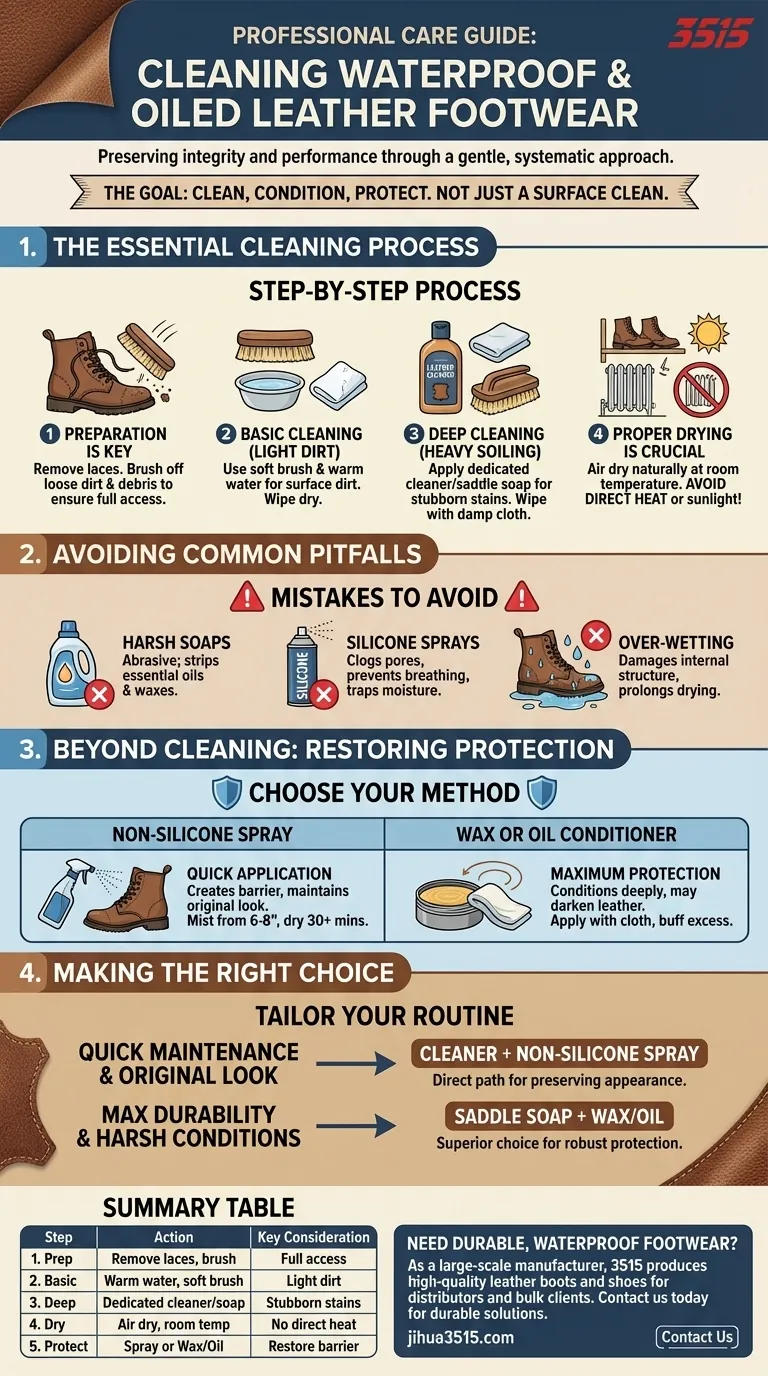
To properly clean waterproof and oiled leather footwear, you must use a gentle approach that removes dirt without stripping the leather's essential treatments. Start by using a brush and warm water for light soil, then for heavier stains, use a dedicated leather cleaner. Always allow the footwear to air dry away from direct heat.
The goal is not merely to clean the surface, but to preserve the integrity of the treated leather. Effective cleaning is the first step in a maintenance cycle that includes conditioning and re-applying a protective layer to maintain water resistance.
The Essential Cleaning Process
A consistent and correct cleaning method is the foundation of long-term care for your specialized footwear.
Step 1: Preparation is Key
Before introducing any water or cleaners, remove the laces to ensure you can access the entire surface, including the tongue. Use a brush to knock off any loose dirt, mud, or debris.
Step 2: Basic Cleaning for Light Dirt
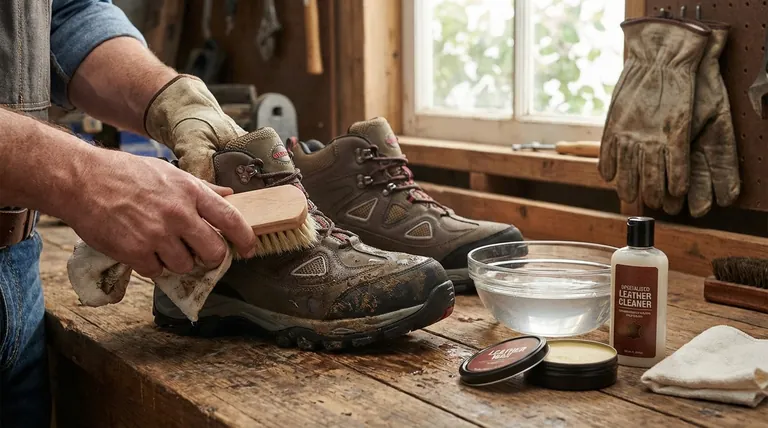
For routine cleaning, a simple method is best. Use a soft-bristled brush and a small amount of warm water to gently scrub away surface-level dirt. Once clean, wipe the leather with a dry cloth.
Step 3: Deep Cleaning for Heavy Soiling
For more stubborn scuffs or heavily soiled areas, a dedicated product is necessary. Apply a waterproof leather cleaner or a quality saddle soap using a soft cloth or brush. Work the cleaner into the leather, then wipe it away with a clean, damp cloth.
Step 4: Proper Drying is Crucial
After cleaning, allow the footwear to air dry naturally at room temperature. Never place leather near a direct heat source like a radiator or in direct sunlight, as this can cause the leather to dry out, become brittle, and crack.
Understanding the Pitfalls and Trade-offs
Avoiding common mistakes is just as important as following the correct steps. The wrong products or methods can permanently damage your footwear.
The Problem with Harsh Soaps
Standard household soaps or detergents are too abrasive for treated leather. They can strip the essential oils and waxes that keep the leather supple and water-resistant, compromising its core function.
Why You Must Avoid Silicone
Silicone-based waterproofing sprays should be avoided. While they create a water-resistant barrier, they can clog the leather's pores, preventing it from breathing. This can trap moisture inside and interfere with the effectiveness of future conditioning treatments.
The Risk of Over-Wetting
While you are using water to clean, be careful not to oversaturate the leather. Over-wetting can damage the internal structure of the leather and significantly prolong the necessary drying time.
Beyond Cleaning: Restoring Protection
Cleaning removes dirt but can also slightly diminish the protective treatments on the leather. The final step is always to restore that barrier.
Choosing Your Waterproofing Method
You have two primary choices: sprays or waxes. Non-silicone sprays are quick to apply and create a barrier against moisture without significantly altering the leather's appearance. Wax polishes offer more robust and durable water protection while also conditioning the leather.
Applying a Protective Spray
To use a spray, lightly mist the surface from a distance of six to eight inches in a continuous, sweeping motion. Apply a quick, even coat and allow it to dry for at least 30 minutes. This creates a shield against both dirt and water.
Applying a Wax or Oil
For maximum protection, apply a wax-based conditioner or oil with a soft cloth using circular motions. This method conditions the leather more deeply but may slightly darken its appearance. After application, remove any excess to ensure an even finish.
Making the Right Choice for Your Footwear
Your maintenance routine should align with how you use your footwear and the results you want to achieve.
- If your primary focus is quick maintenance and preserving the original look: A specialized leather cleaner followed by a non-silicone protective spray is the most direct path.
- If your primary focus is maximum durability and water resistance in harsh conditions: A thorough cleaning with saddle soap followed by a conditioning wax or oil is the superior choice.
Proper care is a simple cycle of cleaning and protecting that ensures your footwear performs for years to come.
Summary Table:
| Step | Action | Key Consideration |
|---|---|---|
| 1. Preparation | Remove laces, brush off loose dirt. | Ensures full access for cleaning. |
| 2. Basic Clean | Use soft brush with warm water. | Ideal for light, surface-level dirt. |
| 3. Deep Clean | Apply dedicated leather cleaner/saddle soap. | Necessary for stubborn stains and heavy soiling. |
| 4. Drying | Air dry naturally at room temperature. | Avoid direct heat to prevent cracking. |
| 5. Protect | Re-apply waterproofing spray or wax. | Restores the leather's water-resistant barrier. |
Need a reliable source for durable, waterproof footwear?
As a large-scale manufacturer, 3515 produces a comprehensive range of high-quality leather boots and shoes for distributors, brand owners, and bulk clients. Our production capabilities encompass all types of footwear built to perform in demanding conditions.
Contact us today to discuss your footwear needs and discover how we can provide durable, high-quality solutions for your market.
Visual Guide
Related Products
- Premium Oil Wax Leather Safety Boots for Bulk Purchase
- Premium Wholesale Waterproof Safety Boots High Performance Protection for Industrial Markets
- Durable Waterproof Rain Boots | Custom Manufacturer for Wholesale & Brands
- Durable Leather Work Boots for Wholesale & Custom Manufacturing
- Wholesale Waterproof Tactical Boots Custom Suede & High-Traction Soles
People Also Ask
- What materials are commonly used for outsoles in safety boots? A Guide to Durability, Grip, and Comfort
- How do safety boots reduce cutting hazards? Essential Protection for Your Workforce
- What are the common types of safety boots and their primary uses? A Guide to Industrial Footwear
- Which organizations develop safety standards for work boots? Ensure Compliance & Worker Safety
- What primary protective functions do professional safety boots provide in urban solid waste recovery and waste picking processes? Discover Dual-Layer Protection.