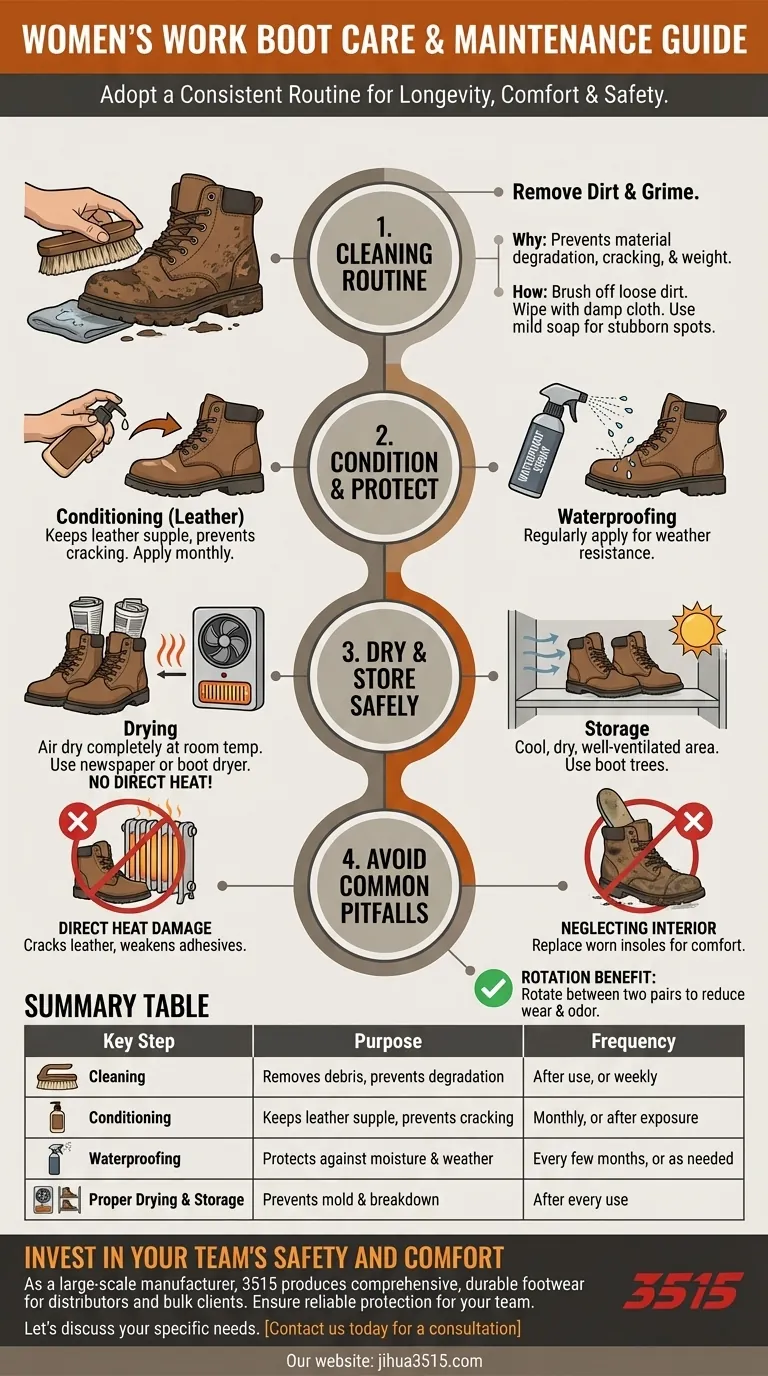
To properly care for and maintain your work boots, you must adopt a consistent routine of cleaning, conditioning, protecting, and storing them. This involves regularly removing dirt with a soft brush or damp cloth, applying a leather conditioner to prevent cracking, using a waterproofing spray for weather resistance, and always storing them in a cool, dry place away from direct sunlight.
Proper maintenance is not about keeping your boots looking new; it's about preserving the critical safety features and structural integrity you rely on. A well-cared-for boot performs better, lasts longer, and provides the comfort and protection you need on the job.
The Foundation: A Consistent Cleaning Routine
The single most effective habit for extending the life of your boots is regular cleaning. This prevents the buildup of materials that can degrade the boot's fabric and structure over time.
Why Immediate Cleaning Matters
Dirt and mud aren't just cosmetic issues. When left to dry, they draw moisture out of leather, leading to brittleness and cracking. Caked-on mud also adds weight and can compromise the boot's breathability and flexibility.
The Correct Cleaning Process
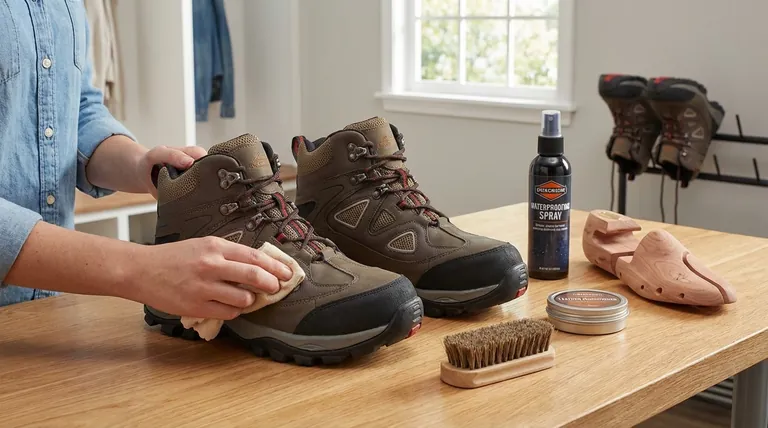
For most leather and synthetic boots, use a soft-bristled brush to remove loose dirt. Follow up with a damp cloth to wipe away any remaining grime. For stubborn spots, a mild soap can be used, but be sure to wipe away all residue afterward.
Preserving the Material: Conditioning and Protection
Cleaning removes damaging debris, while conditioning and waterproofing restore and shield the boot's core materials. These steps are essential for durability, especially for leather.
Conditioning Leather Boots
Think of leather conditioner or oil as a moisturizer for your boots. It replenishes the natural oils in the leather, keeping it supple and preventing painful cracks from forming, particularly in flex points around the ankle and toes.
Applying a Waterproofing Barrier
Even if your boots are marketed as waterproof, that barrier can wear down over time. Regularly applying a waterproofing spray adds a crucial layer of defense against moisture, keeping your feet dry and preventing water from soaking into and damaging the boot materials.
The Critical Steps: Drying and Storage
How you treat your boots after your shift is just as important as how you clean them. Improper drying and storage can undo all your other maintenance efforts.
How to Dry Your Boots Safely
After exposure to moisture, always allow your boots to air dry completely at room temperature. You can stuff them with newspaper to help absorb internal moisture and maintain their shape. Using a dedicated boot dryer is also an excellent, safe option that helps prevent odor.
Storing for Longevity
Store your boots in a cool, dry, well-ventilated area away from direct sunlight. UV rays can fade and break down materials, while damp, enclosed spaces can promote mildew. Using boot trees helps maintain the boot's original shape and prevent creasing.
Common Pitfalls to Avoid
Knowing what not to do is as critical as knowing what to do. A few common mistakes can drastically shorten the lifespan of high-quality work boots.
The Damage of Direct Heat
Never place your boots near a radiator, fireplace, or other direct heat source to speed up drying. Intense heat can irreparably crack and shrink leather and weaken the adhesives that hold the boot together.
Neglecting the Interior
Maintenance isn't just about the outside. Periodically remove the insoles and clean out any interior debris. Most importantly, replace worn-out insoles. Fresh insoles restore the boot's comfort and support, which is vital for long days on your feet.
The Benefit of Rotation
If possible, rotate between two pairs of boots. This gives each pair a full day to dry out and decompress, which significantly reduces wear and tear and prevents the buildup of odor-causing bacteria.
A Maintenance Plan for Your Work Environment
Your specific needs will dictate your maintenance frequency. Use these guidelines to create a routine that works for you.
- If your primary focus is working in wet, muddy conditions: Prioritize daily cleaning and re-apply waterproofing spray frequently.
- If your primary focus is standing for long hours: Make replacing your insoles every 3-6 months and rotating between pairs a non-negotiable part of your routine.
- If your primary focus is preserving leather boots: Commit to cleaning and conditioning your boots at least once a month, or more often if they are exposed to harsh elements.
Protecting your work boots is a direct investment in your own daily comfort and safety.
Summary Table:
| Key Maintenance Step | Purpose | Frequency |
|---|---|---|
| Cleaning | Removes dirt & debris that degrades materials | After each use, or weekly |
| Conditioning | Keeps leather supple and prevents cracking | Monthly, or after exposure to elements |
| Waterproofing | Protects against moisture and weather damage | Every few months, or as needed |
| Proper Drying & Storage | Prevents mold, mildew, and material breakdown | After every use |
Invest in Your Team's Safety and Comfort
As a large-scale manufacturer, 3515 produces a comprehensive range of durable and safe footwear for distributors, brand owners, and bulk clients. Our expertise ensures your teams have the reliable protection they need.
Let's discuss your specific needs and how our production capabilities can support your business.
Contact us today for a consultation
Visual Guide
Related Products
- Wholesale Leather Work Boots with Customizable Wedge Sole for Brands
- Durable Leather Work Boots for Wholesale & Custom Manufacturing
- Durable Leather Moc Toe Work Boots for Wholesale & Custom Manufacturing
- Durable Leather Work Boots for Wholesale & Custom OEM Manufacturing
- Durable Moc Toe Wedge Sole Work Boots for Wholesale and Private Label
People Also Ask
- What is the difference between full-grain and top-grain leather? Premium Material Guide for Boot Manufacturers
- What are the advantages of leather as an upper material for work boots? Unmatched Durability & Custom Comfort
- How can leather work boots be protected from environmental elements? A 3-Step Guide to Lasting Durability
- What is the complete process for deep cleaning leather work boots? A Step-by-Step Guide to Preserve Your Investment
- What are the key qualities of leather for work boots? Superior Durability, Breathability & Custom Fit