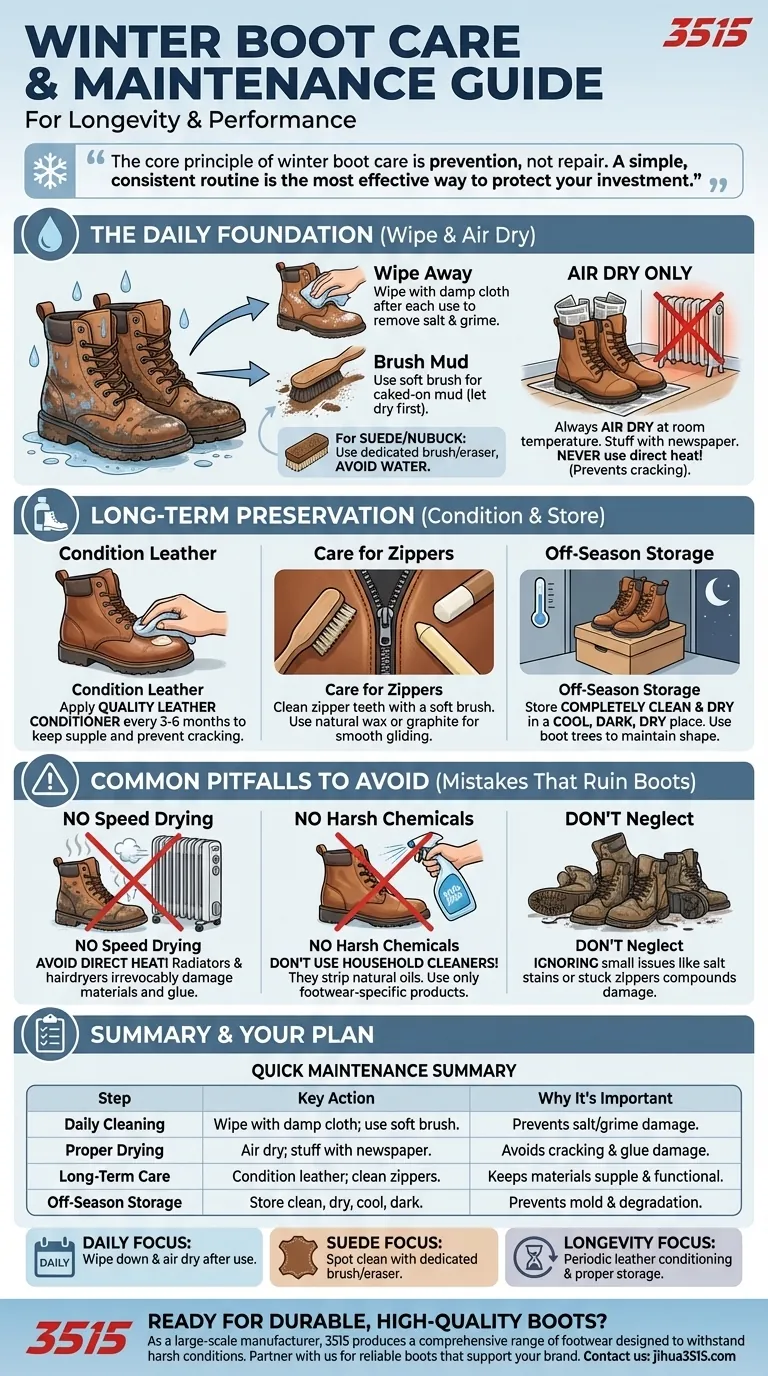
To properly clean and maintain winter boots, you must establish a consistent routine of gentle cleaning, proper drying, and periodic conditioning. Start by wiping away salt and grime with a damp cloth after each use, using a soft brush for dried mud. Crucially, always allow boots to air dry naturally, away from any direct heat sources, to prevent the materials from cracking or becoming brittle.
The core principle of winter boot care is prevention, not repair. A simple, consistent maintenance routine is the most effective way to protect your investment, ensuring your boots remain functional and last for many seasons.
The Foundation: A Consistent Cleaning Routine
Proper boot maintenance begins with regular, gentle cleaning. This isn't an occasional deep clean; it's a small habit that prevents the corrosive effects of salt, dirt, and moisture from causing permanent damage.
Step 1: Remove Surface Dirt and Debris
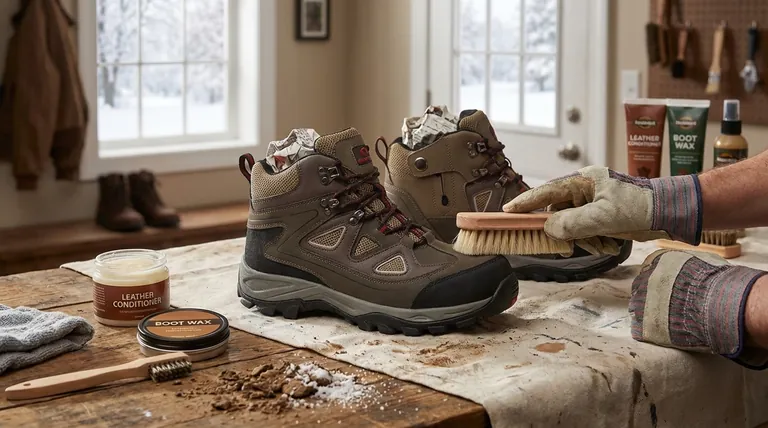
After wearing your boots, especially in snow or slush, wipe them down with a damp cloth to remove salt stains and fresh dirt.
For caked-on mud, allow it to dry completely first. Then, use a soft-bristled brush to gently flake it off without scratching the boot's surface.
For materials like suede or nubuck, avoid water and instead use a dedicated suede brush or eraser to lift stains and restore the texture.
Step 2: Proper Drying is Non-Negotiable
Moisture is an enemy of all boot materials. After cleaning, or if your boots are simply wet from use, they must be dried correctly.
Stuff the boots with newspaper, which helps absorb internal moisture and maintain their shape.
Never place boots near a radiator, fireplace, or other direct heat source. This intense heat will dry out leather, causing it to crack, and can damage the adhesives used in the sole construction. Always air dry at room temperature.
Beyond Cleaning: Long-Term Preservation
Cleaning removes immediate threats, but long-term preservation requires a few additional steps to keep the materials supple and the components functional.
Conditioning Leather to Prevent Cracking
Leather is a skin and requires moisture to stay flexible. Over time, it will dry out and become brittle.
Apply a quality leather conditioner every 3 to 6 months, depending on how often you wear the boots. This replenishes the natural oils, prevents cracking, and maintains the material's integrity.
Caring for Zippers and Hardware
Zippers can easily become clogged with dirt or grit, leading to sticking or breaking. Don't force a stuck zipper.
Clean the zipper teeth regularly with a soft brush. If needed, a light application of natural wax or a graphite pencil can help it glide smoothly.
Proper Off-Season Storage
How you store your boots during the warmer months is critical to their longevity.
Ensure boots are completely clean and dry before storing them. Keep them in a cool, dry, and dark place to prevent material degradation, mold growth, or brittleness from developing. Using boot trees or stuffing them with paper will help them retain their proper shape.
Common Pitfalls That Shorten Boot Lifespan
Even with good intentions, common mistakes can inadvertently ruin a good pair of boots. Avoiding these is just as important as active maintenance.
The Danger of "Speed Drying"
The most common mistake is placing wet boots next to a heat source. This rapid drying process irrevocably damages leather, synthetic fabrics, and the glues holding the boot together. Patience and air drying are essential.
Using Harsh Chemicals
Household cleaners, detergents, or other harsh chemicals can strip the natural oils and protective finishes from your boots. Always use products specifically designed for footwear or simply a damp cloth with a very mild, natural soap if necessary.
Neglecting the Small Things
Ignoring a stuck zipper, letting salt stains sit for weeks, or tossing wet boots in a closet are small acts of neglect that compound over time. Consistent care prevents these minor issues from becoming boot-ending failures.
A Simple Maintenance Plan for Your Boots
Tailor your maintenance routine to your boots and your goals. The key is consistency.
- If your primary focus is daily wear for leather or synthetic boots: Make a habit of wiping them down with a damp cloth after use and ensuring they air dry completely overnight.
- If your primary focus is preserving high-end suede or nubuck: Invest in a proper suede care kit (brush and eraser) and make spot-cleaning a regular practice, avoiding water whenever possible.
- If your primary focus is maximum longevity for any boot type: Incorporate periodic leather conditioning (every few months) and a dedicated end-of-season clean and proper storage routine into your plan.
By integrating these simple practices, you transform boot care from a chore into a routine that protects your investment for years to come.
Summary Table:
| Maintenance Step | Key Action | Why It's Important |
|---|---|---|
| Daily Cleaning | Wipe with a damp cloth; use a soft brush for mud. | Prevents salt and grime from causing permanent damage. |
| Proper Drying | Air dry at room temperature; stuff with newspaper. | Avoids cracking leather and damaging adhesives from heat. |
| Long-Term Care | Condition leather periodically; clean zippers. | Keeps materials supple and functional components working. |
| Off-Season Storage | Store clean and dry in a cool, dark place. | Prevents mold, material degradation, and loss of shape. |
Ready to equip your customers with durable, high-quality winter boots that are built to last?
As a large-scale manufacturer, 3515 produces a comprehensive range of footwear for distributors, brand owners, and bulk clients. Our production capabilities encompass all types of durable shoes and boots designed to withstand harsh winter conditions, making long-term maintenance easier for the end-user.
Partner with us to source reliable footwear that supports your brand's reputation for quality. Contact our team today to discuss your manufacturing needs.
Visual Guide
Related Products
- Premium Insulated Safety Boots and Shoes for Wholesale & Bulk Orders
- Factory Direct Wholesale Rain Boots Durable Waterproof & Fully Customizable
- Durable Waterproof Rain Boots | Custom Manufacturer for Wholesale & Brands
- Wholesale Waterproof Tactical Boots Custom Suede & High-Traction Soles
- Heavy-Duty Waterproof Nubuck Safety Boots Safety Shoes for Bulk Supply
People Also Ask
- What are the recommended insulation ratings for mild winter conditions? A Guide for Active & Stationary Workers
- How does insulation thickness correlate with temperature ranges? A Guide to Choosing the Right Warmth
- What insulation level is needed for severe cold and stationary work? 1200g or Higher is Essential
- What safety advantages do insulated boots offer beyond warmth? Dielectric Protection & Superior Grip
- How does fleece lining contribute to the warmth of insulated boots? Trapping Air for Superior Cold Protection