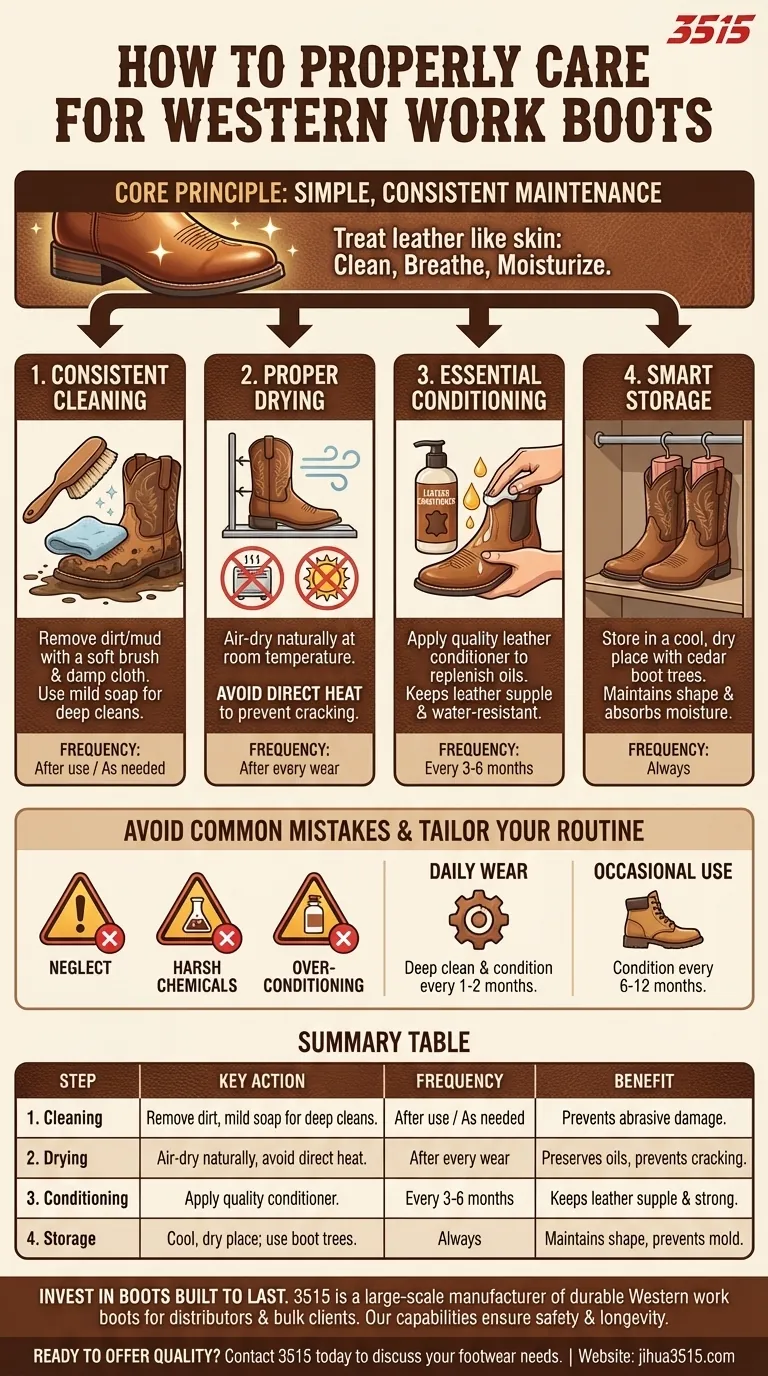
Properly caring for Western work boots involves a consistent four-step cycle: regular cleaning with a soft brush, allowing them to dry naturally away from direct heat, conditioning the leather every 3-6 months to prevent cracking, and storing them in a cool, dry place, preferably with boot trees to maintain their shape. This routine is essential for preserving their function, safety, and longevity.
The core principle of boot care is not about intensive, infrequent restoration, but about simple, consistent maintenance. Treating the leather as a skin that needs to breathe, stay clean, and remain moisturized is the key to protecting your investment and ensuring decades of reliable performance.
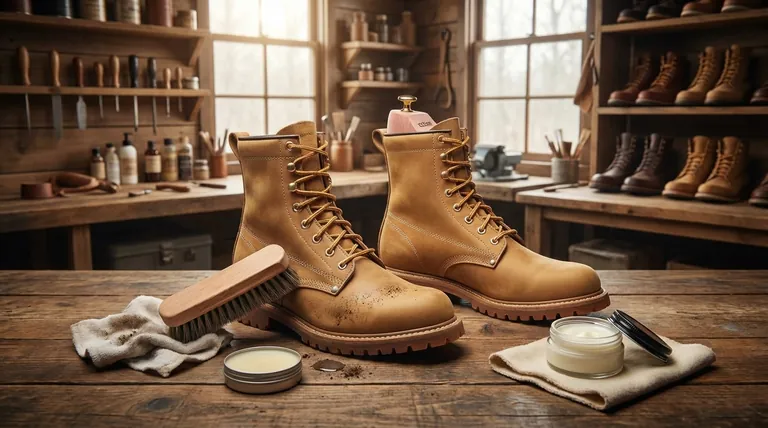
The Four Pillars of Western Work Boot Longevity
Western work boots are an investment in durability, safety, and tradition. Their robust construction is designed to withstand harsh conditions, but the material they are made from—leather—requires deliberate care to reach its full potential.
Pillar 1: Consistent Cleaning
After use, especially in demanding environments, boots accumulate dirt, mud, and other debris. This buildup can trap moisture and abrasive particles that slowly degrade the leather.
A quick, regular cleaning is your first line of defense. Use a soft brush to remove loose dirt and a damp cloth for more stubborn grime. For a deeper clean, a mild soap specifically for leather can be used.
Pillar 2: Proper Drying
The single biggest mistake in boot care is exposing wet leather to direct, high heat. This includes placing them near a heater, fireplace, or in direct, intense sunlight.
Forcing them to dry too quickly causes the leather's natural oils to evaporate, leading to stiffness, brittleness, and cracking. Always let your boots air-dry naturally in a well-ventilated area at room temperature.
Pillar 3: Essential Conditioning
Leather is a natural material that can dry out over time. Conditioning is the process of replenishing the oils and fats that keep the leather supple, strong, and water-resistant.
Applying a quality leather conditioner every 3 to 6 months—or more often if you work in very dry or wet conditions—is critical. This step prevents cracking and dramatically extends the functional life of your boots.
Pillar 4: Smart Storage
How you store your boots between uses matters. Keeping them in a damp or humid environment can promote mold and mildew, while a hot, dry space can accelerate leather degradation.
Store your boots in a cool, dry, and ventilated place. Using cedar boot trees is highly recommended, as they absorb residual moisture, neutralize odors, and help the boot maintain its original shape.
Understanding the Trade-offs and Pitfalls
Effective boot care is as much about what you don't do as what you do. Avoiding common mistakes is crucial for preserving the integrity of your boots.
The Myth of "Toughing It Out"
Ignoring basic cleaning and conditioning will not make your boots tougher. Neglected leather becomes brittle and weak, compromising the boot's structure, stitching, and protective qualities.
The Danger of Harsh Chemicals
Never use household detergents, solvents, or all-purpose cleaners on your leather boots. These products are designed to strip grease and oil, which is precisely what your leather needs to stay healthy. Stick to products formulated for leather care.
Over-Conditioning Is a Real Problem
While essential, too much conditioner can be detrimental. Oversaturated leather can become overly soft, lose its shape, and feel greasy. It can also clog the leather's pores, preventing it from breathing. Follow the product instructions and apply thin, even coats.
Making the Right Choice for Your Goal
Your specific care routine should align with how you use your boots. Adjust the frequency of your maintenance based on your daily demands.
- If your primary focus is daily wear in a demanding work environment: Clean your boots lightly after each use and plan for a deep clean and conditioning session every 1-2 months.
- If your primary focus is occasional use for style or lighter activities: A quick brush-off after wear is sufficient, with a full conditioning treatment every 6 months to a year.
Ultimately, a proactive care routine ensures your Western work boots will continue to provide the safety, comfort, and style they were designed for.
Summary Table:
| Step | Key Action | Frequency | Benefit |
|---|---|---|---|
| 1. Cleaning | Remove dirt with a soft brush; use mild soap for deep cleans. | After use / As needed | Prevents abrasive damage and trapped moisture. |
| 2. Drying | Air-dry naturally at room temperature; avoid direct heat. | After every wear | Preserves leather oils and prevents cracking. |
| 3. Conditioning | Apply quality leather conditioner to replenish oils. | Every 3-6 months | Keeps leather supple, strong, and water-resistant. |
| 4. Storage | Store in a cool, dry place; use cedar boot trees. | Always | Maintains shape and prevents mold/mildew. |
Invest in boots built to last. Proper care starts with quality craftsmanship. As a large-scale manufacturer, 3515 produces a comprehensive range of durable Western work boots for distributors, brand owners, and bulk clients. Our production capabilities ensure every pair meets the highest standards of safety and longevity.
Ready to offer your customers boots worth caring for? Contact 3515 today to discuss your footwear needs and explore our extensive catalog.
Visual Guide
Related Products
- Durable Leather Work Boots for Wholesale & Custom Manufacturing
- Durable Goodyear Welt Leather Work Boots for Wholesale & Private Label
- Durable Leather Work Boots for Wholesale & Custom OEM Manufacturing
- Durable Leather Work Boots Wholesale Manufacturer & Custom Factory
- Wholesale Leather Work Boots with Customizable Wedge Sole for Brands
People Also Ask
- What is the difference between full-grain and top-grain leather? Premium Material Guide for Boot Manufacturers
- What are the common workplace hazards that can be mitigated with the right work boots? Protect Your Workforce
- What are the common foot issues workers face due to uncomfortable work boots? Prevent Pain & Deformities
- What are the advantages of leather versus synthetic work boots? A Guide to Choosing the Right Material
- What are the key components of modern work boots? Engineered for Ultimate Durability and Comfort