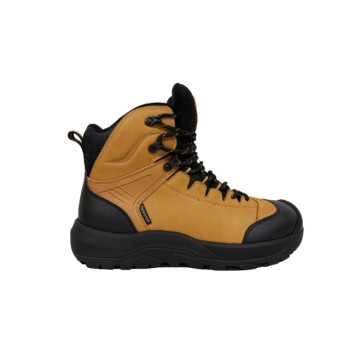
Yes, insulated boots can cause feet to sweat, but this is a sign of improper material selection, not a flaw in the concept of insulation. The problem arises when boots trap moisture instead of allowing it to escape. High-quality insulated boots are designed with breathable materials specifically to prevent this, ensuring your feet stay both warm and dry.
The goal is not just warmth, but dry warmth. Achieving this depends on a system where breathable boots work in tandem with moisture-wicking socks to actively manage the sweat your feet naturally produce.
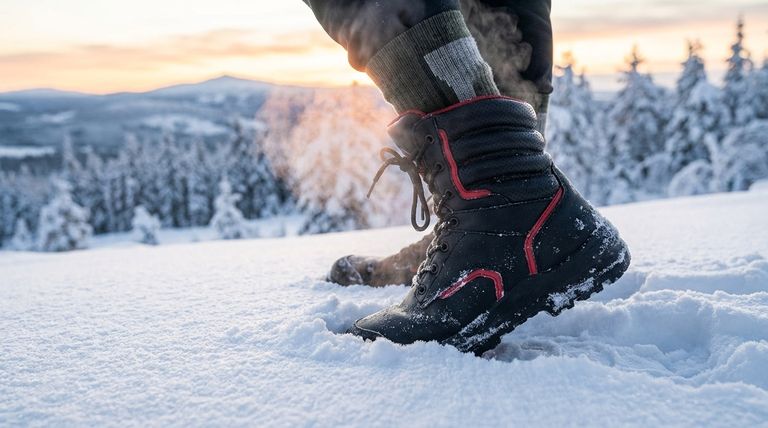
The Core Problem: Trapped Moisture, Not Insulation
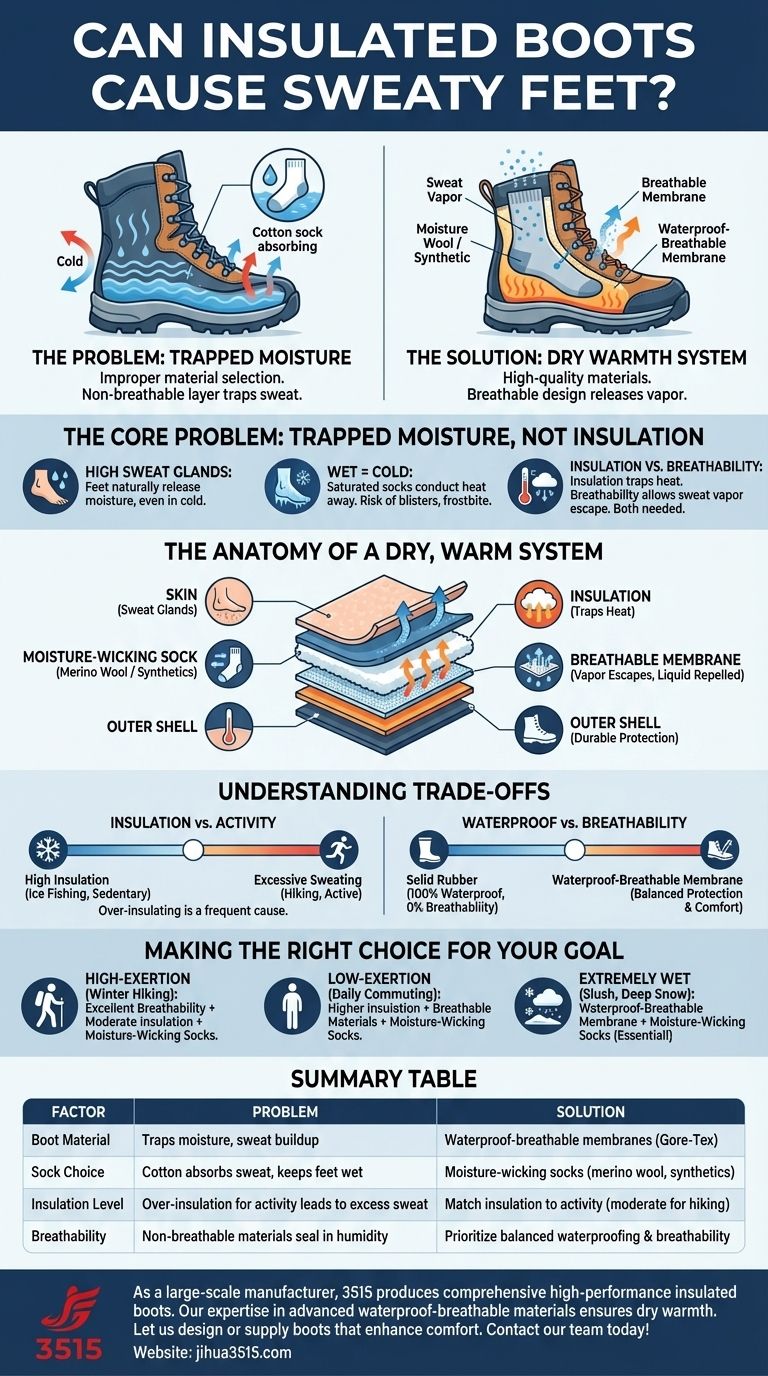
To understand the solution, we must first correctly identify the problem. The insulation itself isn't the enemy; trapped water vapor is.
Why Your Feet Sweat
Your feet have one of the highest concentrations of sweat glands in your body. They release moisture to regulate temperature, and this process continues even in cold weather, especially during physical activity.
The Vicious Cycle of Wet Feet
When sweat has nowhere to go, it saturates your socks. This moisture rapidly cools, conducts heat away from your skin, and renders your boot's insulation ineffective. This leads to the dangerous combination of cold, wet feet, which increases the risk of blisters and even frostbite.
Insulation vs. Breathability
Insulation works by trapping a layer of air, which your body heats up, creating a thermal barrier against the cold. Breathability, however, is a material's ability to allow water vapor (sweat) to pass through it and escape to the outside. The most effective winter boots excel at both.
The Anatomy of a Dry, Warm System
Keeping feet dry is an active process that relies on every layer from your skin to the outside of the boot.
The Role of the Boot's Materials
Modern high-performance boots often use a waterproof-breathable membrane. These remarkable materials contain microscopic pores that are too small for liquid water droplets to enter from the outside, but large enough for individual water vapor molecules (your sweat) to escape from the inside.
The Critical Layer: Your Socks
The single most common point of failure is wearing the wrong socks. Cotton socks are the absolute worst choice for insulated footwear. Cotton is highly absorbent; it acts like a sponge, holding sweat directly against your skin.
Instead, you must use moisture-wicking socks made from materials like merino wool or specialized synthetics. These fibers don't absorb moisture; they pull it away from your skin and push it toward the breathable outer layers of the boot, where it can evaporate.
Understanding the Trade-offs
Choosing the right boot means matching its features to your specific needs and avoiding common pitfalls.
Insulation Rating vs. Your Activity Level
A boot with a very high insulation rating (e.g., 800g or more) is perfect for sedentary activities like ice fishing but will cause excessive sweating during high-exertion activities like winter hiking. Over-insulating is a frequent cause of sweaty feet.
Waterproofing vs. Breathability
The most breathable materials are not always the most waterproof. A solid rubber boot is 100% waterproof but has zero breathability. It will trap all sweat inside. For most cold-weather activities, a boot with a waterproof-breathable membrane offers the best balance for protection and comfort.
"Poor Quality" Explained
When a boot is described as "poor quality" in this context, it typically means it's made from non-breathable materials like cheap plastics or vinyl. These materials insulate but effectively seal your foot in a bag, guaranteeing it will become wet with sweat.
Making the Right Choice for Your Goal
Select your footwear system based on your intended use to ensure optimal performance.
- If your primary focus is high-exertion activity (winter hiking): Prioritize boots with excellent breathability and moderate insulation, and always pair them with high-performance merino wool or synthetic socks.
- If your primary focus is low-exertion activity (daily commuting, standing outdoors): A higher insulation rating is appropriate, but still insist on boots made with breathable materials to manage passive sweat throughout the day.
- If your primary focus is protection in extremely wet conditions (slush, deep snow): A waterproof-breathable membrane is non-negotiable, and moisture-wicking socks become absolutely essential to manage inevitable internal humidity.
By managing moisture effectively, you ensure your insulated boots provide the comfort and protection they were designed for.
Summary Table:
| Factor | Problem | Solution |
|---|---|---|
| Boot Material | Traps moisture, causing sweat buildup | Use waterproof-breathable membranes (e.g., Gore-Tex) |
| Sock Choice | Cotton absorbs sweat, keeping feet wet | Wear moisture-wicking socks (e.g., merino wool, synthetics) |
| Insulation Level | Over-insulation for activity leads to excess sweat | Match insulation to activity (e.g., moderate for hiking, high for sedentary use) |
| Breathability | Non-breathable materials seal in humidity | Prioritize boots with balanced waterproofing and breathability |
As a large-scale manufacturer, 3515 produces a comprehensive range of high-performance insulated boots for distributors, brand owners, and bulk clients. Our expertise in combining advanced waterproof-breathable materials with optimal insulation ensures your customers experience dry warmth in any condition. Let us help you design or supply boots that prevent sweating and enhance comfort. Contact our team today to discuss your footwear needs!
Visual Guide
Related Products
- Premium Insulated Safety Boots and Shoes for Wholesale & Bulk Orders
- High Performance Fire-Retardant Waterproof Safety Boots
- Premium Wholesale Waterproof Safety Boots High Performance Protection for Industrial Markets
- Factory Direct Wholesale Rain Boots Durable Waterproof & Fully Customizable
- Wholesale Waterproof Tactical Boots Custom Suede & High-Traction Soles
People Also Ask
- What are the recommended insulation ratings for mild winter conditions? A Guide for Active & Stationary Workers
- How does insulation thickness correlate with temperature ranges? A Guide to Choosing the Right Warmth
- What insulation level is needed for severe cold and stationary work? 1200g or Higher is Essential
- What safety advantages do insulated boots offer beyond warmth? Dielectric Protection & Superior Grip
- How does fleece lining contribute to the warmth of insulated boots? Trapping Air for Superior Cold Protection