
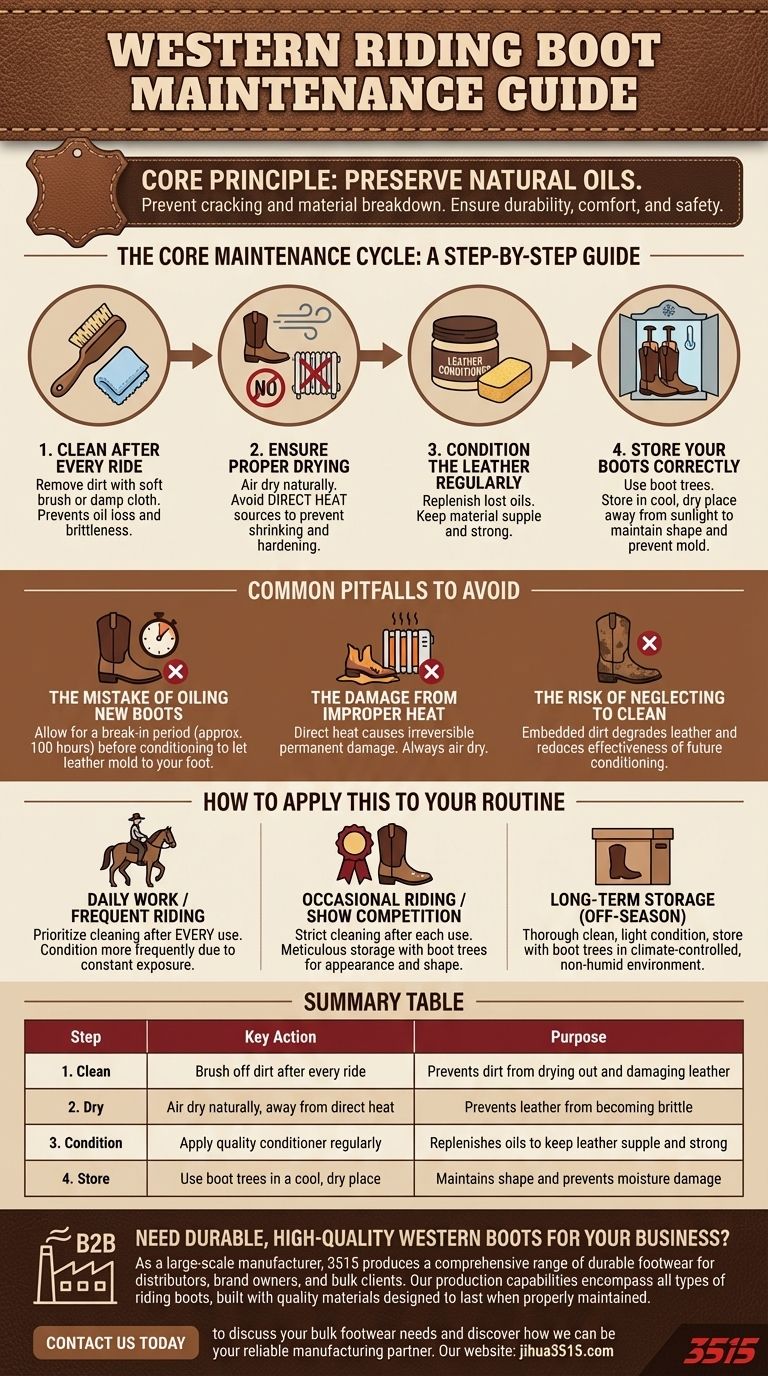
Properly maintaining Western riding boots involves a consistent cycle of cleaning, conditioning, and correct storage. After each ride, they should be cleaned with a soft brush or damp cloth, allowed to air dry away from any direct heat source, and treated regularly with a quality leather conditioner to keep the material supple. Storing them with boot trees in a cool, dry place is essential for preserving their shape and preventing damage.
The core principle of boot care is not just cleaning but actively preserving the leather's natural oils. This prevents the irreversible cracking and material breakdown caused by a constant cycle of moisture exposure and drying, ensuring your boots remain a durable, comfortable, and safe tool for years to come.
The Core Maintenance Cycle: A Step-by-Step Guide
Effective boot care is a routine, not a one-time fix. Following these steps consistently will protect your investment and keep your boots in optimal condition.
Step 1: Clean After Every Ride
Dirt and mud are more than just a cosmetic issue. When mud dries on leather, it actively pulls essential oils and moisture out of the hide, leading to brittleness and cracking over time.
A quick cleaning after each use is the most critical habit to develop. Use a soft brush to remove loose dirt and dust. For more stubborn grime, a damp cloth is sufficient.
Step 2: Ensure Proper Drying
How you dry your boots is as important as how you clean them. Never place wet boots near a radiator, fireplace, or other sources of direct heat.
Forcing leather to dry too quickly causes the fibers to shrink and harden, making the boots brittle and uncomfortable. Always let them air dry naturally in a well-ventilated area. If you need to speed up the process, a specialized boot dryer that uses circulated air without high heat is a safe option.
Step 3: Condition the Leather Regularly
Conditioning is the process of replenishing the oils in the leather that are lost through use and exposure to the elements. This keeps the material flexible, strong, and resistant to cracking.
Apply a high-quality leather conditioner according to the product's instructions. The frequency depends on your climate and how often you ride, but a good rule of thumb is whenever the leather starts to look or feel dry.
Step 4: Store Your Boots Correctly
Proper storage protects your boots from environmental damage and helps them retain their intended shape. Always store them in a cool, dry place away from direct sunlight, which can fade and dry out the leather.
Using boot trees is highly recommended. They help the boots maintain their form, smooth out creases that can turn into cracks, and allow air to circulate inside, preventing moisture buildup and mold.
Common Pitfalls to Avoid
Even with good intentions, common mistakes can shorten the lifespan of your boots. Understanding these pitfalls is key to effective long-term care.
The Mistake of Oiling New Boots
It can be tempting to condition a brand-new pair of boots immediately. However, you should allow for a break-in period first (around 100 hours of wear is a good guideline).
This period allows the leather to stretch and mold to the unique shape of your foot. Conditioning them too early can make the leather overly soft and interfere with this crucial fitting process.
The Damage from Improper Heat
This point cannot be overstated. The single most common cause of premature boot failure is exposure to direct heat during drying. This mistake causes permanent damage that no amount of conditioner can reverse.
The Risk of Neglecting to Clean
Skipping the quick post-ride wipe-down allows dirt to embed in the leather's pores. This not only degrades the material but also makes future deep cleaning and conditioning less effective.
How to Apply This to Your Routine
Your specific maintenance schedule will depend on how you use your boots. Tailor your approach based on your primary goal.
- If your primary focus is daily work or frequent riding: Prioritize cleaning after every single use and condition the leather more frequently, as it's constantly exposed to stress and the elements.
- If your primary focus is occasional riding or show competition: Maintain a strict cleaning routine after each use and store them meticulously with boot trees to preserve their appearance and shape.
- If your primary focus is long-term storage for the off-season: Ensure the boots are thoroughly cleaned, lightly conditioned, and stored with boot trees in a climate-controlled, non-humid environment.
By treating boot care as an essential part of your riding discipline, you ensure your boots will protect you, provide comfort, and last for countless rides to come.
Summary Table:
| Step | Key Action | Purpose |
|---|---|---|
| 1. Clean | Brush off dirt after every ride | Prevents dirt from drying out and damaging leather |
| 2. Dry | Air dry naturally, away from direct heat | Prevents leather from becoming brittle |
| 3. Condition | Apply quality conditioner regularly | Replenishes oils to keep leather supple and strong |
| 4. Store | Use boot trees in a cool, dry place | Maintains shape and prevents moisture damage |
Need Durable, High-Quality Western Boots for Your Business?
As a large-scale manufacturer, 3515 produces a comprehensive range of durable footwear for distributors, brand owners, and bulk clients. Our production capabilities encompass all types of riding boots, built with quality materials that are designed to last when properly maintained.
Contact us today to discuss your bulk footwear needs and discover how we can be your reliable manufacturing partner.
Visual Guide
Related Products
- Durable Goodyear Welt Leather Work Boots for Wholesale & Private Label
- Wholesale High-Traction Camo Boots - Custom Manufacturer for Brands
- High-Traction Suede Tactical Boots Wholesale & Custom Manufacturing
- Wholesale Waterproof Tactical Boots Custom Suede & High-Traction Soles
- Durable Military Combat Boots with Water Drainage for Wholesale & OEM
People Also Ask
- What is the difference between full-grain and top-grain leather? Premium Material Guide for Boot Manufacturers
- What are the advantages of leather as an upper material for work boots? Unmatched Durability & Custom Comfort
- Why is it important to waterproof leather work boots? Protect Your Investment and Performance
- How should new leather work boots be broken in? A Guide to Comfort and Durability
- What are the advantages of leather uppers in work boots? Unmatched Durability & Protection



















