
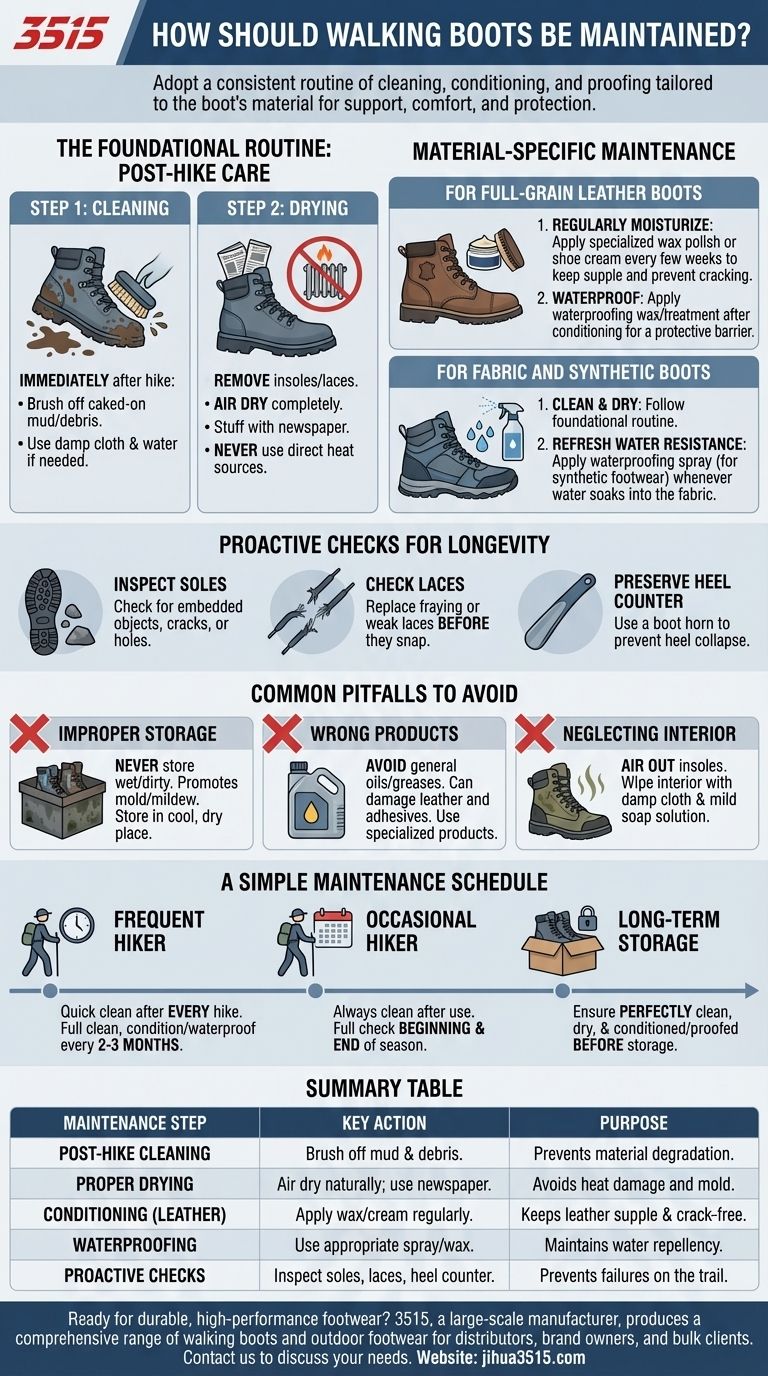
To properly maintain walking boots, you must adopt a consistent routine of cleaning, conditioning, and proofing tailored to the boot's material. After every hike, clean off mud with a brush and water, then allow the boots to air dry naturally. For leather boots, regularly apply a conditioner or wax to prevent cracking, while fabric boots require periodic reapplication of a waterproofing spray to maintain their water repellency.
Your walking boots are your most critical piece of equipment. Proper maintenance is not just about extending their lifespan; it is about ensuring they continue to provide the support, comfort, and protection required for safe and enjoyable hiking.
The Foundational Routine: Post-Hike Care
Every maintenance cycle begins the moment you take your boots off. Neglecting these initial steps can cause premature wear and material degradation.
Step 1: Cleaning
Immediately after a hike, use a stiff brush to remove all caked-on mud and debris. If necessary, use a small amount of cold water and a damp cloth.
Letting mud dry on your boots draws out the natural oils from leather and can abrade synthetic fabrics over time, causing them to become brittle.
Step 2: Drying
Remove the insoles and laces to allow the boots to air out completely. Stuff the boots with newspaper or use boot trees to help them retain their shape and absorb internal moisture.
Never place your boots near a direct heat source like a radiator or fire. Intense heat can crack leather, shrink fabrics, and weaken the adhesives that hold the sole together.
Material-Specific Maintenance
While all boots benefit from cleaning and proper drying, the next steps depend entirely on what your boots are made of.
For Full-Grain Leather Boots
Leather is a natural skin that requires regular moisturizing to maintain its integrity.
Apply a specialized wax polish or shoe cream every few weeks, or whenever the leather appears dry. This conditioning step keeps the leather supple and prevents it from cracking.
After conditioning, apply a waterproofing wax or treatment to create a protective barrier against moisture. This is a separate and essential step for keeping your feet dry.
For Fabric and Synthetic Boots
Boots made from synthetic materials or fabric/leather combinations are generally simpler to maintain.
After cleaning, the primary task is to refresh their water resistance. Most fabric boots are treated with a Durable Water Repellent (DWR) finish at the factory, which wears off over time.
Apply a waterproofing spray designed for synthetic footwear whenever you notice water is soaking into the fabric rather than beading up on the surface.
Proactive Checks for Longevity
Good maintenance goes beyond cleaning and conditioning. Regular inspections can prevent minor issues from becoming trip-ending failures.
Inspect the Soles
Regularly check the soles for embedded stones, glass, or thorns that could work their way through the material. Also, look for signs of cracking or holes, which indicate the sole is nearing the end of its life.
Check the Laces
Boot laces are under constant strain and abrasion. Check them for fraying or weak spots and replace them before they snap on the trail.
Preserve the Heel Counter
Use a boot horn when putting on your boots. This simple tool prevents the back of the heel from collapsing, preserving the boot's critical support structure.
Common Pitfalls to Avoid
Even with the best intentions, common mistakes can inadvertently shorten the life of your boots.
Storing Boots Improperly
Never store your boots when they are still wet or dirty. This creates a perfect environment for mold and mildew, which can permanently damage the materials and cause foul odors. Always store them in a cool, dry place away from direct sunlight.
Using the Wrong Products
Avoid using general-purpose oils or greases on modern walking boots. These can over-soften the leather, reducing its supportive qualities, and can even damage the adhesives used in boot construction. Stick to products specifically formulated for footwear.
Neglecting the Interior
Don't forget the inside of the boot. Regularly removing the insoles to air them out helps prevent the buildup of bacteria and odor. If needed, the interior can be wiped with a damp cloth and a mild soap solution.
A Simple Maintenance Schedule
- If you are a frequent hiker: Perform a quick clean after every single hike. Conduct a full clean, condition (for leather), and waterproof session every 2-3 months, depending on use.
- If you are an occasional hiker: Always clean your boots after use. Plan for a full maintenance check at the beginning and end of your main hiking season.
- If you are storing your boots long-term: Ensure they are perfectly clean, dry, and conditioned/proofed before putting them away to prevent material degradation during storage.
Consistent care is the single most effective way to ensure your boots support your adventures for years to come.
Summary Table:
| Maintenance Step | Key Action | Purpose |
|---|---|---|
| Post-Hike Cleaning | Brush off mud and debris. | Prevents material degradation. |
| Proper Drying | Air dry naturally; use newspaper. | Avoids heat damage and mold. |
| Conditioning (Leather) | Apply wax or cream regularly. | Keeps leather supple and crack-free. |
| Waterproofing | Use appropriate spray or wax. | Maintains water repellency. |
| Proactive Checks | Inspect soles, laces, and heel counter. | Prevents failures on the trail. |
Ready to equip yourself with durable, high-performance footwear? As a large-scale manufacturer, 3515 produces a comprehensive range of walking boots and outdoor footwear for distributors, brand owners, and bulk clients. Our production capabilities ensure you receive reliable, well-crafted boots designed for adventure. Contact us today to discuss your footwear needs and discover how we can support your business or next project.
Visual Guide
Related Products
- Durable Goodyear Welt Leather Work Boots for Wholesale & Private Label
- Durable Rubber Sole Outdoor Shoes Wholesale & Custom Manufacturing
- Wholesale Durable Camouflage Canvas Shoes with High-Traction Cleated Rubber Sole
- Wholesale Safety Boots Manufacturer for Custom & Private Label Orders
- Heavy-Duty Waterproof Nubuck Safety Boots Safety Shoes for Bulk Supply
People Also Ask
- What is the difference between full-grain and top-grain leather? Premium Material Guide for Boot Manufacturers
- What are the advantages of leather as an upper material for work boots? Unmatched Durability & Custom Comfort
- Why is it important to waterproof leather work boots? Protect Your Investment and Performance
- How should new leather work boots be broken in? A Guide to Comfort and Durability
- What are the advantages of leather uppers in work boots? Unmatched Durability & Protection

















