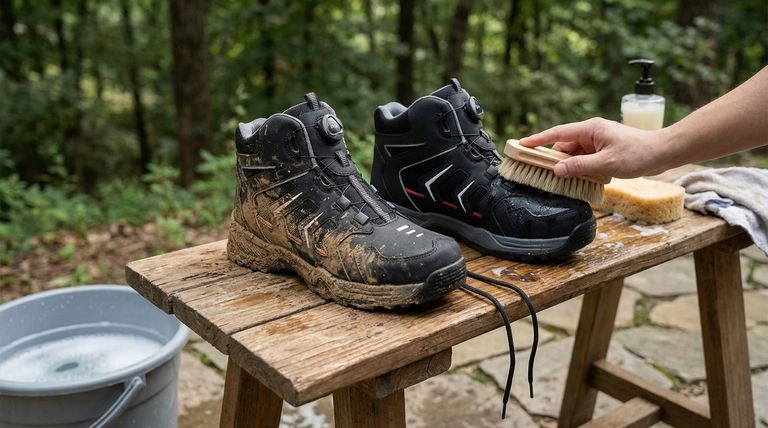
Routine cleaning is the single most important factor in maximizing the lifespan and performance of your trekking or tactical boots. The correct process involves three core steps: removing loose debris with a soft-bristled brush, washing the surface with lukewarm water and a mild soap, and allowing the boots to air dry completely away from any direct heat source.
Neglecting your boots allows dirt, grit, and moisture to act as abrasive agents that slowly degrade the materials from the outside in. A consistent and simple cleaning routine is not about aesthetics; it is fundamental maintenance that preserves the structural integrity and technical performance of your gear.
Why Routine Cleaning is Non-Negotiable
Properly cleaning your boots is a proactive measure that prevents premature failure. Dirt and grime are more than just cosmetic issues; they actively harm the materials that are engineered to protect your feet.
Preventing Material Degradation
Dried mud and caked-on dirt draw moisture out of leather, causing it to become brittle and crack. For synthetic materials, embedded grit acts like fine-grit sandpaper, accelerating wear on fibers and seams with every step you take.
Maintaining Breathability
High-performance boots often feature waterproof-breathable membranes. When the exterior fabric is clogged with dirt and grime, its ability to breathe is severely compromised. This traps sweat and moisture inside, defeating a key feature of the boot.
Ensuring Long-Term Durability
Consistent cleaning prevents the cumulative damage that leads to catastrophic failure on the trail. It is the most effective way to protect your investment and ensure your boots remain a reliable piece of equipment.
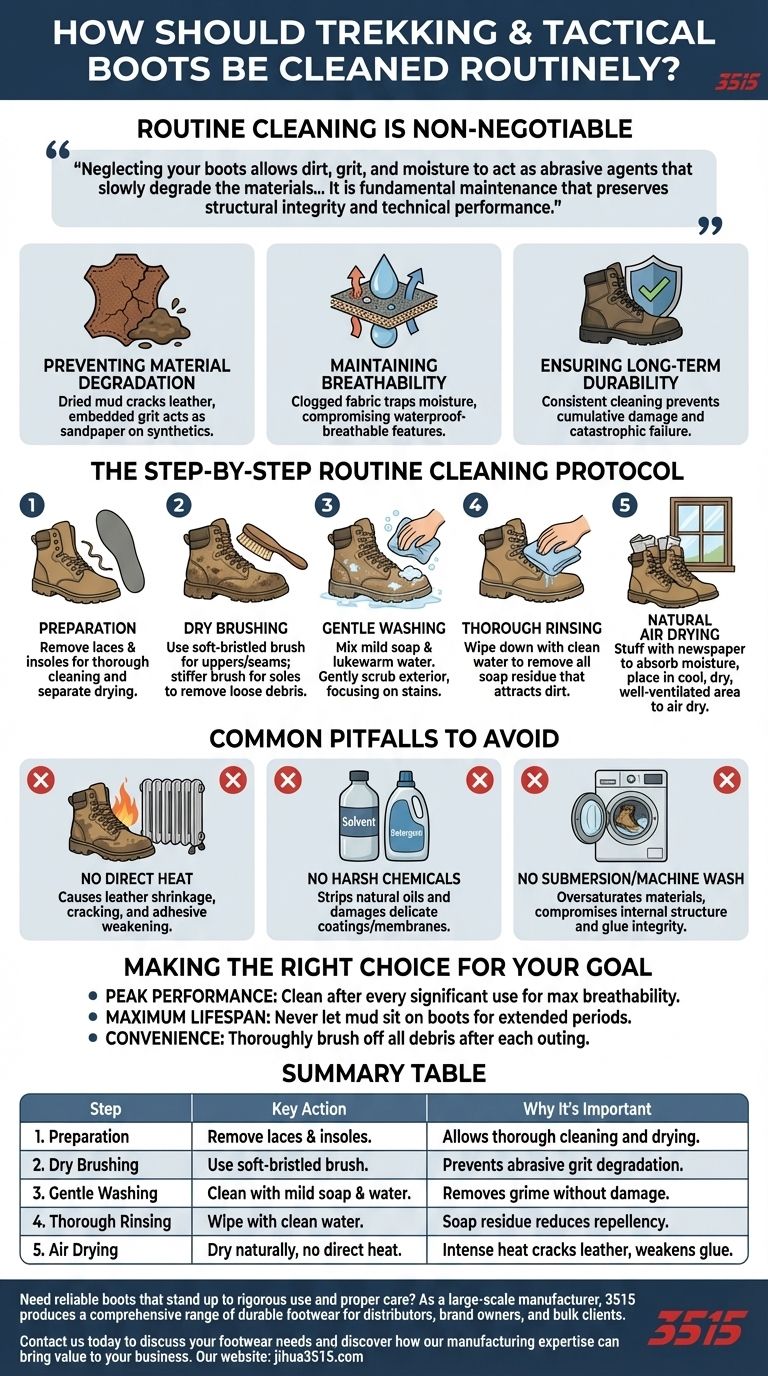
The Step-by-Step Routine Cleaning Protocol
Follow this simple protocol after any significant use, especially after exposure to mud, water, or particularly dusty conditions.
Step 1: Preparation
First, remove the laces and insoles from your boots. This allows you to clean the tongue and interior more effectively and lets all components dry thoroughly and separately.
Step 2: Dry Brushing
Using a soft-bristled brush, remove all loose dirt, dust, and mud from the boot's uppers, seams, and eyelets. You can use a stiffer brush for the heavy-duty rubber soles and outsoles to dislodge rocks and caked-on grime.
Step 3: Gentle Washing
Mix a small amount of mild soap (like dish soap or a specialized boot cleaner) with lukewarm water. Dip a cloth or your soft brush into the solution and gently scrub the boot's exterior. Focus on any remaining stains or soiled areas.
Step 4: Thorough Rinsing
Wipe the boots down with a separate cloth dampened with clean, cool water. It is critical to remove all soap residue, as it can attract more dirt and affect the material's water repellency.
Step 5: Natural Air Drying
Stuff the boots with newspaper or paper towels to help absorb internal moisture and maintain their shape. Place them in a cool, dry, well-ventilated area to air dry naturally.
Common Pitfalls to Avoid
The wrong cleaning methods can cause more damage than neglect. Understanding what not to do is as important as knowing what to do.
The Mistake of Using Direct Heat
Never place your boots near a radiator, campfire, or use a hairdryer to speed up drying. Intense, direct heat will cause leather to shrink and crack, and it can weaken the adhesives that bond the sole to the upper, leading to delamination.
The Problem with Harsh Chemicals
Avoid harsh detergents, solvents, or household chemical cleaners. These potent agents can strip the natural oils from leather and damage the delicate coatings and membranes on synthetic materials, destroying their performance characteristics.
The Danger of Submersion and Machine Washing
Do not fully submerge your boots in water for long periods or put them in a washing machine. This can oversaturate the materials, damage the internal structure, and compromise the integrity of the glues and cements used in their construction.
Making the Right Choice for Your Goal
Integrating this routine into your post-activity habits will ensure your boots are always ready for the next challenge. Your specific goal will determine the frequency and intensity of your care.
- If your primary focus is peak performance: Clean your boots after every significant use to maintain maximum breathability and function.
- If your primary focus is maximum boot lifespan: Never let mud sit on your boots for extended periods, as this is the primary cause of material breakdown.
- If your primary focus is convenience: At a minimum, thoroughly brush off all debris after each outing to prevent the most immediate abrasive damage.
Consistent care transforms your boots from a disposable purchase into a long-term, reliable asset.
Summary Table:
| Step | Key Action | Why It's Important |
|---|---|---|
| 1. Preparation | Remove laces and insoles. | Allows for thorough cleaning and drying of all components. |
| 2. Dry Brushing | Use a soft-bristled brush to remove loose dirt. | Prevents abrasive grit from degrading materials. |
| 3. Gentle Washing | Clean with mild soap and lukewarm water. | Removes grime without damaging technical fabrics or leather. |
| 4. Thorough Rinsing | Wipe with clean water to remove soap residue. | Soap residue can attract dirt and reduce water repellency. |
| 5. Air Drying | Dry naturally, away from direct heat. | Intense heat can crack leather and weaken adhesives. |
Need reliable boots that stand up to rigorous use and proper care?
As a large-scale manufacturer, 3515 produces a comprehensive range of durable footwear for distributors, brand owners, and bulk clients. Our production capabilities encompass all types of trekking and tactical boots, engineered for performance and longevity.
Contact us today to discuss your footwear needs and discover how our manufacturing expertise can bring value to your business.
Visual Guide
Related Products
- Durable Leather Tactical Boots Wholesale & Custom Manufacturing for Brands
- Wholesale Lightweight Tactical Boots Custom Manufacturer for Desert & Combat Use
- Wholesale Waterproof Tactical Boots Custom Suede & High-Traction Soles
- High-Traction Suede Tactical Boots Wholesale & Custom Manufacturing
- Durable Mid-Cut Tactical Boots for Wholesale & Private Label
People Also Ask
- What specialized protections do tactical boots offer? Maximize Endurance with High-Performance Footwear
- What features should law enforcement officers look for in tactical boots? Essential Guide for Safety & Performance
- Importance of Professional Tactical Boots in Loess Gully Regions: Ensure Safety and Precision for Field Monitoring
- What is rucking, and why are tactical boots suitable for it? Discover the Ultimate Footwear for Heavy Loads
- What makes the traction of tactical boots superior? Unlock the Science of Unbeatable Grip