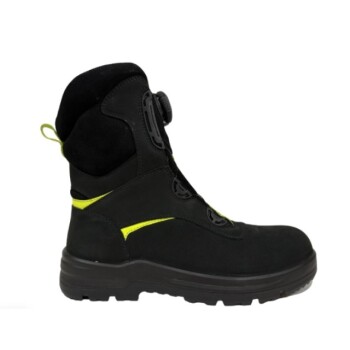
A portable high-resolution Spiroergometry System is deployed to objectively quantify the physiological energy cost of wearing specific high-altitude tactical boots or outdoor shoes. By monitoring real-time gas exchange—specifically oxygen consumption (VO2) and carbon dioxide output (VCO2)—the system measures the metabolic burden the footwear places on the wearer during high-intensity exercise.
Core Insight: The primary value of this system is its ability to calculate the Respiratory Exchange Ratio (RER). This metric reveals exactly when a user's metabolism shifts from aerobic to anaerobic states, providing definitive proof of how footwear design impacts endurance and fatigue management.
Quantifying Physiological Cost
Measuring Respiratory Efficiency
The core function of the system is to monitor minute ventilation (VE) alongside gas exchange.
It answers the critical question: "How hard do the lungs and heart have to work to move this specific boot?"
The Respiratory Exchange Ratio (RER)
By comparing the amount of carbon dioxide produced to the amount of oxygen consumed, the system generates RER data.
This ratio is a key indicator of fuel usage (fat vs. carbohydrates) and overall metabolic efficiency. High-altitude boots that are overly heavy or biomechanically inefficient will cause RER values to spike earlier during exertion.
Identifying Metabolic Limits
Pinpointing Anaerobic Thresholds
For tactical and outdoor scenarios, knowing the user's anaerobic threshold is vital.
This is the intensity level where lactate accumulates faster than it can be cleared. The spiroergometry system identifies if a specific shoe design lowers this threshold, causing the wearer to fatigue faster than they would in alternative footwear.
Detecting Metabolic Transitions
The system tracks the transition phases between different metabolic states.
If a boot has poor ergonomic design, the user forces "metabolic transitions" (shifts in energy production) at lower speeds or inclines. This data validates whether a shoe supports or hinders high-altitude performance.
Understanding the Trade-offs
Physiological vs. Mechanical Data
It is critical to understand that spiroergometry measures physiological cost, not mechanical stability.
While this system tracks heart and lung performance, it does not measure balance, ground reaction forces, or center of pressure. Those metrics require different instrumentation, such as high-frequency force plates.
Specificity of Use
The data provided is systemic, meaning it reflects the whole body's effort.
It cannot isolate specific muscle fatigue in the foot or ankle; it only reflects the total energy expenditure required to compensate for the footwear's weight and stiffness.
Making the Right Choice for Your Evaluation
Different testing goals require prioritizing different data points from the spiroergometry system.
- If your primary focus is Endurance Validation: Focus on VO2 and RER trends to ensure the boot does not prematurely force the wearer into anaerobic metabolism.
- If your primary focus is High-Intensity Operations: Focus on Minute Ventilation (VE) to assess how the footwear impacts breathing rates during peak physical stress.
The portable spiroergometry system effectively translates the abstract concept of "boot heaviness" into precise, actionable metabolic data.
Summary Table:
| Key Metric | Physiological Insight for Footwear | Importance in High-Altitude Evaluation |
|---|---|---|
| VO2 / VCO2 | Real-time oxygen consumption & CO2 output | Measures total metabolic burden of the boot weight. |
| RER (Ratio) | Respiratory Exchange Ratio (Fuel source) | Identifies the shift from aerobic to anaerobic states. |
| VE (Ventilation) | Minute ventilation (Air volume moved) | Evaluates how hard the lungs work during exertion. |
| Anaerobic Threshold | Lactate accumulation point | Detects if footwear design causes premature fatigue. |
| Metabolic Shift | Transition between energy states | Validates ergonomic efficiency under peak physical stress. |
Optimize Your Tactical Footwear Performance with 3515
As a premier large-scale manufacturer serving global distributors and brand owners, 3515 leverages advanced performance insights to deliver superior footwear solutions. Our flagship Safety Shoes series and specialized Tactical & Work Boots are engineered to minimize metabolic cost and maximize endurance in the most demanding high-altitude environments.
Whether you need bulk production of training shoes, sneakers, or professional Dress & Formal footwear, our comprehensive production capabilities ensure your products meet the highest physiological standards. Contact us today to discuss your specific requirements and see how our manufacturing expertise can bring unparalleled value to your brand.
References
- Valeria Paéz, Morin Lang. Maximal pulmonary ventilation and lactate affect the anaerobic performance in young women exposed to hypobaric hypoxia. DOI: 10.3389/fphys.2023.1110477
This article is also based on technical information from 3515 Knowledge Base .
Related Products
- High-Traction Suede Tactical Boots Wholesale & Custom Manufacturing
- Durable High-Ankle Tactical Boots Wholesale Manufacturer for Custom & Bulk Orders
- Durable High-Ankle Tactical Boots for Wholesale & Custom Manufacturing
- Durable Leather High-Ankle Tactical Boots for Wholesale & Custom Manufacturing
- Wholesale Tactical Boots High-Traction & Reflective for Bulk & Brand Orders
People Also Ask
- Why is sequential analysis utilized to evaluate tactical boots? Master Dynamic Boot Development and Ergonomic Performance
- How does the material of tactical boots affect their performance? Choose the Right Material for Your Mission
- How do tactical boots differ from regular boots? Performance, Durability & Design Explained
- How do military uniforms and tactical boots impact the prediction of thermal risk? Essential Safety Insights
- What are the benefits of integrating FES and sEMG into tactical boots? Safety, Reliability & Field-Ready Performance