
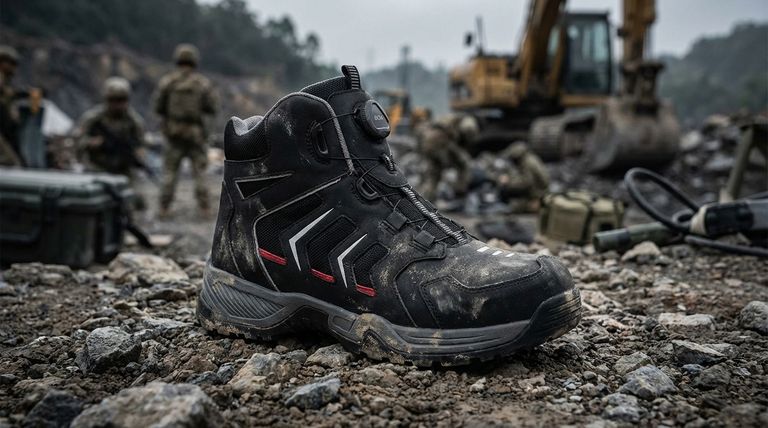
In the context of footwear, the term 'tactical' signifies that a boot is purpose-built for a specific, demanding objective, drawing its design heritage from military and law enforcement applications. These boots are engineered to provide robust protection in extreme circumstances while prioritizing fluid movement, stealth, and all-day comfort.
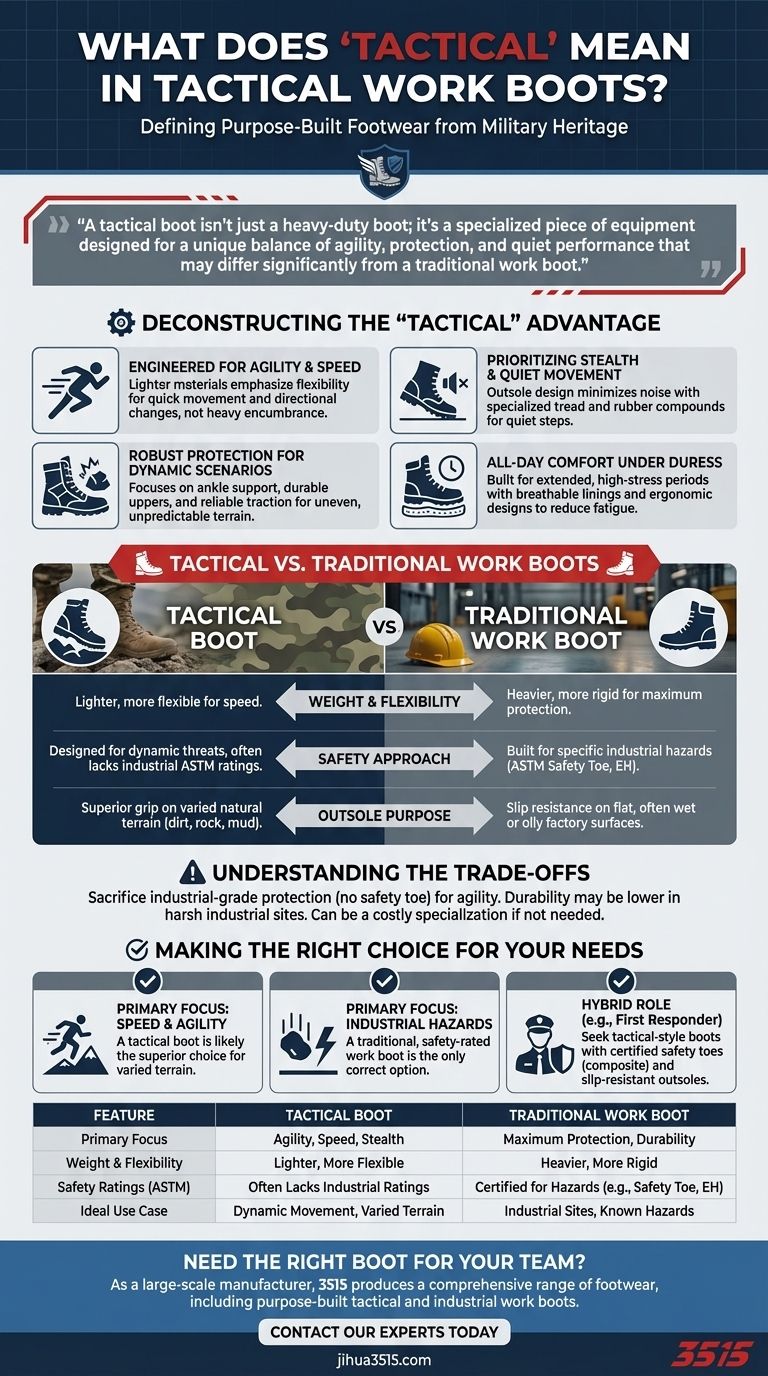
A tactical boot isn't just a heavy-duty boot; it's a specialized piece of equipment designed for a unique balance of agility, protection, and quiet performance that may differ significantly from a traditional work boot.
Deconstructing the "Tactical" Advantage
To understand what makes a boot tactical, we must look at the specific performance characteristics that were originally demanded by soldiers and officers in the field.
Engineered for Agility and Speed
Tactical boots are often constructed with lighter materials compared to traditional work boots. Their design emphasizes flexibility, allowing the wearer to run, climb, and change direction quickly without being encumbered by a heavy, rigid boot.
Prioritizing Stealth and Quiet Movement
A key feature is an outsole designed to minimize noise. The tread patterns and rubber compounds are chosen to allow for quiet steps on a variety of surfaces, a critical requirement for military or law enforcement operations.
Robust Protection for Dynamic Scenarios
While they offer protection, it's geared toward dynamic environments. This includes strong ankle support to prevent sprains on uneven terrain, durable uppers to resist abrasion, and reliable traction to maintain footing in unpredictable conditions.
All-Day Comfort Under Duress
These boots are built with the expectation that the user will be on their feet for extended, high-stress periods. Features like breathable linings, cushioned midsoles, and ergonomic designs are standard to reduce fatigue.
Tactical vs. Traditional Work Boots
The most common point of confusion is how a tactical boot differs from a standard work boot. The answer lies in their core design philosophy.
The Weight and Flexibility Divide
A traditional work boot, especially one with a steel toe, is often heavier and more rigid. Its purpose is maximum protection against a known set of hazards. A tactical boot sacrifices some of that heavy armor for speed and flexibility.
A Different Approach to Safety
Standard work boots are built to meet specific safety ratings for industrial hazards, such as ASTM ratings for impact resistance (safety toes) and electrical hazard (EH) protection. Many tactical boots do not carry these industrial-specific ratings, as they are designed to counter different types of threats.
Outsole and Traction Purpose
A work boot outsole is typically designed for slip resistance on flat, often wet or oily surfaces found in factories or on construction sites. A tactical boot outsole is designed for superior grip on varied natural terrain—like dirt, rock, and mud.
Understanding the Trade-offs
Choosing a tactical boot for a job it wasn't designed for can be a mistake. Objectivity is critical when assessing your actual needs.
Sacrificing Industrial-Grade Protection
The most significant trade-off is often the lack of a certified safety toe. If your job site requires protection from crushing or falling objects, a standard tactical boot is not a compliant or safe choice.
Durability in Specific Environments
The lightweight materials that make a tactical boot agile may wear faster under the constant abrasion of a construction site or the chemical exposure of an industrial plant compared to a purpose-built industrial boot.
The Cost of Specialization
You may be paying a premium for features—like noise reduction or extreme flexibility—that have no practical benefit in your work environment, while missing out on protections that you actually need.
Making the Right Choice for Your Needs
Selecting the correct boot means matching the tool to the task. Consider what your daily activity truly demands.
- If your primary focus is speed, agility, and traversing varied terrain: A tactical boot is almost certainly the superior choice for your needs.
- If your primary focus is protection from industrial hazards like falling objects, punctures, or electrical shock: A traditional, safety-rated work boot is the only correct and safe option.
- If you need a hybrid for a role like a first responder or certain security jobs: Seek out tactical-style boots that are specifically built to include certified safety toes (composite is common) and slip-resistant outsoles.
Ultimately, choosing the right footwear is about correctly identifying the problems you need it to solve.
Summary Table:
| Feature | Tactical Boot | Traditional Work Boot |
|---|---|---|
| Primary Focus | Agility, Speed, Stealth | Maximum Protection, Durability |
| Weight & Flexibility | Lighter, More Flexible | Heavier, More Rigid |
| Safety Ratings (ASTM) | Often Lacks Industrial Ratings | Certified for Hazards (e.g., Safety Toe, EH) |
| Ideal Use Case | Dynamic Movement, Varied Terrain | Industrial Sites, Known Hazards |
Need the Right Boot for Your Team?
As a large-scale manufacturer, 3515 produces a comprehensive range of footwear for distributors, brand owners, and bulk clients. Our production capabilities encompass all types of shoes and boots, including purpose-built tactical and industrial work boots.
Let us help you equip your team with the perfect balance of protection, agility, and comfort. Contact our experts today to discuss your specific needs and explore our extensive catalog.
Visual Guide
Related Products
- Durable Leather Tactical Boots Wholesale & Custom Manufacturing for Brands
- High-Traction Suede Tactical Boots Wholesale & Custom Manufacturing
- Durable Leather High-Ankle Tactical Boots for Wholesale & Custom Manufacturing
- Durable Mid-Cut Tactical Boots for Wholesale & Private Label
- Durable High-Ankle Tactical Boots Wholesale Manufacturer for Custom & Bulk Orders
People Also Ask
- What specialized protections do tactical boots offer? Maximize Endurance with High-Performance Footwear
- What features should law enforcement officers look for in tactical boots? Essential Guide for Safety & Performance
- Importance of Professional Tactical Boots in Loess Gully Regions: Ensure Safety and Precision for Field Monitoring
- What is rucking, and why are tactical boots suitable for it? Discover the Ultimate Footwear for Heavy Loads
- What makes the traction of tactical boots superior? Unlock the Science of Unbeatable Grip















