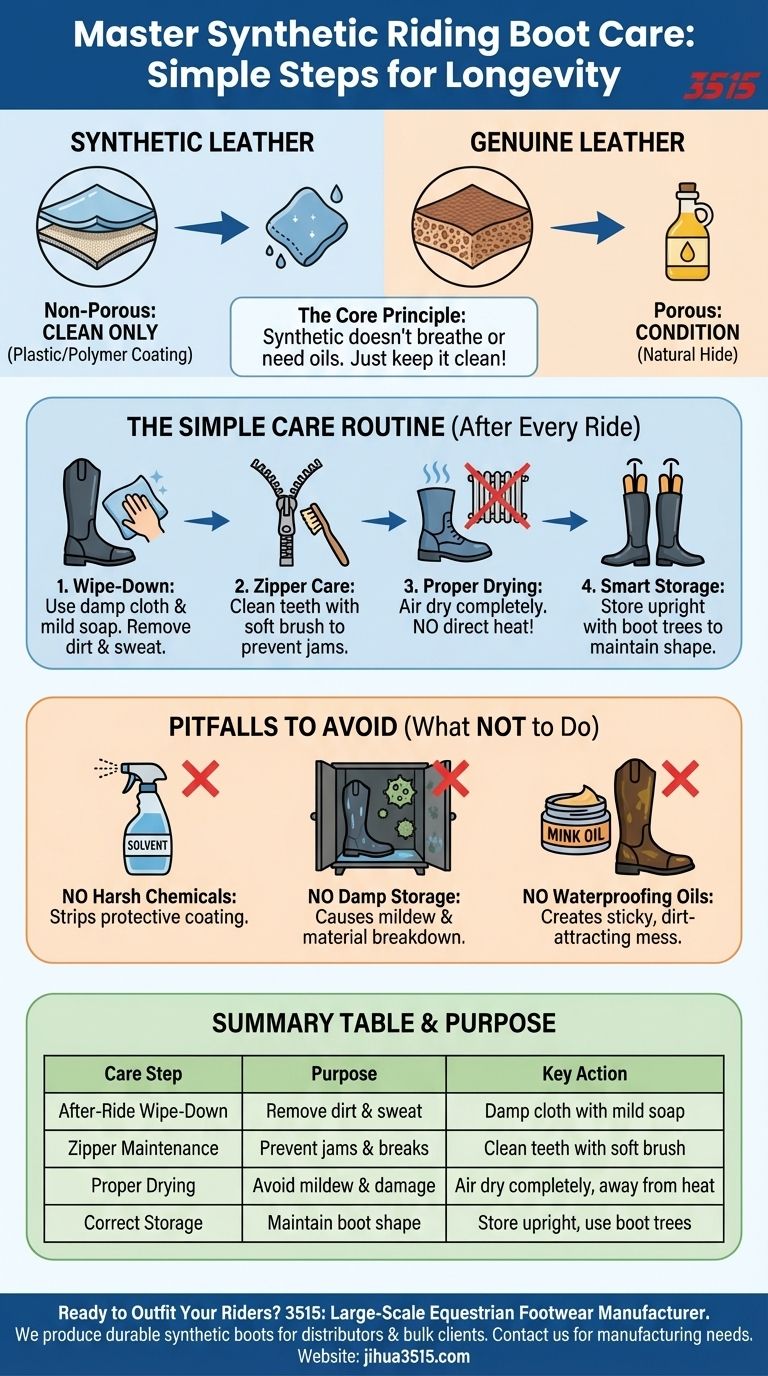
Caring for synthetic riding boots is fundamentally different—and simpler—than caring for genuine leather. The entire process focuses on cleaning away dirt and sweat, not on conditioning. A quick wipe-down with a damp cloth and a gentle cleanser after each ride, followed by complete air drying, is the most effective routine.
The core principle is this: Synthetic leather is a non-porous material. Unlike natural hide, it does not dry out, crack, or require oils to stay supple. Therefore, your goal is simply to keep it clean, not to condition it.
The "Why" Behind Synthetic Boot Care
To care for your boots properly, you must first understand the material. This knowledge prevents you from making common mistakes that can shorten their lifespan.
Understanding Synthetic Leather
Synthetic leather is essentially a plastic or polymer coating, often polyurethane, applied to a fabric backing. It's designed to mimic the look of leather without being a natural, porous hide.
This means it doesn't "breathe" or absorb substances like real leather does. Its structure is stable and won't lose natural oils over time because it never had any to begin with.
The Real Enemies: Dirt and Sweat
The primary threats to synthetic boots are abrasive grit and corrosive sweat. Dirt and sand can wear away at the finish and stitching, especially in the creases around the ankle.
Sweat and moisture, if left to sit, can degrade the synthetic material and adhesives over time and lead to odor or mildew.
Why Leather Products Don't Work
Applying traditional leather conditioners, creams, or oils to synthetic boots is ineffective and potentially harmful. Since the material is non-porous, these products can't be absorbed.
Instead, they sit on the surface, creating a sticky film that attracts even more dirt and can damage the boot's finish.
A Simple, Effective Care Routine
Consistency is more important than complexity. A few minutes after each ride will protect your investment far better than an intensive cleaning once a month.
After Every Ride: The Wipe-Down
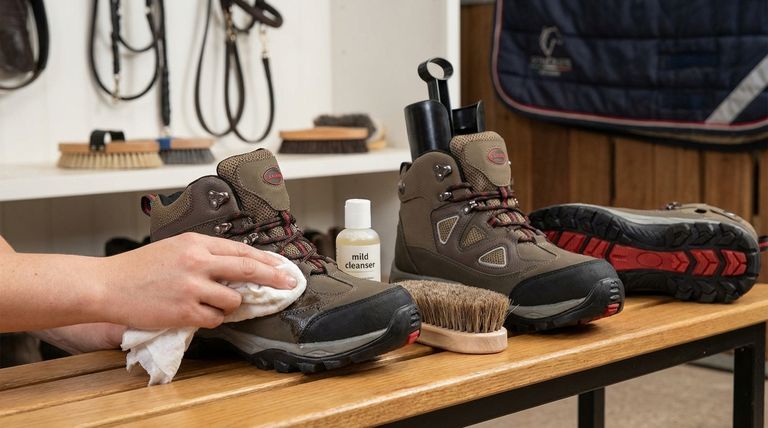
Use a damp cloth to wipe away all visible dust, sweat, and dirt. For more stubborn grime, you can use a small amount of a gentle cleanser, like mild dish soap, diluted in water.
Wipe away any soap residue with a clean, damp cloth afterward.
Don't Neglect the Zippers
A failed zipper is one of the most common reasons for replacing tall boots. After each ride, use a soft brush (an old toothbrush works well) to clear any grit or mud from the zipper teeth.
This simple step prevents debris from causing the zipper to jam or break.
Proper Drying and Storage
Always allow your boots to air dry completely before storing them. Never use direct heat sources like a radiator or hairdryer, as this can warp or crack the synthetic material.
Store your boots upright, preferably with boot trees, to help them maintain their shape and prevent the ankles from creasing and weakening.
Common Pitfalls to Avoid
Knowing what not to do is as important as knowing what to do. Avoiding these common errors will ensure your boots last as long as possible.
Using Harsh Chemical Cleaners
Never use solvents, abrasive cleaners, or harsh chemicals. These can strip the protective top coat off the synthetic leather, causing it to become dull, brittle, or discolored.
Storing Boots While Damp
Putting boots away while still wet or damp is a primary cause of material breakdown. It creates a perfect environment for mildew and can weaken the glues holding the boot together.
Applying "Waterproofing" Oils
Avoid products like mink oil on synthetic boots. They are designed to penetrate and saturate real leather, but on a synthetic surface, they will only create a greasy, dirt-attracting mess.
Making the Right Choice for Your Goal
Your specific routine can be tailored to the situation, but the principles remain the same.
- If your primary focus is daily maintenance: A quick wipe-down with a damp cloth after every ride is the single most effective habit.
- If your primary focus is a deep clean after a muddy day: Use a soft brush for loose dirt, then a cloth with a mild soap and water solution, paying close attention to seams and zippers.
- If your primary focus is long-term preservation: Ensure boots are completely dry before storing them upright, ideally with boot trees, to maintain their shape.
Consistent, simple cleaning—not complex conditioning—is the key to maximizing the life of your synthetic riding boots.
Summary Table:
| Care Step | Purpose | Key Action |
|---|---|---|
| After-Ride Wipe-Down | Remove dirt and sweat | Use a damp cloth with mild soap |
| Zipper Maintenance | Prevent jams and breaks | Clean teeth with a soft brush |
| Proper Drying | Avoid mildew and material damage | Air dry completely, away from heat |
| Correct Storage | Maintain boot shape | Store upright, use boot trees |
Ready to Outfit Your Riders with Durable, Easy-to-Care-For Boots?
As a large-scale manufacturer, 3515 produces a comprehensive range of equestrian footwear for distributors, brand owners, and bulk clients. Our production capabilities encompass all types of riding boots, including high-performance synthetic leather options designed for durability and simple maintenance.
Let us help you stock reliable footwear that your customers will love. Contact our team today to discuss your manufacturing needs and explore our catalog.
Visual Guide
Related Products
- Durable Leather High-Ankle Tactical Boots for Wholesale & Custom Manufacturing
- Wholesale Leather Ankle Boots with Lug Soles for Custom Brand Manufacturing
- Durable Leather Work Boots for Wholesale & Custom OEM Manufacturing
- Durable Leather Work Boots Wholesale Manufacturer & Custom Factory
- Wholesale Classic Leather Lace-Up Ankle Boots for Brand Manufacturing
People Also Ask
- How do military uniforms and tactical boots impact the prediction of thermal risk? Essential Safety Insights
- How does the material of tactical boots affect their performance? Choose the Right Material for Your Mission
- Why is sequential analysis utilized to evaluate tactical boots? Master Dynamic Boot Development and Ergonomic Performance
- How do tactical boots differ from regular boots? Performance, Durability & Design Explained
- What are the primary differences between tactical boots and combat boots? Choose the Right Boot for Your Mission