
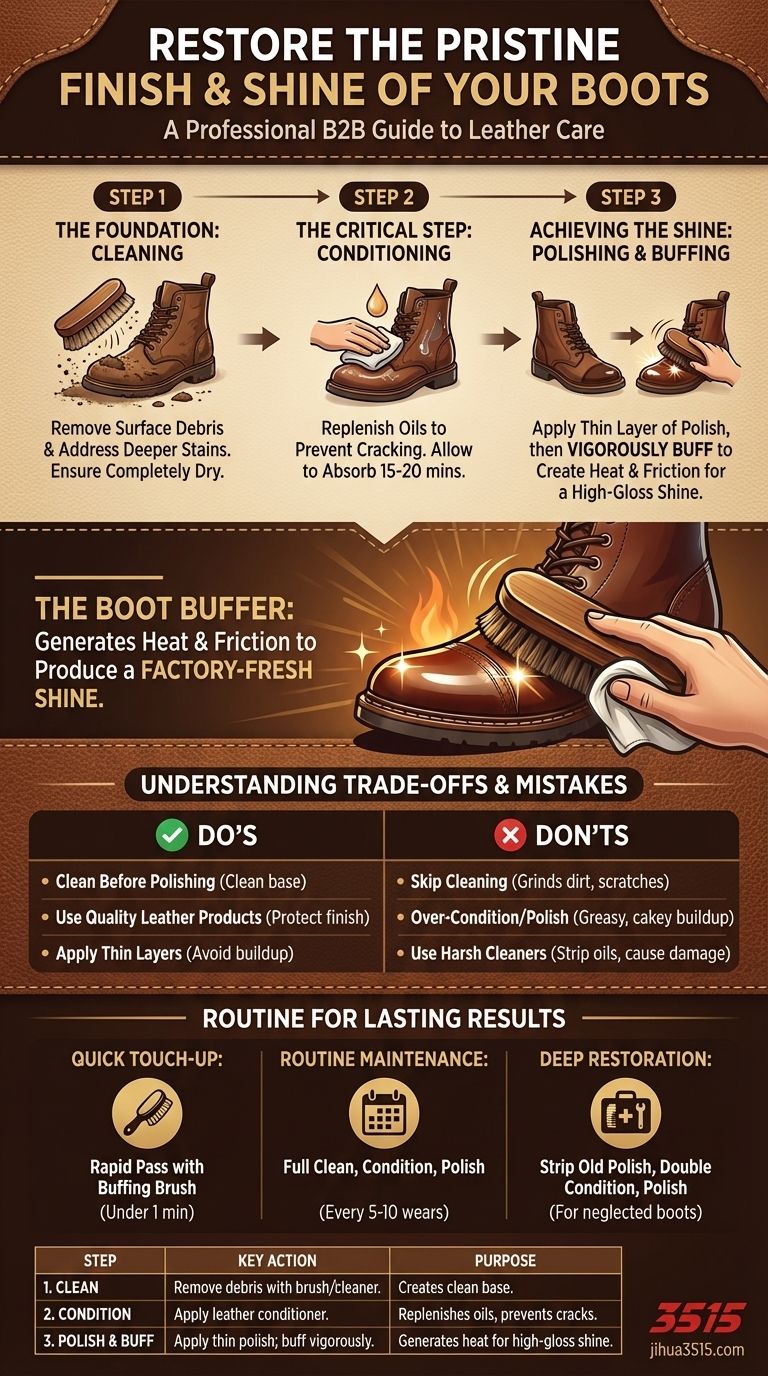
To restore the pristine finish and shine of your boots, the final and most critical step is a vigorous buffing after applying the appropriate polish. While various products play a role, it is the boot buffer—whether a brush or a cloth—that removes excess polish and creates the heat and friction necessary to produce a high-gloss, factory-fresh shine.
The key to a lasting, high-quality shine isn't a single product, but a disciplined process. True restoration requires cleaning and conditioning the leather before you even think about polishing and buffing.
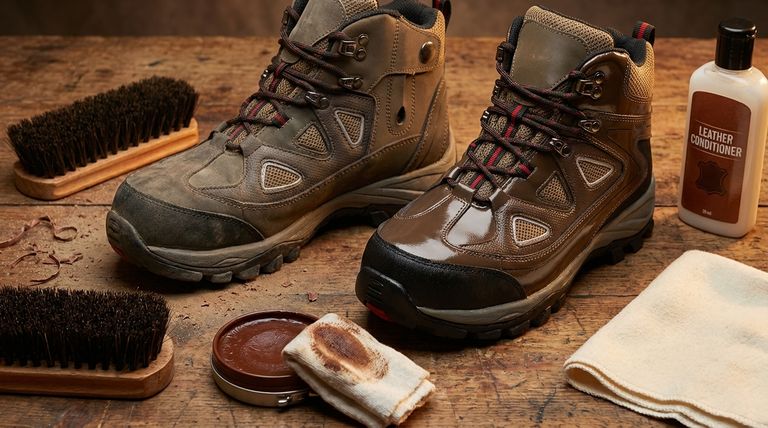
The Foundation: A Thorough Cleaning
Before any shine can be achieved, the surface of the boot must be completely free of dirt and grime. Polishing over debris will only grind it into the leather, causing damage and a cloudy finish.
Remove Surface Debris
First, use a horsehair brush to vigorously wipe away all loose dirt, dust, and mud from the entire boot, paying special attention to the welt and seams.
Address Deeper Stains
For more stubborn grime, use a slightly damp cloth to wipe down the leather. For significant stains, a dedicated leather cleaner is necessary to lift the dirt without stripping essential oils.
Allow for Proper Drying
Never apply polish or conditioner to damp leather. Let the boots air dry completely at room temperature, away from direct heat sources like radiators or sunlight, which can cause the leather to crack.
The Critical Step: Conditioning the Leather
Think of conditioning as moisturizing for your leather. Skipping this step is the most common reason boots look dull and eventually crack, regardless of how well they are polished.
Why Conditioning Is Non-Negotiable
Leather is a skin; it needs oils to remain supple and strong. A quality leather conditioner replenishes these oils, preventing the material from drying out and developing cracks.
How to Apply Conditioner
Apply a small, dime-sized amount of conditioner to a soft, clean cloth. Work it into the leather using small, circular motions, ensuring even coverage across the entire boot. Let it absorb for at least 15-20 minutes before moving on.
Achieving the Shine: Polishing and Buffing
This is the final stage where the visual restoration happens. The polish adds color and a protective layer, while the buffing brings out the shine.
Applying the Polish
Using a separate clean cloth or dauber, apply a thin, even layer of cream or wax polish in small, circular motions. Use sparingly; a thick layer will be difficult to buff and will be more likely to scuff.
The Role of the Boot Buffer
After the polish has had a moment to dry to a slight haze, it's time to buff. Use a horsehair shine brush or a soft, lint-free cloth and sweep it rapidly across the boot's surface with short, energetic strokes. This action smooths the wax and generates the friction that creates a brilliant shine.
Understanding the Trade-offs
Achieving a pristine finish requires an investment of time and attention to detail. Cutting corners will produce inferior results.
Skipping Cleaning
Polishing over dirt is the fastest way to permanently damage your boots. It grinds abrasive particles into the leather's pores, leading to scratches and a dull finish that no amount of buffing can fix.
Over-Conditioning or Over-Polishing
More is not better. Using too much conditioner can oversaturate the leather, making it feel greasy. Similarly, applying thick layers of polish creates a cakey buildup that cracks easily and obscures the natural beauty of the leather.
Using the Wrong Products
Always use products designed specifically for leather footwear. Harsh household cleaners or oils can strip the leather's natural finish and cause irreversible damage.
A Routine for Lasting Results
Your approach should match your goal, from a quick touch-up to a full restoration.
- If your primary focus is a quick touch-up: A rapid pass with a horsehair buffing brush can often revive a recent polish and restore a decent shine in under a minute.
- If your primary focus is routine maintenance: Perform the full clean, condition, and polish process every 5-10 wears to keep the leather healthy and consistently sharp.
- If your primary focus is deep restoration of neglected boots: Use a dedicated leather cleaner to strip old polish and dirt, then apply two light coats of conditioner before proceeding with the polish and buffing steps.
Proper care is not just about aesthetics; it is the single best way to protect your investment and extend the life of your boots.
Summary Table:
| Step | Key Action | Purpose |
|---|---|---|
| 1. Clean | Remove debris with a brush; use cleaner for stains. | Creates a clean, smooth base for polishing. |
| 2. Condition | Apply a quality leather conditioner. | Replenishes oils to prevent cracking and dullness. |
| 3. Polish & Buff | Apply thin polish layer; buff vigorously with a cloth or brush. | Generates heat and friction for a high-gloss shine. |
Need a reliable source for high-quality boots that are built to last?
As a large-scale manufacturer, 3515 produces a comprehensive range of durable footwear for distributors, brand owners, and bulk clients. Our production capabilities encompass all types of boots designed to maintain their pristine finish with proper care.
Contact us today to discuss your footwear needs and discover how we can be your trusted manufacturing partner.
Visual Guide
Related Products
- Wholesale Durable Safety Boots | Custom Steel Toe & Puncture-Resistant Manufacturing
- Premium Wholesale Tactical Style Safety Shoes Boots with Quick Lacing
- Durable Goodyear Welt Leather Work Boots for Wholesale & Private Label
- Durable Leather Work Boots for Wholesale & Custom Manufacturing
- Premium Wholesale Waterproof Safety Boots High Performance Protection for Industrial Markets
People Also Ask
- What materials are commonly used for outsoles in safety boots? A Guide to Durability, Grip, and Comfort
- What are the key features of safety boots? Essential Protection for Hazardous Workplaces
- What are the consequences of not wearing safety boots? Protect Your Finances and Career
- How should safety boots be cleaned to avoid damage? A Gentle Guide to Preserve Your Boots
- What makes durable safety boots? The Ultimate Guide to Long-Lasting Work Footwear



















