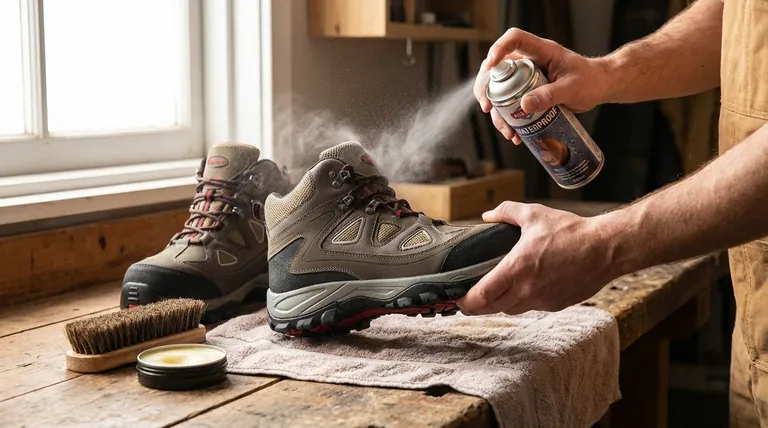
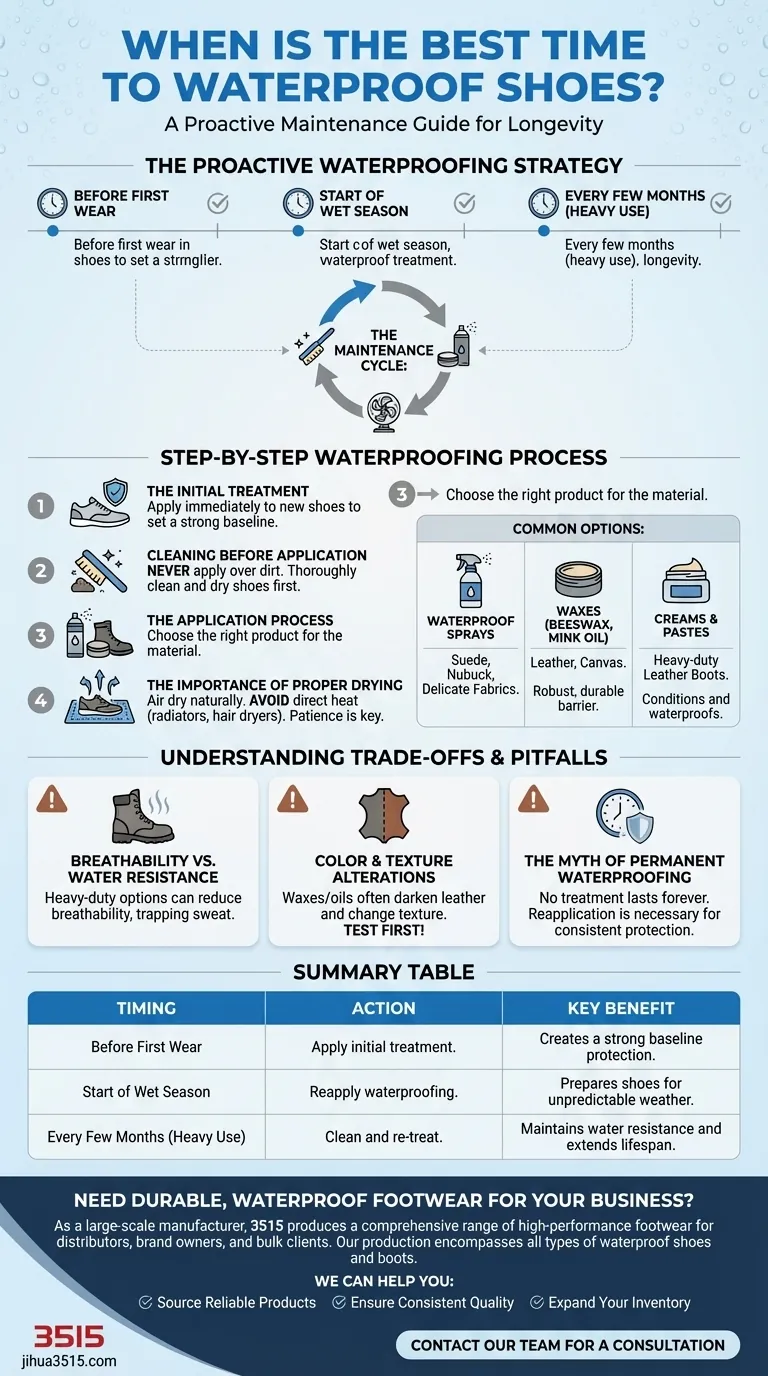
The best time to waterproof your shoes is before you wear them for the first time, and then again at the start of each wet season. This proactive approach ensures they are protected from unpredictable rain or snow from day one. Reapplying the treatment every few months during periods of heavy use will maintain their resistance and extend their lifespan.
The core principle isn't about finding a single "perfect" time, but adopting a consistent maintenance routine. Effective waterproofing is a cycle of cleaning, applying the right treatment, and proper drying—not a one-time fix.
The Proactive Waterproofing Strategy
Your goal is to create a barrier before it's needed. Waiting until your shoes are already wet or water-damaged is a reactive approach that yields poor results and can permanently harm the material.
Step 1: The Initial Treatment
New shoes should be treated immediately. Even if they claim to be "water-resistant" from the factory, that initial coating can be inconsistent or wear off quickly. Applying a protectant right away sets a strong baseline.
Step 2: Cleaning Before Application
Never apply waterproofing to a dirty shoe. Applying a spray or wax over dirt and grime traps it against the material, degrading the fabric and creating an uneven, ineffective barrier.
Always start by cleaning your shoes thoroughly with a soft brush or cloth. For deeper cleans, use a gentle soap and allow them to dry completely before proceeding.
Step 3: The Application Process
Choose the right product for the material. Different materials require different treatments. A spray designed for suede could damage leather, and a heavy wax isn't suitable for breathable mesh.
Common options include:
- Waterproof Sprays: Best for suede, nubuck, and delicate fabrics.
- Waxes (Beeswax, Mink Oil): Ideal for leather and some canvas, providing a robust, durable barrier.
- Creams and Pastes: Often used for heavy-duty leather boots to condition and waterproof simultaneously.
Always test any new product on a small, inconspicuous area first to check for discoloration.
Step 4: The Importance of Proper Drying
Patience is critical after application. After applying the waterproofing treatment, you must let the shoes air dry naturally in a well-ventilated area.
Avoid direct heat sources like radiators or hair dryers. High heat can warp the shoe's shape, crack leather, and melt adhesives, causing permanent damage. Stuffing shoes with newspaper can help absorb excess moisture and maintain their form.
Understanding the Trade-offs and Common Pitfalls
Waterproofing is a maintenance task, not a magic solution. Understanding the limitations is key to managing your expectations and avoiding mistakes.
Breathability vs. Water Resistance
Heavy-duty waterproofing can reduce breathability. Products like thick waxes or silicone sprays create an excellent moisture barrier, but they can also trap sweat and heat inside the shoe. For athletic or performance footwear, choose a spray specifically designed to maintain breathability.
Color and Texture Alterations
Some products will change your shoe's appearance. Waxes and oils, in particular, will almost always darken the color of leather and can alter its texture. This is why testing on a small, hidden spot is not just a recommendation—it's essential.
The Myth of Permanent Waterproofing
No treatment lasts forever. The barrier you create wears down with every step, scuff, and exposure to the elements. Regular reapplication is necessary to maintain protection, especially for shoes you wear frequently in wet conditions.
How to Apply This to Your Footwear
The right routine depends on your shoes and how you use them.
- If your primary focus is on daily sneakers or fabric shoes: Clean them regularly and apply a breathable waterproofing spray every few months, or more often if you live in a rainy climate.
- If your primary focus is on leather boots or dress shoes: Treat them with a high-quality wax or cream at the start of the season and reapply whenever water stops beading on the surface.
- If your primary focus is on suede or nubuck footwear: Use a specialized suede-safe spray after every few wears and always clean them with a proper suede brush before treatment.
Ultimately, consistent care is the most effective strategy for keeping your feet dry and your shoes in excellent condition.
Summary Table:
| Timing | Action | Key Benefit |
|---|---|---|
| Before First Wear | Apply initial waterproofing treatment. | Creates a strong baseline of protection from day one. |
| Start of Wet Season | Reapply waterproofing. | Prepares shoes for unpredictable rain, snow, and slush. |
| Every Few Months (Heavy Use) | Clean and re-treat. | Maintains water resistance and significantly extends shoe lifespan. |
Need Durable, Waterproof Footwear for Your Business?
As a large-scale manufacturer, 3515 produces a comprehensive range of high-performance footwear for distributors, brand owners, and bulk clients. Our production capabilities encompass all types of waterproof shoes and boots, designed to meet the demands of any climate or activity.
We can help you:
- Source Reliable Products: Offer your customers footwear built with quality materials and construction.
- Ensure Consistent Quality: Benefit from our large-scale manufacturing expertise and stringent quality control.
- Expand Your Inventory: Access a wide variety of styles designed for durability and weather resistance.
Let's discuss how we can support your business with premium footwear solutions.
Contact our team today for a consultation
Visual Guide
Related Products
- Wholesale Premium Waterproof Nubuck Safety Shoes Boots
- Heavy-Duty Waterproof Nubuck Safety Boots Safety Shoes for Bulk Supply
- Premium Wholesale Waterproof Safety Boots High Performance Protection for Industrial Markets
- Durable Waterproof Rain Boots | Custom Manufacturer for Wholesale & Brands
- Wholesale Waterproof Tactical Boots Custom Suede & High-Traction Soles
People Also Ask
- Why are waterproof safety boots recommended for certain work environments? Essential Protection for Wet & Hazardous Jobs
- What materials are commonly used in waterproof boots? The Complete Guide to Durable, Breathable Protection
- What are the drawbacks of waterproof boots? The Breathability vs. Protection Trade-Off
- What is the advantage of one-piece construction in waterproof boots? Unbeatable Seamless Protection
- What is the difference between waterproof, water-resistant, and water-repellent boots? Choose the Right Protection for Your Feet