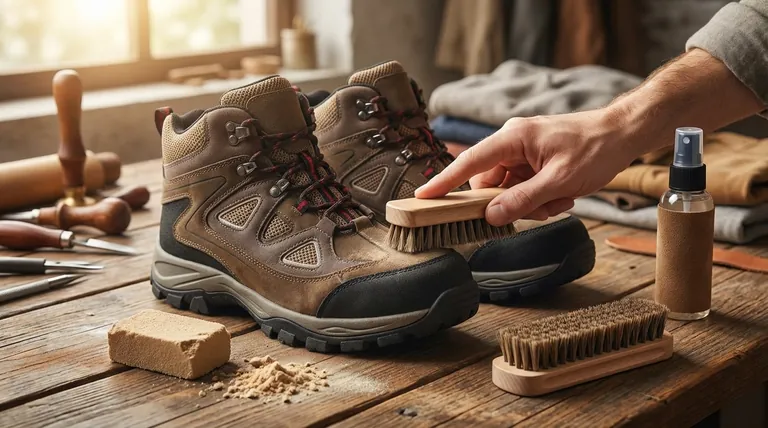
To clean suede and nubuck work boots, you must use a dry-cleaning method with specialized tools. Unlike standard leather, you should strictly avoid using water, soap, or liquid cleaners, which will stain the material and permanently damage its delicate, velvety texture. The correct process involves using a suede brush to remove loose dirt and a suede eraser to lift scuffs and stains from the fibers.
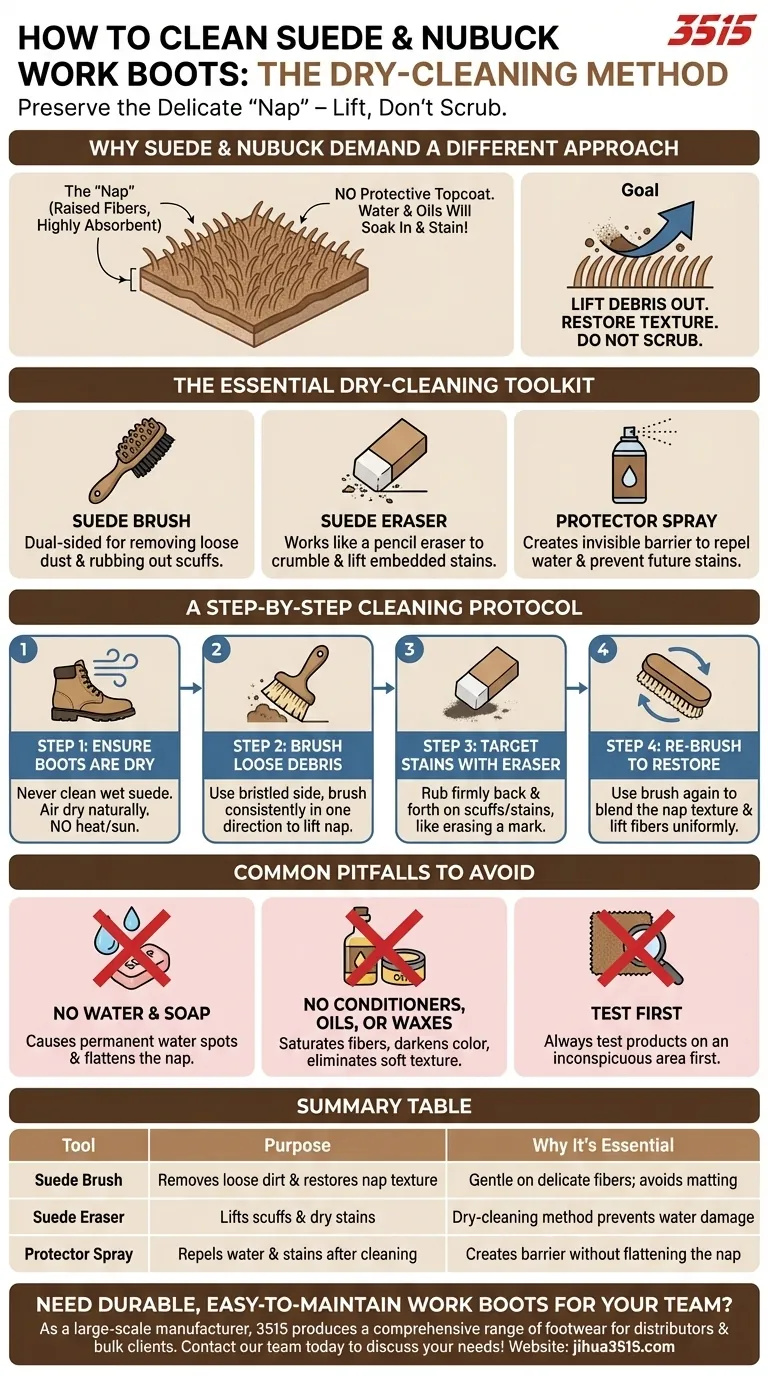
The core principle for cleaning suede and nubuck is to restore the material's "nap"—its soft, raised fibers—not to scrub its surface. Water and traditional conditioners will flatten this nap, causing irreversible damage. Your goal is to lift dirt out and brush the fibers back up using dedicated, dry tools.
Why Suede and Nubuck Demand a Different Approach
Understanding the material itself is the key to proper care. Suede and nubuck are fundamentally different from the smooth, finished leather found on most work boots.
The Delicate Nature of the "Nap"
Suede and nubuck leathers are sanded to create a surface of fine, raised fibers known as the nap. This gives them their signature soft texture.
This unfinished surface has no protective topcoat, making it highly absorbent. Water, soap, and oils will soak in, matting the fibers down and leaving dark, permanent spots.
Your Goal: Lift, Don't Scrub
Cleaning smooth leather involves wiping a sealed surface. Cleaning suede and nubuck is a mechanical process of lifting debris out of the nap and then brushing the fibers to restore their uniform, upright texture.
The Essential Dry-Cleaning Toolkit
You cannot use the same supplies for suede and nubuck as you would for standard leather. Invest in a few specific, inexpensive tools.
The Suede Brush
A proper suede brush is the most critical tool. It typically features two sides: one with soft nylon or brass bristles for removing general dust and another with firm rubber nubs for rubbing out tougher scuffs.
The Suede Eraser
A suede eraser, also called a cleaning block, works like a pencil eraser. As you rub it on a stain, it crumbles and lifts the embedded dirt particles away from the leather fibers.
Specialized Protective Sprays
After cleaning, a suede and nubuck protector spray is vital. These sprays create an invisible barrier that helps repel water and prevent future stains without damaging the nap. Standard leather conditioners will ruin the material.
A Step-by-Step Cleaning Protocol
Follow this precise, water-free process to safely clean your boots and restore their appearance.
Step 1: Ensure the Boots are Completely Dry
Never attempt to clean wet or muddy suede. Let the boots air dry naturally at room temperature. Using a heater or direct sunlight can shrink and crack the leather.
Step 2: Brush to Remove Loose Debris
Use the bristled side of your suede brush to gently sweep away all loose dust and dirt. Brush consistently in a single direction to help lift the nap uniformly.
Step 3: Target Stains with an Eraser
For scuffs, water spots, or dried stains, use the suede eraser. Rub it firmly back and forth over the affected area as if erasing a pencil mark.
Step 4: Re-Brush to Restore Texture
After erasing, the nap in that spot will look flat or messy. Use the brush again—employing a circular or back-and-forth motion—to lift the fibers and blend the texture with the rest of the boot.
Common Pitfalls to Avoid
The most common mistakes come from applying standard leather care techniques to these specialized materials.
Using Water and Soap
This is the single most destructive mistake. A "mild soap solution" and a damp cloth will create water spots and permanently flatten the nap. Suede and nubuck require a dry cleaning process.
Applying Leather Conditioners, Oils, or Waxes
Standard conditioners, mink oil, and beeswax are designed for smooth leather. On suede or nubuck, they will saturate the fibers, dramatically darken the color, and eliminate the soft texture forever.
Forgetting to Test First
Even with specialized suede cleaners (foams or liquids for severe stains), you must always test the product on a small, inconspicuous area of the boot first to see how the color and texture react.
Making the Right Choice for Your Goal
Select your cleaning method based on the condition of your boots.
- If your primary focus is routine maintenance: A quick pass with a dedicated suede brush every few wears is sufficient to remove dust and keep the nap looking fresh.
- If your primary focus is removing minor scuffs or dry stains: Use a suede eraser directly on the mark, then follow up by brushing the area to restore the texture.
- If your primary focus is protecting your investment: After every cleaning, apply a quality suede and nubuck protector spray to guard against future water damage and stains.
By treating suede and nubuck with the specific dry-cleaning tools they require, you can confidently maintain their unique finish and extend the life of your work boots.
Summary Table:
| Tool | Purpose | Why It's Essential |
|---|---|---|
| Suede Brush | Removes loose dirt & restores nap texture | Gentle on delicate fibers; avoids matting |
| Suede Eraser | Lifts scuffs and dry stains | Dry-cleaning method prevents water damage |
| Protector Spray | Repels water & stains after cleaning | Creates barrier without flattening the nap |
Need durable, easy-to-maintain work boots for your team?
As a large-scale manufacturer, 3515 produces a comprehensive range of footwear for distributors, brand owners, and bulk clients. Our production capabilities encompass all types of shoes and boots, including styles designed for easy maintenance and long-lasting performance.
Let us help you equip your workforce with reliable footwear. Contact our team today to discuss your needs!
Visual Guide
Related Products
- Durable Leather Work Boots for Wholesale & Custom Manufacturing
- Durable Leather Work Boots for Wholesale & Custom OEM Manufacturing
- Durable Leather Work Boots Wholesale Manufacturer & Custom Factory
- Wholesale Leather Work Boots with Customizable Wedge Sole for Brands
- Durable Leather Moc Toe Work Boots for Wholesale & Custom Manufacturing
People Also Ask
- What is the difference between full-grain and top-grain leather? Premium Material Guide for Boot Manufacturers
- What are the common workplace hazards that can be mitigated with the right work boots? Protect Your Workforce
- What are the common foot issues workers face due to uncomfortable work boots? Prevent Pain & Deformities
- What are the advantages of leather versus synthetic work boots? A Guide to Choosing the Right Material
- What are the key components of modern work boots? Engineered for Ultimate Durability and Comfort