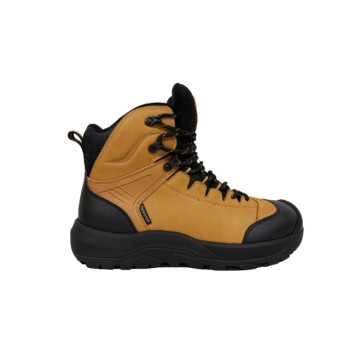
The best boots for cooler weather are defined by a specific combination of features designed to manage temperature, moisture, and challenging surfaces. These key attributes include effective insulation, water-resistant materials, and high-traction outsoles. A proper fit that allows for cushioning and potentially thicker socks is also a critical component for both warmth and comfort.
The ideal cool-weather boot is not a single product but a system of functional components. Your goal is to match the boot's insulation, traction, and weatherproofing capabilities to the specific environmental challenges you will face, from a damp autumn day to an icy winter morning.

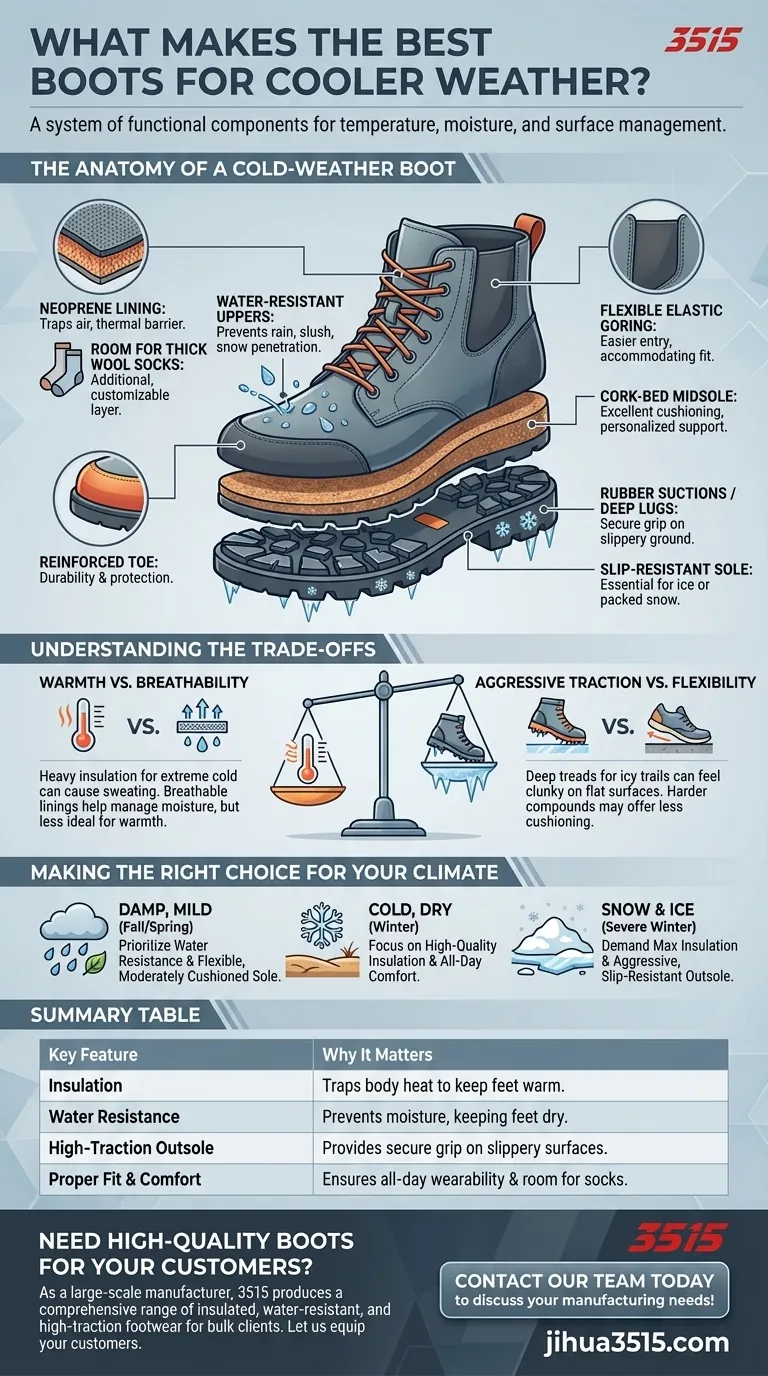
The Anatomy of a Cold-Weather Boot
To make an informed choice, you must understand how each part of a boot contributes to its overall performance. The materials and construction of the sole, lining, and upper work together to protect you from the elements.
Insulation: The Core of Warmth
The primary defense against cold is insulation. Materials like a neoprene lining trap air, creating a thermal barrier that keeps your feet warm.
Some boots are designed with enough room to accommodate thick wool socks, which serve as an additional, customizable layer of insulation.
Boots without dedicated insulation, such as standard Hunter boots, are insufficient for very low temperatures and rely entirely on added liners or socks to provide any meaningful warmth.
Traction: Your Connection to the Ground
Cooler weather often brings slippery conditions like wet leaves, ice, or snow. A boot's outsole is your point of contact with these surfaces.
Look for features like rubber suctions or deep, sturdy lugs on the sole. These design elements are engineered to provide a secure grip on slick ground.
A slip-resistant sole is a non-negotiable feature for environments where ice or packed snow is a regular occurrence, preventing dangerous falls.
Material and Weatherproofing
Keeping your feet dry is just as important as keeping them warm, as moisture rapidly pulls heat away from the body.
Many boots suitable for variable conditions use water-resistant materials for their uppers. This prevents rain, slush, and snow from penetrating the boot and soaking your socks.
Features like a reinforced toe can add durability and an extra layer of protection from both impact and moisture.
Fit and Comfort: The Foundation for All-Day Wear
A boot is only effective if you can wear it comfortably for extended periods.
A cork-bed midsole provides excellent cushioning, molding to your foot over time for personalized support.
Flexible elastic goring allows for easier entry and a more accommodating fit around the ankle, adapting to your movements without chafing or restriction.
Understanding the Trade-offs
Selecting the right boot requires balancing competing priorities. A feature that excels in one condition may be a liability in another.
Warmth vs. Breathability
Heavy insulation is essential for extreme cold but can be a significant drawback in milder cool weather.
Over-insulated boots can cause your feet to sweat, and that trapped moisture will eventually make you feel colder and more uncomfortable.
Some advanced models incorporate breathable linings to help manage this, allowing water vapor to escape while still providing warmth. However, even these are less than ideal for warmer months or climates.
Aggressive Traction vs. Everyday Flexibility
Deep, aggressive treads are perfect for icy trails but can feel clunky and stiff on dry pavement or indoor surfaces.
The most rugged, slip-resistant soles are often made from harder rubber compounds, which may offer less cushioning for all-day city walking compared to a more flexible sole.
Making the Right Choice for Your Climate
Your ideal boot depends entirely on the specific "cooler weather" you encounter most often. Use your primary need to guide your decision.
- If your primary focus is damp, mild fall or spring weather: Prioritize water resistance and a moderately cushioned, flexible sole.
- If your primary focus is consistently cold and dry conditions: Your main concern should be high-quality insulation and all-day comfort.
- If your primary focus is snow and ice: Demand maximum insulation combined with an aggressive, high-traction, slip-resistant outsole.
Ultimately, choosing the right boot is about understanding your environment and selecting a tool built specifically for that challenge.
Summary Table:
| Key Feature | Why It Matters |
|---|---|
| Insulation | Traps body heat to keep feet warm in low temperatures. |
| Water Resistance | Prevents moisture from rain and snow, keeping feet dry. |
| High-Traction Outsole | Provides a secure grip on slippery surfaces like ice and wet leaves. |
| Proper Fit & Comfort | Ensures all-day wearability and room for warm socks. |
Need high-quality boots for your customers?
As a large-scale manufacturer, 3515 produces a comprehensive range of durable and functional footwear for distributors, brand owners, and bulk clients. Our production capabilities encompass all types of insulated, water-resistant, and high-traction boots perfect for cooler climates.
Let us help you equip your customers with the right footwear for the season. Contact our team today to discuss your manufacturing needs!
Visual Guide
Related Products
- Premium Insulated Safety Boots and Shoes for Wholesale & Bulk Orders
- Durable Waterproof Rain Boots | Custom Manufacturer for Wholesale & Brands
- Factory Direct Wholesale Rain Boots Durable Waterproof & Fully Customizable
- Wholesale Lightweight Tactical Boots Custom Manufacturer for Desert & Combat Use
- Wholesale Waterproof Tactical Boots Custom Suede & High-Traction Soles
People Also Ask
- What are the recommended insulation ratings for mild winter conditions? A Guide for Active & Stationary Workers
- How does insulation thickness correlate with temperature ranges? A Guide to Choosing the Right Warmth
- What insulation level is needed for severe cold and stationary work? 1200g or Higher is Essential
- What safety advantages do insulated boots offer beyond warmth? Dielectric Protection & Superior Grip
- How does fleece lining contribute to the warmth of insulated boots? Trapping Air for Superior Cold Protection