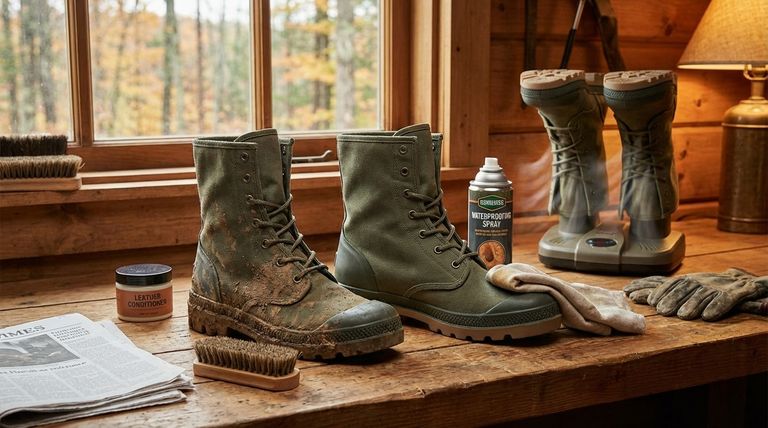
Properly maintaining hunting boots involves a consistent routine of cleaning them after every use, drying them correctly away from direct heat, and periodically treating the materials with the appropriate conditioner or waterproofing product. This simple process is the single most important factor in extending their lifespan and ensuring they perform reliably in the field.
Your hunting boots are a critical investment in your comfort and safety. Their maintenance isn't a complex task, but a discipline—a cycle of cleaning, drying, and treating that protects materials from their greatest enemies: abrasive dirt, moisture saturation, and heat damage.
The Core Principles of Boot Care
The goal of any maintenance plan is to keep the boot's materials in their ideal state. For leather, this means clean, hydrated, and water-resistant. For synthetics, it means clean and protected by a durable water-repellent (DWR) coating.
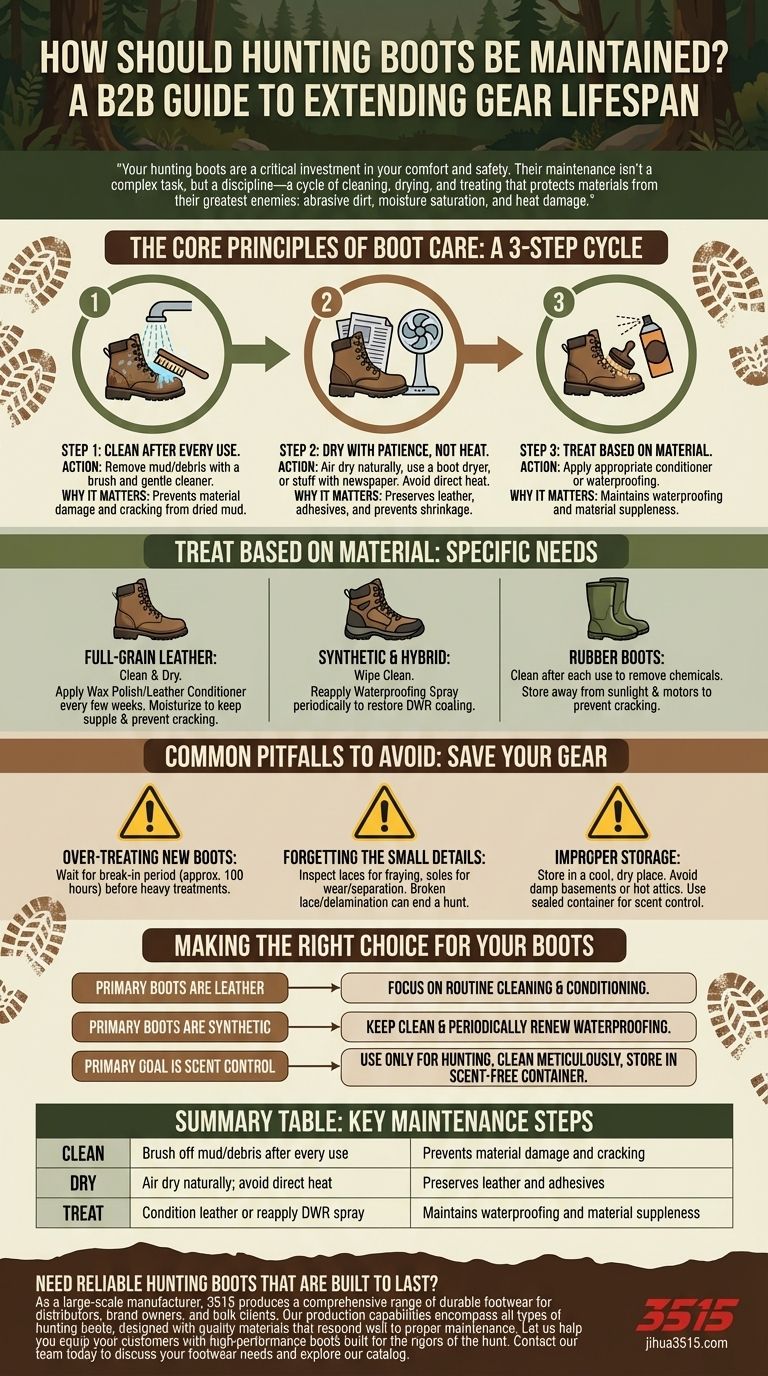
Step 1: Clean After Every Use
Leaving mud and debris on your boots is not a badge of honor; it's a primary cause of material failure. As mud dries, it pulls essential moisture and oils out of leather, causing it to become brittle and crack.
Regularly clean your boots with a brush and a gentle cleaner. This prevents the abrasive effects of dirt on stitching and materials.
Step 2: Dry with Patience, Not Heat
This is the most critical step. Never dry your boots near a direct heat source like a campfire, wood stove, or radiator. Intense heat can permanently shrink and crack leather, warp synthetics, and melt the adhesives that hold the boot together.
The best method is to use a boot dryer, which uses low-temperature, circulating air. Alternatively, remove the insoles and stuff the boots with newspaper, placing them in a dry, well-ventilated area.
Step 3: Treat Based on Material
Different materials have different needs. Applying the wrong product can be as damaging as doing nothing at all.
Full-Grain Leather Boots Leather is a skin and needs to be moisturized. After cleaning and drying, apply a wax polish or leather conditioner every few weeks to keep the material supple and prevent cracking. This also helps maintain its natural water resistance.
Synthetic and Hybrid Boots These boots are much lower maintenance. Simply wipe them down after use. Their water resistance comes from a factory-applied DWR coating, which will eventually wear off. Reapply a waterproofing spray periodically to restore it.
Rubber Boots Clean rubber boots after each use to remove damaging chemicals or acids found in soil. Store them away from direct sunlight and electric motors, as UV light and ozone can cause the rubber to perish and crack.
Common Pitfalls to Avoid
Even with good intentions, mistakes can happen. Being aware of these common errors will save you from prematurely ruining an expensive pair of boots.
Over-Treating New Boots
Brand new leather boots need a break-in period (around 100 hours of wear) before you apply heavy oils or greases. This allows the leather to breathe and conform to your foot. Applying heavy products too early can over-soften the leather, compromising its structural support.
Forgetting the Small Details
Your maintenance check shouldn't stop at the uppers. Regularly inspect your laces for fraying and check the soles for excessive wear or separation. A broken lace or a delaminating sole can end a hunt just as quickly as a leaky boot.
Improper Storage
During the off-season, store your boots in a cool, dry place with stable temperatures. Avoid damp basements or hot attics. For dedicated hunters, storing them in a sealed container or bag can also help with scent control, preventing them from absorbing foreign smells.
Making the Right Choice for Your Boots
Your maintenance routine should be tailored to your gear and your goals. A consistent approach is always better than an intensive annual treatment.
- If your primary boots are full-grain leather: Your focus must be on a routine of cleaning and conditioning to prevent the leather from drying out and cracking.
- If your primary boots are synthetic: Concentrate on keeping them clean and periodically renewing the waterproofing treatment to maintain their weather resistance.
- If your primary goal is scent control: Use your boots only for hunting, clean them meticulously after every outing, and store them in a sealed, scent-free container.
By treating your boots as the essential equipment they are, you ensure they will be ready and reliable for every season to come.
Summary Table:
| Maintenance Step | Key Action | Why It Matters |
|---|---|---|
| Clean | Brush off mud/debris after every use | Prevents material damage and cracking |
| Dry | Air dry naturally; avoid direct heat | Preserves leather and adhesives |
| Treat | Condition leather or reapply DWR spray | Maintains waterproofing and material suppleness |
Need Reliable Hunting Boots That Are Built to Last?
As a large-scale manufacturer, 3515 produces a comprehensive range of durable footwear for distributors, brand owners, and bulk clients. Our production capabilities encompass all types of hunting boots, designed with quality materials that respond well to proper maintenance.
Let us help you equip your customers with high-performance boots built for the rigors of the hunt. Contact our team today to discuss your footwear needs and explore our catalog.
Visual Guide
Related Products
- Wholesale Lightweight Tactical Boots Custom Manufacturer for Desert & Combat Use
- Durable Leather Tactical Boots Wholesale & Custom Manufacturing for Brands
- High-Traction Suede Tactical Boots Wholesale & Custom Manufacturing
- Durable Military Combat Boots with Water Drainage for Wholesale & OEM
- Wholesale Waterproof Tactical Boots Custom Suede & High-Traction Soles
People Also Ask
- What are the common types of combat boots? Find the Right Boot for Your Mission
- What specialized protections do tactical boots offer? Maximize Endurance with High-Performance Footwear
- How is the compatibility of polymer materials demonstrated in smart footwear? Enhancing Tactical & Training Performance
- What are the different types of tactical boots available? Find the Right Boot for Your Mission
- What are the main construction similarities between tactical boots and tactical sneakers? Built for Performance & Durability