Choosing the right boot stiffness is a critical decision that directly correlates to the terrain you'll be hunting and the load you'll be carrying. Stiff, rigid boots are engineered for steep, rugged mountains and heavy packs to provide essential support and reduce fatigue. Conversely, flexible boots offer superior comfort and agility for milder, flatter terrain with lighter loads.
The core principle is simple: boot stiffness is a tool. You must match the stiffness of the tool to the demands of the job—the more demanding the terrain and heavier the load, the more torsional rigidity and support you require from your footwear.
The Core Function of Boot Stiffness
Understanding why stiffness matters is the first step to making an informed choice. A boot's stiffness is not about comfort in the traditional sense; it's about structural integrity and biomechanical efficiency under stress.
How Stiffness Provides Support
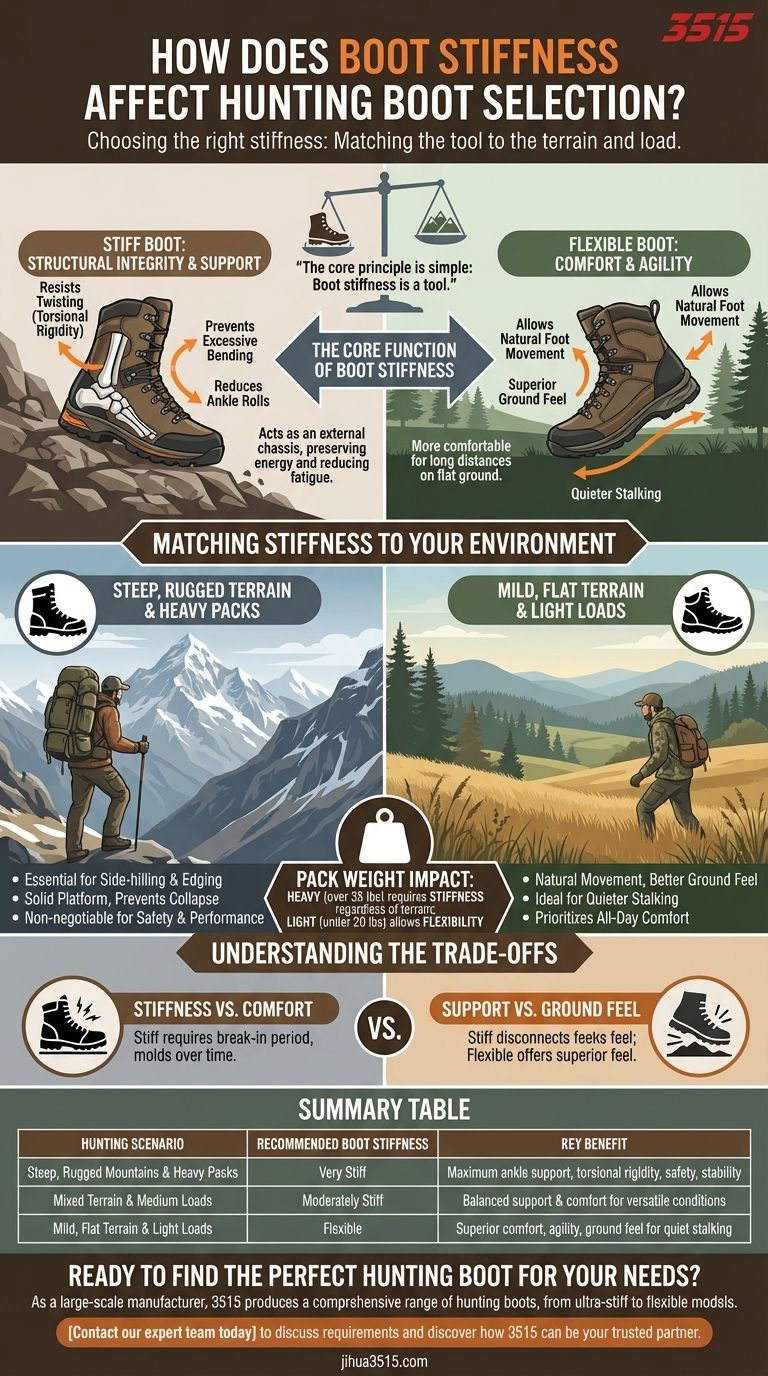
A stiff boot acts as an external chassis for your foot and ankle. On uneven, angled, or rocky ground, it resists twisting (torsional rigidity) and excessive bending.
This structure keeps your foot in a more stable, neutral position, significantly reducing the risk of ankle rolls and other injuries common in challenging terrain.
Reducing Strain and Fatigue
Your feet and lower legs are composed of dozens of small muscles and tendons that constantly work to stabilize you. A flexible boot forces these muscles to work overtime on rough ground.
A stiff boot takes on much of this stabilizing work. By providing a rigid platform, it reduces the micro-adjustments your muscles have to make, preserving energy and preventing debilitating fatigue on long hunts.
Matching Stiffness to Your Environment
The two most important factors dictating your need for stiffness are the terrain you will be in and the weight you will be carrying.
For Steep and Rugged Terrain
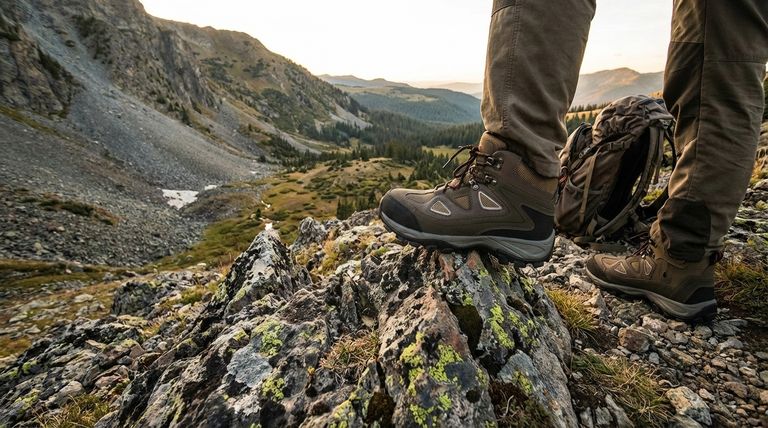
Mountain hunting often involves side-hilling (traversing across a steep slope) and "edging" on small rock ledges. A stiff boot provides a solid, trustworthy platform for these movements.
The rigidity prevents the boot from collapsing or rolling over the sole, giving you a secure foothold where a flexible boot would fail. This is non-negotiable for safety and performance in the high country.
For Mild Terrain and Lowlands
In rolling hills, forests, or agricultural fields, the ground is more predictable. Here, the priority shifts from rigid support to comfort and stealth.
A flexible boot allows your foot to move more naturally, which is more comfortable over long distances on flat ground. It also provides a better "feel" for the ground, enabling quieter stalking.
The Impact of Load Weight
The weight of your pack is just as critical as the terrain. Your boots support not only your body weight but everything you carry on your back.
A light daypack (under 20 lbs) may not require extra support. However, carrying a medium (20-35 lbs) or heavy expedition pack (over 35 lbs) dramatically increases the forces on your feet and ankles, necessitating a stiffer, more supportive boot regardless of the terrain.
Understanding the Trade-offs
There is no single "best" boot; every choice involves a compromise. Understanding these trade-offs is key to avoiding a poor investment.
Stiffness vs. Comfort
Stiff boots almost always require a dedicated break-in period before they become comfortable. They are built with robust materials that need time to mold to your feet.
Flexible boots are typically comfortable right out of the box, as they are made from softer materials and designed to bend with your foot's natural motion.
Support vs. Ground Feel
The same rigidity that provides support also creates a disconnect between your foot and the ground. This can make walking on flat, even surfaces feel clunky or awkward.
Flexible boots offer a superior ground feel, which can be an advantage for hunters who need to move silently and deliberately.
Making the Right Choice for Your Hunt
Use your specific hunting context as the primary guide for your decision.
- If your primary focus is mountain hunting with a heavy, multi-day pack: You must select a very stiff boot to ensure stability, prevent fatigue, and maintain safety on steep, treacherous ground.
- If your primary focus is day hunting in rolling hills, forests, or flatlands: A medium-to-flexible boot is the ideal choice, prioritizing all-day walking comfort and a natural stride.
- If your primary focus is a mix of terrain with varying pack loads: Look for a moderately stiff "all-around" boot that balances enough support for occasional climbs with enough comfort for the flatter sections.
Ultimately, selecting the correct boot stiffness is about aligning your equipment with your environment to ensure comfort, safety, and success.
Summary Table:
| Hunting Scenario | Recommended Boot Stiffness | Key Benefit |
|---|---|---|
| Steep, Rugged Mountains & Heavy Packs | Very Stiff | Maximum ankle support and torsional rigidity for safety and stability. |
| Mixed Terrain & Medium Loads | Moderately Stiff | Balanced support and comfort for versatile hunting conditions. |
| Mild, Flat Terrain & Light Loads | Flexible | Superior comfort, agility, and ground feel for quiet stalking. |
Ready to find the perfect hunting boot for your needs?
As a large-scale manufacturer, 3515 produces a comprehensive range of hunting boots for distributors, brand owners, and bulk clients. Our production capabilities encompass all types of boots, from ultra-stiff mountaineering models to flexible stalking boots, ensuring you get the exact support and performance your customers demand.
Contact our expert team today to discuss your specific requirements and discover how 3515 can be your trusted footwear manufacturing partner.
Visual Guide
Related Products
- Wholesale Lightweight Tactical Boots Custom Manufacturer for Desert & Combat Use
- Durable Leather Tactical Boots Wholesale & Custom Manufacturing for Brands
- Durable Spiked Camouflage Boots Wholesale & Factory Production
- High-Traction Suede Tactical Boots Wholesale & Custom Manufacturing
- Wholesale High-Traction Camo Boots - Custom Manufacturer for Brands
People Also Ask
- What are the common types of combat boots? Find the Right Boot for Your Mission
- What specialized protections do tactical boots offer? Maximize Endurance with High-Performance Footwear
- How is the compatibility of polymer materials demonstrated in smart footwear? Enhancing Tactical & Training Performance
- What are the main construction similarities between tactical boots and tactical sneakers? Built for Performance & Durability
- How does additive manufacturing equipment reduce environmental risks? Sustainable Tactics for Modern Footwear Production