
Proper care for riding boots is a systematic process of cleaning, conditioning, and correct storage. Executing this routine consistently is the most effective way to preserve the leather's integrity, maintain the boot's structural shape, and significantly extend its functional lifespan.
The goal is not just to keep your boots looking good, but to protect your investment. A consistent care routine prevents the leather from cracking, maintains the boot's supportive shape, and ensures your equipment remains safe and reliable for every ride.
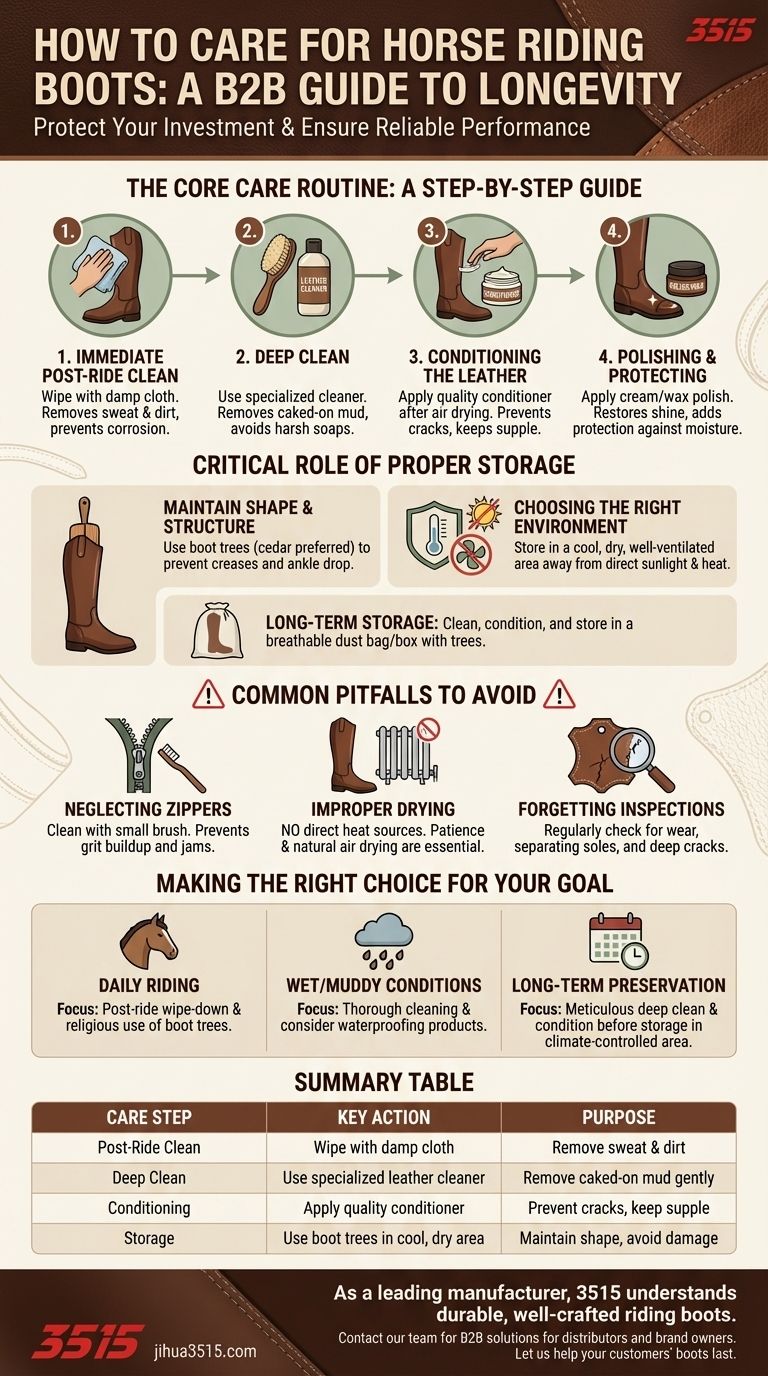
The Core Care Routine: A Step-by-Step Guide
A predictable routine is the foundation of boot longevity. It transforms maintenance from a chore into a simple, effective habit that protects the materials from the stress of regular use.
Step 1: The Immediate Post-Ride Clean
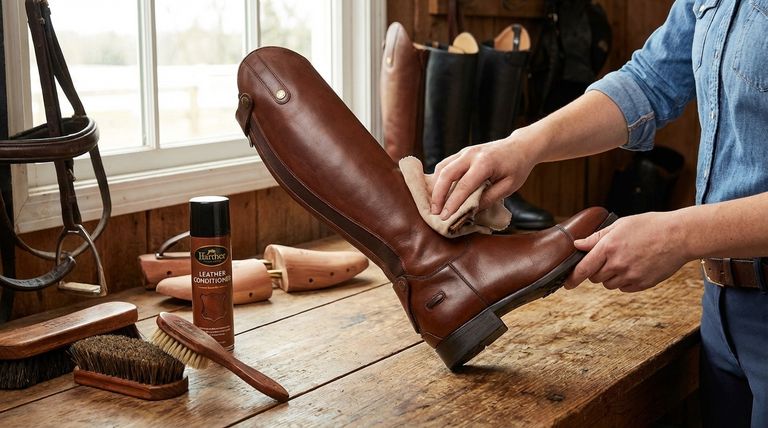
After every ride, take a moment to wipe your boots down with a damp cloth.
This simple action removes corrosive sweat and abrasive dirt before they have a chance to penetrate the leather, preventing long-term damage.
Step 2: The Deep Clean
For a more thorough cleaning, use a soft brush to remove caked-on mud, followed by a specialized leather cleaner.
Avoid using harsh detergents or soaps, as these can strip the leather of its essential natural oils, leading to dryness and brittleness.
Step 3: Conditioning the Leather
Once the boots are clean and have been allowed to air dry naturally away from direct heat, apply a quality leather conditioner.
Conditioning is the most critical step for preventing cracks. It replenishes the moisture within the leather's fibers, keeping it supple, strong, and comfortable.
Step 4: Polishing and Protecting
Applying a cream or wax-based polish not only restores shine but also adds another thin layer of protection against moisture and scuffs.
For boots frequently exposed to wet conditions, consider using a waterproofing spray or a light application of mink oil to enhance water resistance.
The Critical Role of Proper Storage
How you store your boots between rides is just as important as how you clean them. Improper storage can quickly undo all your maintenance efforts.
Maintaining Shape and Structure
Tall boots must be stored upright with support to prevent the ankle from dropping and creating deep, permanent creases.
Use boot trees or shapers to maintain the intended form of the leg and foot. Cedar boot trees are particularly effective as they also help absorb residual moisture and odor. In their absence, rolled-up magazines or sections of pool noodles can serve as a functional substitute.
Choosing the Right Environment
Always store your boots in a cool, dry, and well-ventilated area away from direct sunlight.
Sunlight and heat are the enemies of leather. UV rays can fade the color, while direct heat will dry out the material rapidly, making it brittle and prone to cracking.
Long-Term Storage Solutions
If you need to store your boots for an extended period, first perform a full clean and condition.
Once they are fully dry, place them in a breathable dust bag or box with boot trees inside. This protects them from dust accumulation while still allowing air to circulate.
Common Pitfalls to Avoid
Even with a good routine, a few common mistakes can undermine the lifespan of your boots. Being aware of them is key to avoiding costly damage.
Neglecting the Zippers
Zippers are a common failure point. Dirt and grit that accumulate in the zipper teeth act like sandpaper, wearing them down and leading to jams or breaks.
Use a small, stiff brush (like a toothbrush) to regularly clean the zipper teeth. Applying a zipper lubricant can also ensure smooth operation and prevent strain.
The Dangers of Improper Drying
Never attempt to speed up the drying process by placing boots near a radiator, fireplace, or other direct heat source.
Forcing them to dry too quickly draws out the natural oils and will almost certainly lead to a stiff, cracked surface. Patience and air drying are essential.
Forgetting Regular Inspections
Make it a habit to regularly inspect your boots for signs of significant wear.
Look for separating soles, broken or loose stitching, and deep cracks in the leather, especially at flex points like the ankle. Catching these issues early can prevent a minor repair from becoming a catastrophic failure.
Making the Right Choice for Your Goal
Your specific needs and riding habits should dictate the focus of your care routine.
- If your primary focus is daily riding: Concentrate on the post-ride wipe-down and using boot trees religiously to manage daily wear and tear.
- If your primary focus is riding in wet or muddy conditions: Emphasize thorough cleaning after each use and consider applying a dedicated waterproofing product.
- If your primary focus is long-term preservation: Perform a meticulous deep clean and condition before storing your boots with shapers in a protected, climate-controlled environment.
A consistent care routine is the single best way to ensure your riding boots provide years of performance, safety, and comfort.
Summary Table:
| Care Step | Key Action | Purpose |
|---|---|---|
| Post-Ride Clean | Wipe with damp cloth | Remove sweat and dirt to prevent corrosion |
| Deep Clean | Use specialized leather cleaner | Remove caked-on mud without stripping oils |
| Conditioning | Apply quality conditioner | Prevent cracks and keep leather supple |
| Storage | Use boot trees in cool, dry area | Maintain shape and avoid UV/heat damage |
As a leading manufacturer of high-performance equestrian footwear, 3515 understands the importance of durable, well-crafted riding boots. Our comprehensive range of boots for distributors, brand owners, and bulk clients is designed to withstand rigorous use while maintaining their quality through proper care. Whether you need reliable riding boots for daily training or specialized designs for challenging conditions, our production capabilities ensure superior materials and construction.
Let us help you provide your customers with boots that last. Contact our team today to discuss your footwear needs and explore our manufacturing solutions.
Visual Guide
Related Products
- Durable Goodyear Welt Leather Work Boots for Wholesale & Private Label
- Wholesale Tactical Boots High-Traction & Reflective for Bulk & Brand Orders
- Wholesale High-Traction Camo Boots - Custom Manufacturer for Brands
- Durable Leather High-Ankle Tactical Boots for Wholesale & Custom Manufacturing
- Durable Leather Tactical Boots Wholesale & Custom Manufacturing for Brands
People Also Ask
- What is the difference between full-grain and top-grain leather? Premium Material Guide for Boot Manufacturers
- What are the advantages of leather as an upper material for work boots? Unmatched Durability & Custom Comfort
- Why is it important to waterproof leather work boots? Protect Your Investment and Performance
- How should new leather work boots be broken in? A Guide to Comfort and Durability
- What are the advantages of leather uppers in work boots? Unmatched Durability & Protection



















