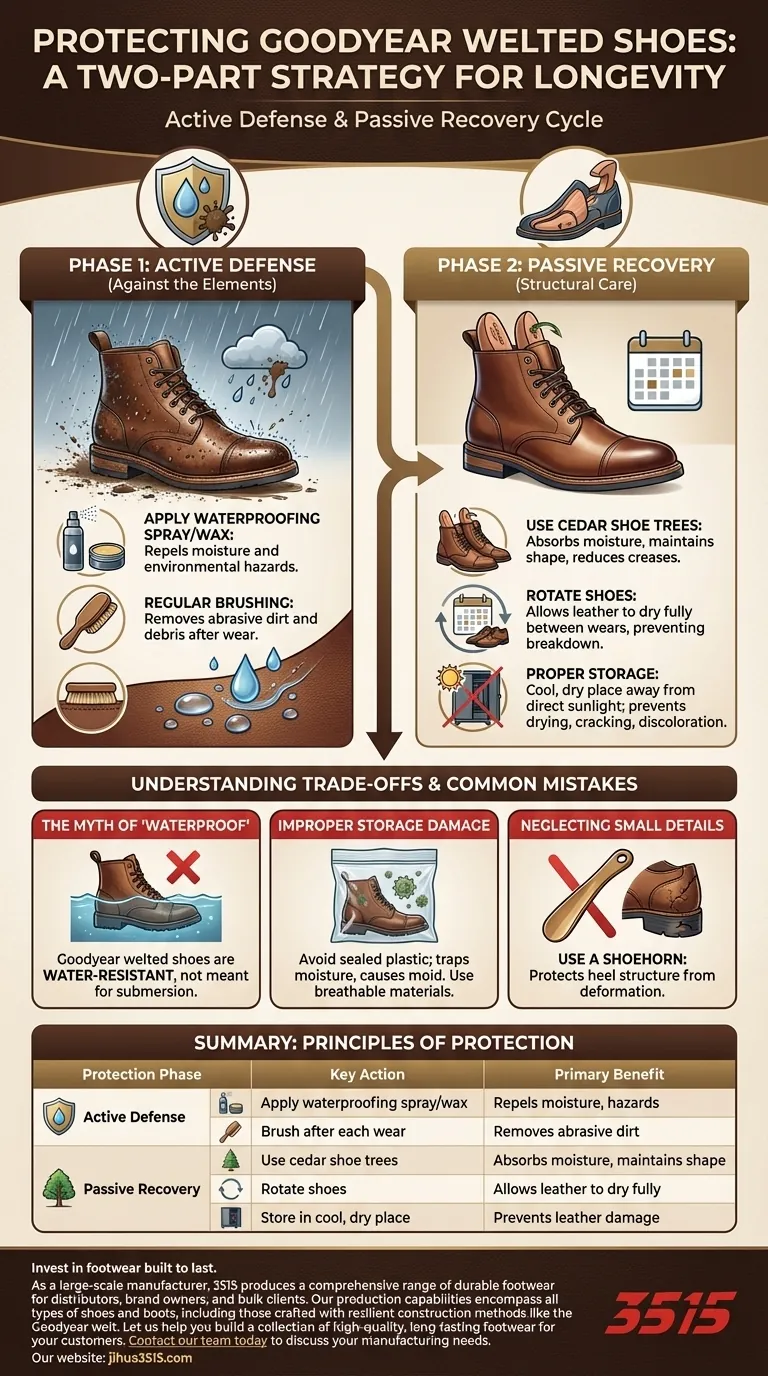
To protect Goodyear welted shoes, you must implement a two-part strategy of active defense and passive recovery. This involves applying a quality waterproofing spray or wax to shield the leather from moisture and consistently using cedar shoe trees after each wear to absorb sweat and maintain the shoe's structural integrity.
A Goodyear welt offers exceptional durability, but its longevity is not guaranteed—it is earned. True protection comes from a disciplined routine that shields the shoe from environmental stress and, just as importantly, allows it to fully recover between wears.
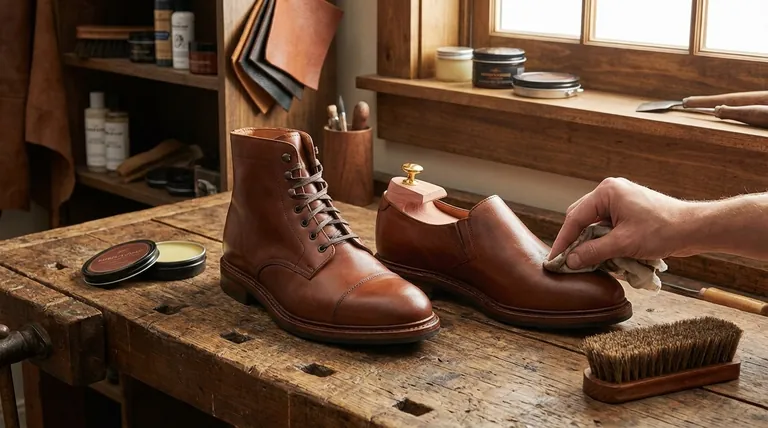
The Principles of Protection: A Two-Part System
Protecting your investment in Goodyear welted shoes requires understanding that care extends beyond just polishing. It's a cycle of defending the materials from the elements and then helping them recuperate.
Phase 1: Active Defense Against the Elements
The first step is creating a barrier between the shoe's leather and environmental hazards like water, salt, and dirt.
A pre-emptive treatment is your first line of defense. Applying a waterproofing spray or wax creates a hydrophobic layer that repels water, preventing it from saturating the leather and potentially damaging the welt.
Regular brushing is also a crucial defensive action. A quick brush-down after a day's wear removes abrasive dirt and debris before it can work its way into the leather's pores.
Phase 2: Passive Recovery and Structural Care
What you do when you are not wearing your shoes is as critical as how you protect them while you are.
The single most important tool for shoe longevity is a pair of cedar shoe trees. They absorb damaging moisture and salts from sweat, gently stretch out creases, and provide the internal support needed to maintain the shoe's original shape.
Leather needs time to breathe and dry completely. Rotating your shoes—avoiding wearing the same pair on consecutive days—is essential for allowing moisture to evaporate fully, which prevents the breakdown of leather fibers and the growth of odor-causing bacteria.
Proper storage is the final piece of recovery. Store your shoes in a cool, dry place away from direct sunlight. Constant exposure to heat or UV rays will dry out the leather, leading to cracking, brittleness, and discoloration.
Understanding the Trade-offs and Common Mistakes
While Goodyear welted shoes are resilient, they are not invincible. Certain common misconceptions and mistakes can inadvertently shorten their lifespan.
The Myth of "Waterproof"
Goodyear welted shoes are highly water-resistant, not truly waterproof. While treatments help, the stitched construction can eventually allow water ingress during prolonged exposure or submersion. They are built for resilience, not for wading through deep puddles.
The Damage of Improper Storage
Never store your high-quality leather shoes in a sealed plastic box or bag. This traps moisture and creates an ideal environment for mold and mildew, which can permanently ruin the leather.
Neglecting the Small Details
Using a shoehorn is a simple but vital habit. It protects the heel counter, the rigid structure at the back of the shoe, from being crushed and deformed over time. Forcing your foot in will break down this essential support.
Making the Right Choice for Your Goal
Your specific care routine should adapt to your climate and how you use your shoes.
- If your primary focus is daily durability: Make shoe trees and shoe rotation your non-negotiable daily habits.
- If your primary focus is weather resistance: Regularly re-apply a quality waterproofing spray or wax, especially before and during wet seasons.
- If your primary focus is long-term preservation: Prioritize correct storage in a temperature-stable environment away from all direct light sources.
By mastering this cycle of defense and recovery, you transform a simple purchase into a lasting component of your wardrobe.
Summary Table:
| Protection Phase | Key Action | Primary Benefit |
|---|---|---|
| Active Defense | Apply waterproofing spray/wax | Repels moisture and environmental hazards |
| Active Defense | Brush after each wear | Removes abrasive dirt and debris |
| Passive Recovery | Use cedar shoe trees | Absorbs moisture, maintains shape, reduces creases |
| Passive Recovery | Rotate shoes (don't wear consecutively) | Allows leather to dry fully, prevents fiber breakdown |
| Passive Recovery | Store in a cool, dry place away from sunlight | Prevents leather from drying out, cracking, or discoloring |
Invest in footwear built to last.
As a large-scale manufacturer, 3515 produces a comprehensive range of durable footwear for distributors, brand owners, and bulk clients. Our production capabilities encompass all types of shoes and boots, including those crafted with resilient construction methods like the Goodyear welt.
Let us help you build a collection of high-quality, long-lasting footwear for your customers. Contact our team today to discuss your manufacturing needs.
Visual Guide
Related Products
- Durable Goodyear Welt Leather Work Boots for Wholesale & Private Label
- Wholesale Durable Leather Work Boots | 8-Inch Goodyear Welt Manufacturer
- Wholesale Durable & Breathable Training Shoes for Custom Brands
- Wholesale Breathable Training Shoes Custom Athletic Footwear Manufacturer
- Custom OEM Training Shoes Wholesale Manufacturer Durable & Breathable
People Also Ask
- What is the difference between full-grain and top-grain leather? Premium Material Guide for Boot Manufacturers
- What are the advantages of leather as an upper material for work boots? Unmatched Durability & Custom Comfort
- Why is it important to waterproof leather work boots? Protect Your Investment and Performance
- How should new leather work boots be broken in? A Guide to Comfort and Durability
- What are the advantages of leather uppers in work boots? Unmatched Durability & Protection