The definitive way to pair engineer boots with denim is by focusing on two elements: the fit of the jeans and the height of the cuff. The goal is to create a clean, balanced line from your thigh down to the boot, ensuring the denim complements the boot's substantial profile rather than competing with it or creating a disproportionate silhouette.
The core principle is achieving a balanced silhouette. Your denim's leg opening must be wide enough to fit cleanly over the boot shaft, and your cuff style must be intentional, whether you choose to showcase the boot's details or create a more subtle, integrated look.

The Foundation: Selecting the Right Denim
Before considering how to cuff your jeans, you must start with the correct cut. The wrong fit will undermine the entire look, regardless of how you style it.
Fit is Paramount: Straight or Slim-Straight
The ideal choice is a straight-fit or slim-straight jean. This cut provides enough room in the leg to accommodate the boot's shaft without bunching or stretching.
This creates a coherent and classic line, honoring the boot's workwear heritage. Avoid skinny jeans, as they create an unbalanced "boots with sticks" look that overemphasizes the boot's bulk.
The Importance of the Leg Opening
Pay close attention to the leg opening measurement. You need an opening wide enough to slide over the boot shaft without a struggle.
A measurement between 7.5 and 8.5 inches is typically the sweet spot. Anything smaller will get stuck, and anything larger (like a bootcut) will flare out and look dated, hiding the boot's unique profile.
Consider a Heavier Denim
While not mandatory, a mid-to-heavyweight denim, such as raw or selvedge denim, provides a structural advantage.
This sturdier fabric holds a cuff much more crisply and cleanly, adding to the intentionality of the look. Lighter, softer denim can result in flimsy, unkempt-looking cuffs.
Mastering the Cuff: The Critical Interface
The cuff is where the jean meets the boot. Your approach here dictates whether the final look is bold and deliberate or classic and understated.
The High Cuff: The Statement Look
A higher, larger cuff (typically two or more rolls) that exposes the boot shaft up to the first buckle is a bold, confident statement.
This method intentionally draws attention to the boots, making them the clear focal point of the outfit. It works best when the rest of the outfit is simple—like a plain t-shirt and leather jacket.
The Low Cuff: The Understated Approach
A simple, small single or double cuff that rests just at the top of the boot's vamp is the most versatile and classic method.
This cuff style is subtle. It ensures your jeans are the correct length while allowing the boot to integrate more naturally into the overall look without demanding all the attention.
Understanding the Trade-offs
Pairing engineer boots correctly requires an awareness of potential pitfalls that can detract from the intended aesthetic.
The Risk of an Unbalanced Silhouette
The single biggest mistake is choosing the wrong denim fit. Skinny or overly tapered jeans create a jarring visual break, while excessively baggy jeans will pool unattractively over the boot, looking sloppy.
Avoiding the "Costume" Effect
Engineer boots have a strong heritage identity. To avoid looking like you are wearing a costume, keep the rest of the outfit grounded and simple.
The references are correct: a white t-shirt and a denim, canvas, or leather jacket are foolproof pairings. Let the boots and denim do the talking.
Cuff Height vs. Leg Proportions
Be mindful that a very high or thick cuff can visually shorten your leg line. If you are concerned about maintaining a sense of height, a lower, cleaner cuff is the safer and more elongating choice.
Making the Right Choice for Your Goal
Your final decision should be guided by the specific look you want to achieve.
- If your primary focus is a classic heritage look: Choose a straight-fit selvedge jean with a simple, low cuff that just kisses the top of the boot.
- If your primary focus is a bold, modern statement: Opt for a slim-straight jean with a crisp, high cuff that confidently displays the boot's buckle and shaft.
- If your primary focus is effortless daily wear: Use a slim-straight jean with a subtle, single cuff for a clean and understated appearance that works in almost any casual context.
Ultimately, the right pairing is one that respects the proportions of both the denim and the boot, creating a look that is intentional and confident.
Summary Table:
| Key Element | Recommendation | Why It Matters |
|---|---|---|
| Denim Fit | Straight or Slim-Straight | Creates a clean line from thigh to boot, avoiding a bulky or unbalanced look. |
| Leg Opening | 7.5 to 8.5 inches | Ensures the jean fits cleanly over the boot shaft without getting stuck or flaring out. |
| Cuff Style | High Cuff (Statement) or Low Cuff (Classic) | Dictates the outfit's focus, either highlighting the boot's details or integrating it subtly. |
Ready to Build Your Perfect Boot Collection?
As a large-scale manufacturer, 3515 produces a comprehensive range of durable footwear for distributors, brand owners, and bulk clients. Our production capabilities encompass all types of work boots and heritage-style engineer boots, ensuring premium quality and consistent supply for your business.
Partner with us to:
- Access a wide catalog of styles built to last.
- Benefit from reliable, large-volume manufacturing.
- Elevate your product line with authentic, well-constructed footwear.
Contact our team today to discuss your manufacturing needs and discover how 3515 can be your trusted footwear partner.
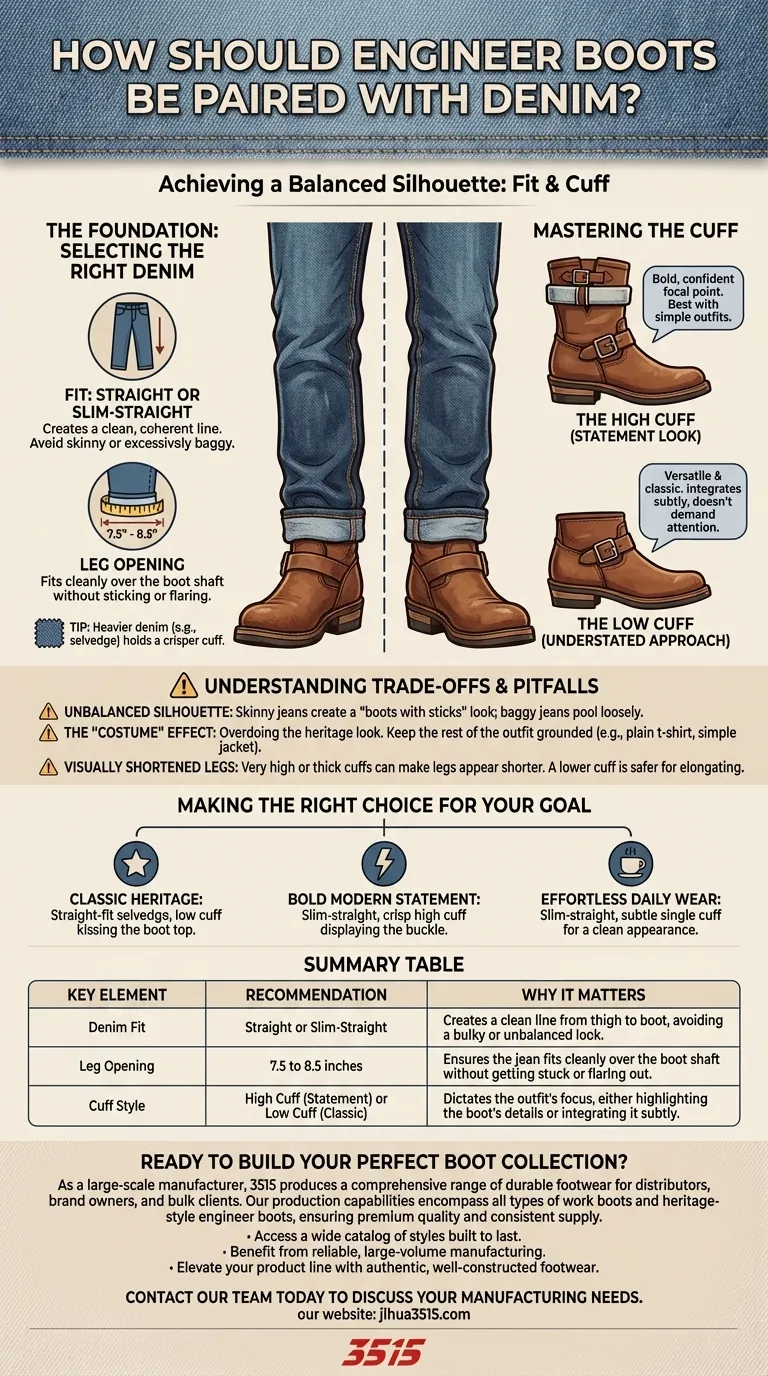
Visual Guide
Related Products
- Durable Leather Work Boots Wholesale Manufacturer & Custom Factory
- Durable Leather Work Boots for Wholesale & Custom OEM Manufacturing
- Durable Leather Work Boots for Wholesale & Custom Manufacturing
- Premium Waterproof High-Cut Industrial Safety Boots for Wholesale and Bulk Orders
- Wholesale Customizable Safety Boots Durable & Protective Footwear Manufacturing
People Also Ask
- What are the common workplace hazards that can be mitigated with the right work boots? Protect Your Workforce
- What certification standard do all work boots meet? Your Guide to ASTM F2413 & Beyond
- What options are available for restoring worn-out work boots? Expert Strategies for Longevity
- What features should junk removal workers look for in work boots? A Guide to Safety & Comfort
- How can you ensure consistent comfort in work boots? Focus on Fit, Materials & Ergonomics