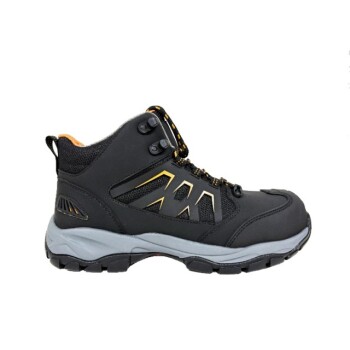
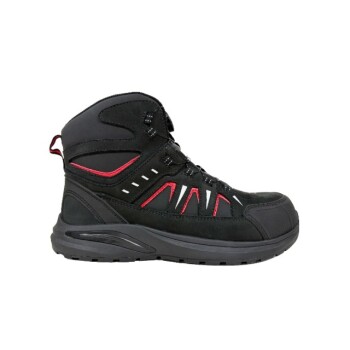
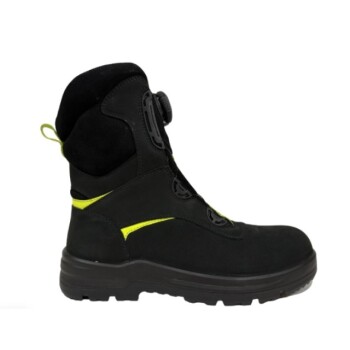
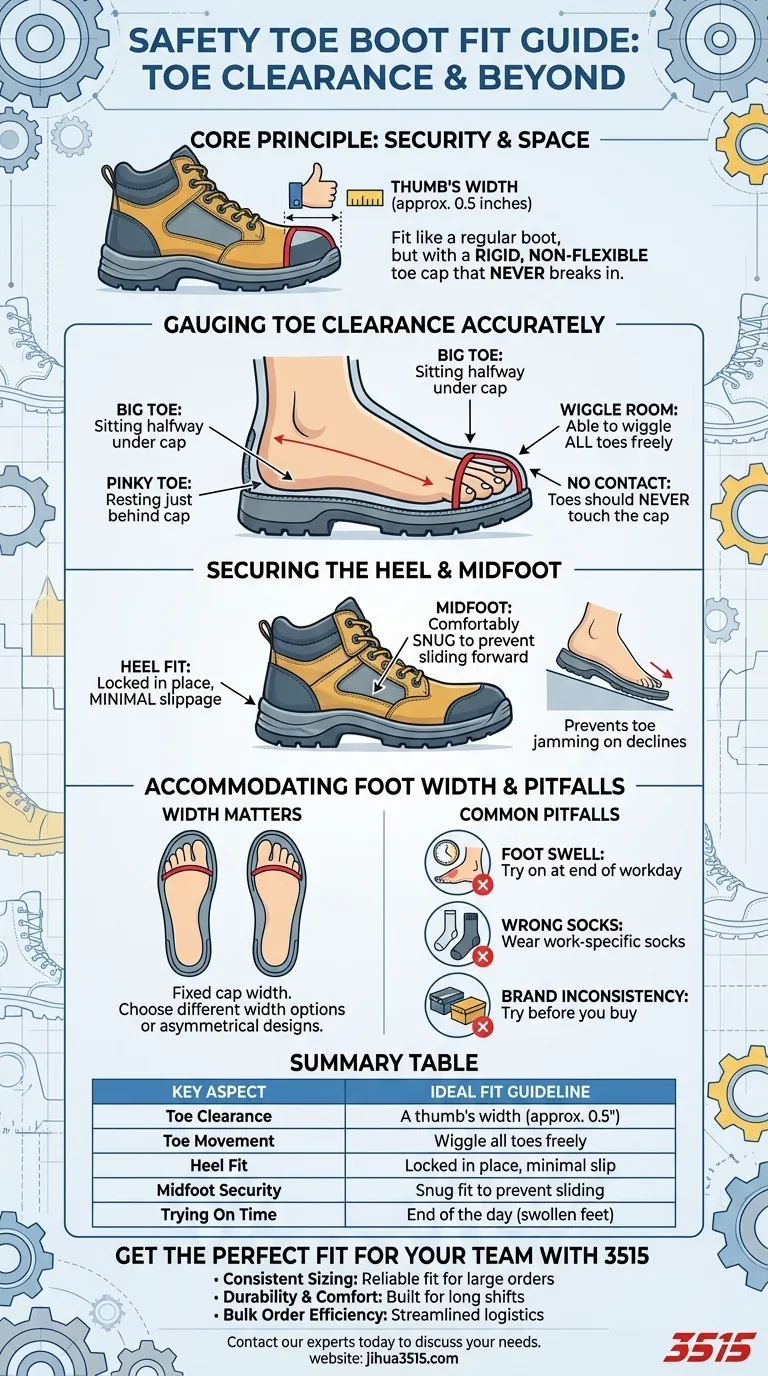
At its core, a safety toe boot should fit like a regular boot but with specific attention to the toe cap. The ideal fit provides roughly a thumb's width of space (about half an inch) between your longest toe and the end of the boot. Your toes should never touch the safety cap, and you should be able to wiggle them freely without feeling cramped.
The central challenge with safety boots isn't just finding your size; it's ensuring the rigid, non-flexible toe cap accommodates your foot's natural shape and movement. Unlike regular footwear, a safety toe box will never "break in," making the initial fit absolutely critical for long-term comfort and protection.
The Principles of a Proper Safety Boot Fit
A correct fit is a balance of security and space. The boot must hold your foot firmly to prevent internal movement and potential injury, while also providing enough room to avoid cramping and blisters.
Gauging Toe Clearance Accurately
The most common mistake is focusing only on length. Your toes need space in all directions within the protective cap.
A good rule of thumb is to have about a thumb's width of space between the tip of your longest toe (which may not be your big toe) and the front of the boot.
Your big toe should sit roughly halfway under the protective toe cap, while your pinky toe should rest just behind it. This positioning ensures your entire forefoot is protected without being constricted.
Crucially, you must be able to wiggle all your toes freely inside the boot. If they feel bunched or constrained, the toe box is too narrow or the boot is too short.
Securing the Heel and Midfoot
While your toes need room to move, your heel must be locked in place.
When you walk, your heel should not lift or slip more than a tiny fraction of an inch. Excessive heel slip is a primary cause of blisters and instability.
The boot should feel comfortably snug across the midfoot and instep, preventing your foot from sliding forward on declines. This is what stops your toes from jamming into the front of the safety cap.
Accommodating Foot Width
The width of the safety cap is fixed. If the boot feels too tight across the ball of your foot, a larger size will likely not solve the problem—it will just be too long.
Look for brands that offer different width options if you have wider feet. Some modern designs also use asymmetrical safety toes that are shaped more like a natural foot, providing a better fit.
Common Pitfalls to Avoid
Getting the fit right involves more than just trying on a boot. Several factors can lead you to choose the wrong size and experience significant discomfort later.
Forgetting About Foot Swell
Your feet naturally swell throughout the day, especially if you're standing or walking for long periods.
Always try on new boots at the end of the workday when your feet are at their largest. This ensures the fit remains comfortable even after a full shift.
Using the Wrong Socks
The thickness of your socks can dramatically alter how a boot fits.
When trying on boots, wear the exact same type of socks you plan to wear on the job. A thick work sock can easily take up half a size.
Assuming All Brands Fit the Same
Sizing is notoriously inconsistent between manufacturers. A size 10 in one brand might fit like a 10.5 in another.
Never buy a safety boot online without trying it on first, unless you are absolutely certain of the brand and model's fit. Your measured size is only a starting point.
Making the Right Choice for Your Feet
Your specific needs should guide your final decision. Consider the environment and the demands of your job to select a boot that offers both safety and all-day comfort.
- If your primary focus is all-day comfort on hard surfaces: Prioritize a snug heel fit and ample toe room to prevent your foot from sliding and your toes from hitting the cap.
- If your primary focus is stability on uneven terrain: Ensure the boot locks down your midfoot and ankle to prevent slipping, while still allowing your toes to splay naturally for balance.
- If you have wider feet: Seek out brands that offer specific width options or feature anatomically shaped (asymmetrical) toe caps.
Ultimately, the right safety boot is one you don't have to think about once it's on your foot.
Summary Table:
| Key Aspect | Ideal Fit Guideline |
|---|---|
| Toe Clearance | A thumb's width (approx. 0.5 inches) between longest toe and boot end. |
| Toe Movement | Ability to wiggle all toes freely without touching the safety cap. |
| Heel Fit | Heel locked in place with minimal to no slippage when walking. |
| Midfoot Security | Snug fit across the instep to prevent foot sliding forward. |
| Trying On Time | Try boots on at the end of the day when feet are naturally swollen. |
Get the Perfect Fit for Your Team
As a large-scale manufacturer, 3515 produces a comprehensive range of safety footwear for distributors, brand owners, and bulk clients. We understand that a perfect fit is non-negotiable for safety and productivity.
We can help you provide:
- Consistent Sizing: Reliable fit across large orders.
- Durability & Comfort: Boots built for long shifts on demanding job sites.
- Bulk Order Efficiency: Streamlined logistics and competitive pricing for large volumes.
Ensure your workforce is equipped with comfortable, properly fitting safety boots. Contact our experts today to discuss your specific needs and request samples.
Visual Guide
Related Products
- Puncture-Resistant Velcro Safety Boots for Wholesale & Custom Manufacturing
- Durable Steel Toe Safety Boots Wholesale & Custom Manufacturing
- Customizable Anti-Smash Safety Boots for Wholesale & Private Label Manufacturing
- Wholesale Durable Breathable Safety Boots Custom OEM Manufacturer
- Wholesale Leather Safety Boots with Customizable Protective Toe
People Also Ask
- Why are industrial safety boots with steel toes necessary for machine operators? Essential Foot Protection for Safety
- What are the characteristics of steel toe safety boots? Maximum Protection, Key Trade-offs
- Is it true that steel toes can cause toes to get cut off? Debunking the Dangerous Myth
- What are the primary safety functions of safety boots with steel-toe designs? Essential Protection for Industry
- What are the different types of safety toe boots available? Choose the Right Protection for Your Job