
The frequency of military boot maintenance is not based on a set schedule, but on their usage and exposure to the elements. While deeper conditioning may only be needed every few months, your boots require immediate attention after every significant use, especially after being exposed to mud, water, or other harsh conditions.
The core principle is to shift from a rigid "how often" schedule to a responsive maintenance system. Treat boot care as two distinct tiers: immediate cleaning after use and periodic deep conditioning to preserve the materials.
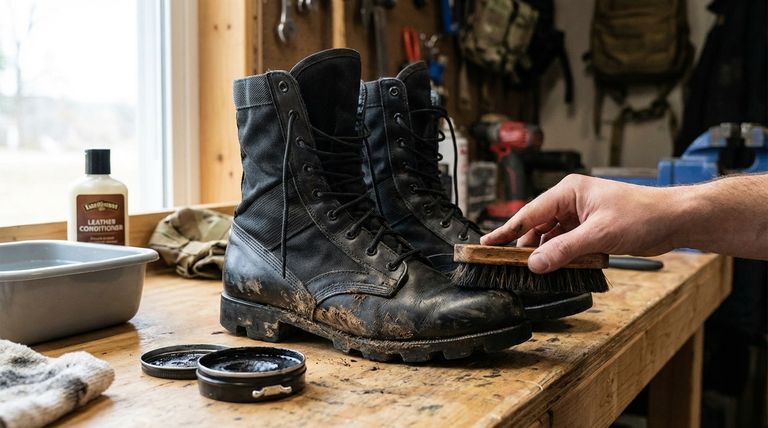
The Two-Tier Maintenance Framework
Proper boot care isn't a single task but a continuous cycle. Breaking it down into two tiers ensures your boots are always ready for deployment and that their service life is maximized.
Tier 1: Post-Mission Cleaning (After Every Significant Use)
This is the immediate action you should take after returning from the field or any environment that soils your boots.
The goal here is simple: remove contaminants before they can damage the boot's materials. Dirt and mud draw moisture out of leather, causing it to become brittle and crack over time.
First, knock off any caked-on mud and debris. Then, use a damp cloth or a specialized brush to wipe down the entire exterior of the boot. For suede, a dedicated suede brush is essential.
Finally, allow the boots to air dry completely in a well-ventilated area away from direct sunlight or heat sources.
Tier 2: Deep Conditioning & Protection (Every Few Months)
This is the deeper, restorative work that keeps the materials supple and weather-resistant. The frequency depends on your climate and usage patterns.
Leather conditioning is crucial for preventing cracks and maintaining flexibility. Apply a quality leather conditioner or oil every few months, or more often if you notice the leather looking dry.
If your boots are not inherently waterproof, reapply a waterproofing treatment after cleaning. This creates a barrier against moisture, which is critical for both comfort and the longevity of the boot.
The Critical Role of Proper Storage
How you store your boots between uses is a form of passive maintenance.
Always store them in a cool, dry place away from direct sunlight. High heat and UV exposure can degrade leather, synthetics, and the adhesives that hold the boot together.
Never store boots in a sealed plastic bag or container, as this traps moisture and can lead to mildew or rot.
Common Pitfalls to Avoid
Even with the best intentions, common mistakes can shorten the life of your boots. Understanding these pitfalls is as important as knowing the correct procedures.
Mistake #1: Using Direct Heat to Dry
Never place your boots near a radiator, fire, or use a hairdryer to speed up drying.
Intense, direct heat can cause leather to crack irreversibly and can weaken the glues and cements used in modern boot construction, potentially leading to sole delamination.
Mistake #2: Over-Conditioning
While essential, using too much conditioner can be counterproductive.
Over-saturated leather can become too soft, losing the structural support your feet and ankles rely on. It can also clog the pores of the leather, reducing breathability.
Mistake #3: Neglecting the Interior
The inside of your boot is just as important as the outside.
Remove the insoles after use to allow them and the boot's footbed to air out completely. This prevents the buildup of bacteria and fungus, which cause odors and can degrade the interior lining.
Making the Right Choice for Your Goal
Your specific maintenance routine should adapt to your operational environment and frequency of use.
- If your primary focus is daily duty in moderate conditions: A quick wipe-down or brushing at the end of the day and a deep conditioning every 2-3 months is sufficient.
- If your primary focus is field operations in wet or muddy terrain: You must perform a thorough cleaning and allow for complete air drying after every single mission.
- If your primary focus is long-term storage: Ensure boots are completely clean and dry, apply a light coat of conditioner, and store them in a breathable bag in a climate-controlled environment.
Proactive and consistent care is the key to ensuring your boots will perform when you need them most.
Summary Table:
| Maintenance Tier | Frequency | Key Actions |
|---|---|---|
| Tier 1: Post-Mission Cleaning | After every significant use | Remove mud/debris, wipe down exterior, air dry completely |
| Tier 2: Deep Conditioning | Every few months (based on usage/climate) | Apply leather conditioner, reapply waterproofing treatment |
Ensure your personnel are equipped with the most durable and reliable footwear. As a large-scale manufacturer, 3515 produces a comprehensive range of military and tactical boots for distributors, brand owners, and bulk clients. Our production capabilities ensure superior quality and performance for every pair. Contact our experts today to discuss your specific requirements and secure a dependable supply of high-performance boots.
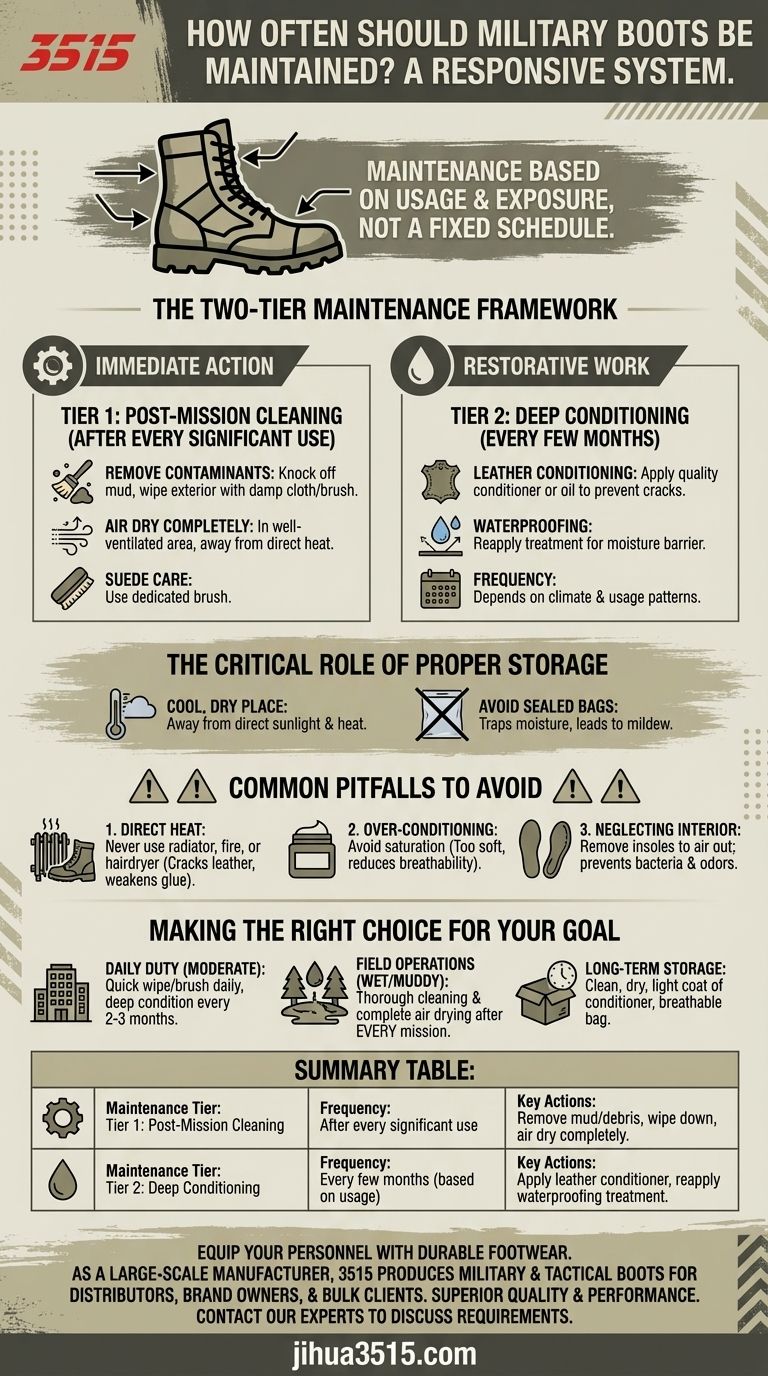
Visual Guide
Related Products
- Durable Military Combat Boots with Water Drainage for Wholesale & OEM
- High-Traction Suede Tactical Boots Wholesale & Custom Manufacturing
- Durable High-Ankle Tactical Boots for Wholesale & Custom Manufacturing
- Durable Mid-Cut Tactical Boots for Wholesale & Private Label
- Wholesale Waterproof Tactical Boots Custom Suede & High-Traction Soles
People Also Ask
- Why must gait validation for military applications be conducted in combat boots? Ensure Data Accuracy for Soldiers
- What are the common types of combat boots? Find the Right Boot for Your Mission
- What factors should be considered when choosing military boots for hiking? Durability vs. Weight for Your Terrain
- What are the key considerations when choosing military boots? Prioritize Compliance, Environment & Fit
- How should the midfoot and heel fit in military boots? Achieve a Snug, Secure Fit for Blister Prevention


















